
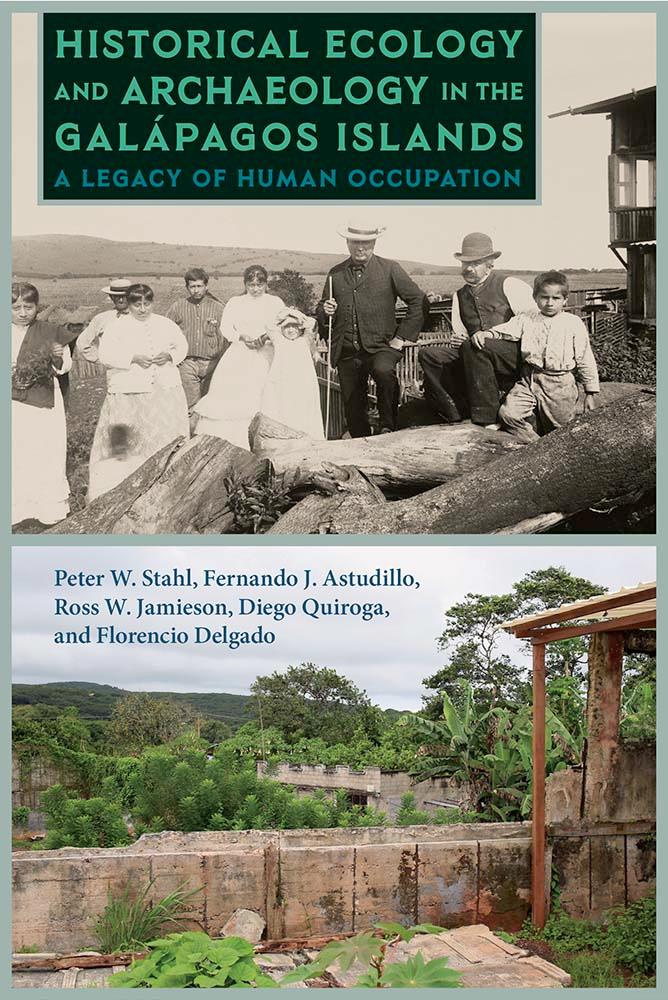
The Galápagos Islands are one of the world’s premiere nature attractions, home to unique ecosystems widely thought to be untouched and pristine. Historical Ecology and Archaeology in the Galápagos Islands reveals that the archipelago is not as isolated as many imagine, examining how centuries of human occupation have transformed its landscape.
This book shows that the island chain has been a part of global networks since its discovery in 1535 and traces the changes caused by human colonization. Central to this history is the sugar plantation Hacienda El Progreso on San Cristóbal Island. Here, zooarchaeological and archaeobotanical evidence documents the introduction of exotic species and landscape transformations, and material evidence attests that inhabitants maintained connections to the outside world for consumer goods.
Beyond illuminating the human history of the islands, the authors also look at the impact of visitors to Galápagos National Park today, raising questions about tourism’s role in biological conservation, preservation, and restoration.
A volume in the series Society and Ecology in Island and Coastal Archaeology, edited by Victor D. Thompson
Płać wygodnie kartą, Klarną, Apple Pay lub Google Pay. Nie jesteś zadowolony? Zawsze masz 14-dniową gwarancję zwrotu pieniędzy. Więcej przeczytasz w naszych warunkach. Masz pytania? Napisz do nas na hello@memmo.org.
Memmo ułatwia naukę – gdziekolwiek jesteś na świecie. U nas znajdziesz podręczniki i sprytne narzędzia do nauki w jednym miejscu: streszczenia, quizy, podcasty i fiszki. A do tego Ted, Twój kumpel do nauki, który odpowie na wszystko, co Cię nurtuje. Ponad 50 000 studentów już tu się uczy – stworzone, byś uczył się szybciej i mniej stresował.
Może Ci się spodobać
Kup książkę0