
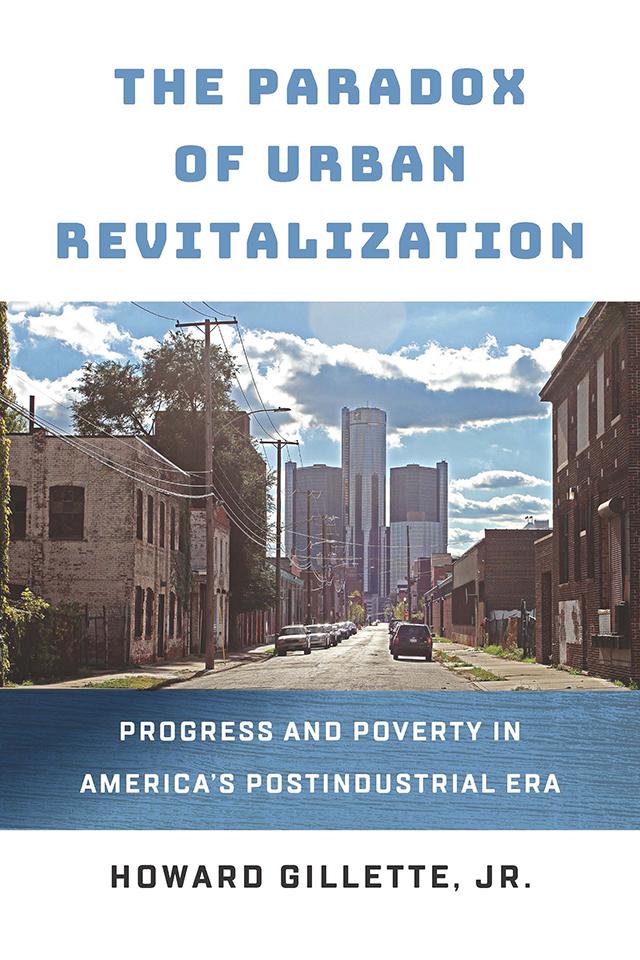
In the twenty-first century, cities in the United States that had suffered most the shift to a postindustrial era entered a period widely proclaimed as an urban renaissance. From Detroit to Newark to Oakland and elsewhere commentators saw cities rising again. Yet revitalization generated a second urban crisis marked by growing inequality and civil unrest reminiscent of the upheavals associated with the first urban crisis in the mid-twentieth century. The urban poor and residents of color have remained very much at a disadvantage in the face of racially biased capital investments, narrowing options for affordable housing, and mass incarceration. In profiling nine cities grappling with challenges of the twenty-first century, author Howard Gillette, Jr. evaluates the uneven efforts to secure racial and class equity as city fortunes have risen. Charting the tension between the practice of corporate subsidy and efforts to assure social justice, The Paradox of Urban Revitalization assesses the course of urban politics and policy over the past half century, before the COVID-19 pandemic upended everything, and details prospects for achieving greater equity in the years ahead.
Płać wygodnie kartą, Klarną, Apple Pay lub Google Pay. Nie jesteś zadowolony? Zawsze masz 14-dniową gwarancję zwrotu pieniędzy. Więcej przeczytasz w naszych warunkach. Masz pytania? Napisz do nas na hello@memmo.org.
Memmo ułatwia naukę – gdziekolwiek jesteś na świecie. U nas znajdziesz podręczniki i sprytne narzędzia do nauki w jednym miejscu: streszczenia, quizy, podcasty i fiszki. A do tego Ted, Twój kumpel do nauki, który odpowie na wszystko, co Cię nurtuje. Ponad 50 000 studentów już tu się uczy – stworzone, byś uczył się szybciej i mniej stresował.
Może Ci się spodobać
Kup książkę0