
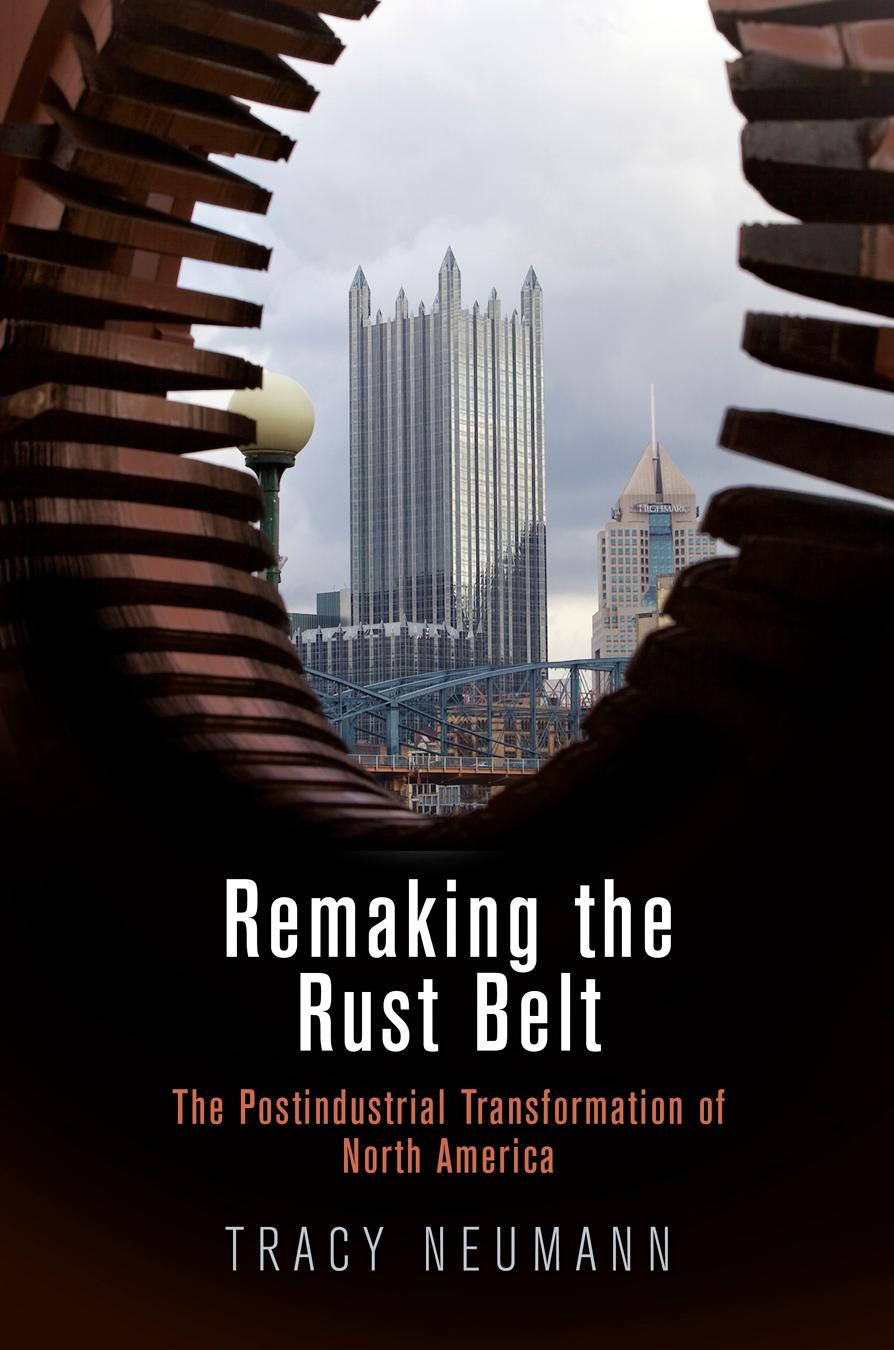
Cities in the North Atlantic coal and steel belt embodied industrial power in the early twentieth century, but by the 1970s, their economic and political might had been significantly diminished by newly industrializing regions in the Global South. This was not simply a North American phenomenon—the precipitous decline of mature steel centers like Pittsburgh, Pennsylvania, and Hamilton, Ontario, was a bellwether for similar cities around the world.
Contemporary narratives of the decline of basic industry on both sides of the Atlantic make the postindustrial transformation of old manufacturing centers seem inevitable, the product of natural business cycles and neutral market forces. In Remaking the Rust Belt, Tracy Neumann tells a different story, one in which local political and business elites, drawing on a limited set of internationally circulating redevelopment models, pursued postindustrial urban visions. They hired the same consulting firms; shared ideas about urban revitalization on study tours, at conferences, and in the pages of professional journals; and began to plan cities oriented around services rather than manufacturing—all well in advance of the economic malaise of the 1970s.
While postindustrialism remade cities, it came with high costs. In following this strategy, public officials sacrificed the well-being of large portions of their populations. Remaking the Rust Belt recounts how local leaders throughout the Rust Belt created the jobs, services, leisure activities, and cultural institutions that they believed would attract younger, educated, middle-class professionals. In the process, they abandoned social democratic goals and widened and deepened economic inequality among urban residents.
Płać wygodnie kartą, Klarną, Apple Pay lub Google Pay. Nie jesteś zadowolony? Zawsze masz 14-dniową gwarancję zwrotu pieniędzy. Więcej przeczytasz w naszych warunkach. Masz pytania? Napisz do nas na hello@memmo.org.
Memmo ułatwia naukę – gdziekolwiek jesteś na świecie. U nas znajdziesz podręczniki i sprytne narzędzia do nauki w jednym miejscu: streszczenia, quizy, podcasty i fiszki. A do tego Ted, Twój kumpel do nauki, który odpowie na wszystko, co Cię nurtuje. Ponad 50 000 studentów już tu się uczy – stworzone, byś uczył się szybciej i mniej stresował.