
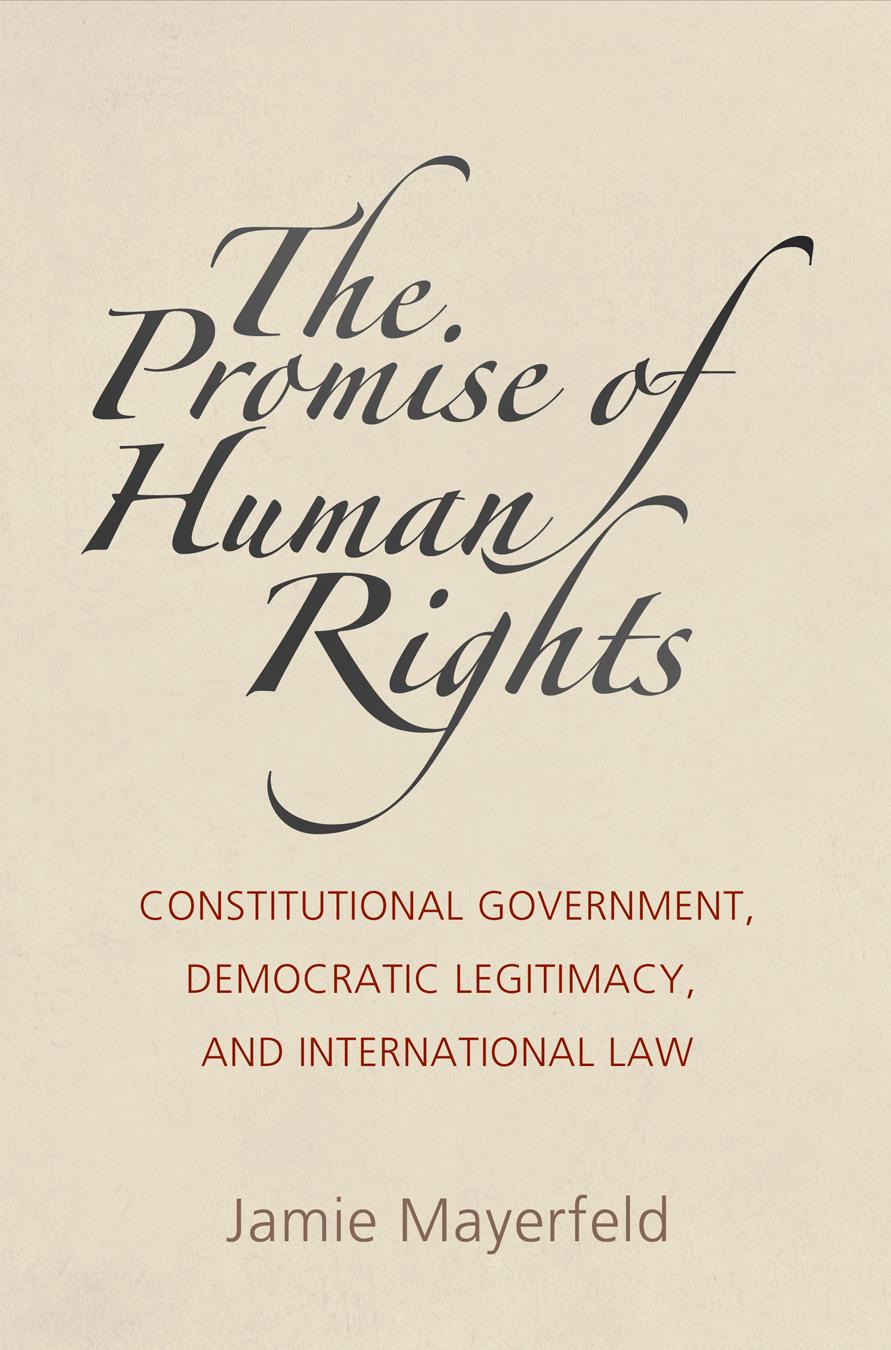
International human rights law is sometimes criticized as an infringement of constitutional democracy. Against this view, Jamie Mayerfeld argues that international human rights law provides a necessary extension of checks and balances and therefore completes the domestic constitutional order. In today's world, constitutional democracy is best understood as a cooperative project enlisting both domestic and international guardians to strengthen the protection of human rights. Reasons to support this view may be found in the political philosophy of James Madison, the principal architect of the U.S. Constitution.
The Promise of Human Rights presents sustained theoretical discussions of human rights, constitutionalism, democracy, and sovereignty, along with an extended case study of divergent transatlantic approaches to human rights. Mayerfeld shows that the embrace of international human rights law has inhibited human rights violations in Europe whereas its marginalization has facilitated human rights violations in the United States. A longstanding policy of "American exceptionalism" was a major contributing factor to the Bush administration's use of torture after 9/11.
Mounting a combination of theoretical and empirical arguments, Mayerfeld concludes that countries genuinely committed to constitutional democracy should incorporate international human rights law into their domestic legal system and accept international oversight of their human rights practices.
Płać wygodnie kartą, Klarną, Apple Pay lub Google Pay. Nie jesteś zadowolony? Zawsze masz 14-dniową gwarancję zwrotu pieniędzy. Więcej przeczytasz w naszych warunkach. Masz pytania? Napisz do nas na hello@memmo.org.
Memmo ułatwia naukę – gdziekolwiek jesteś na świecie. U nas znajdziesz podręczniki i sprytne narzędzia do nauki w jednym miejscu: streszczenia, quizy, podcasty i fiszki. A do tego Ted, Twój kumpel do nauki, który odpowie na wszystko, co Cię nurtuje. Ponad 50 000 studentów już tu się uczy – stworzone, byś uczył się szybciej i mniej stresował.