
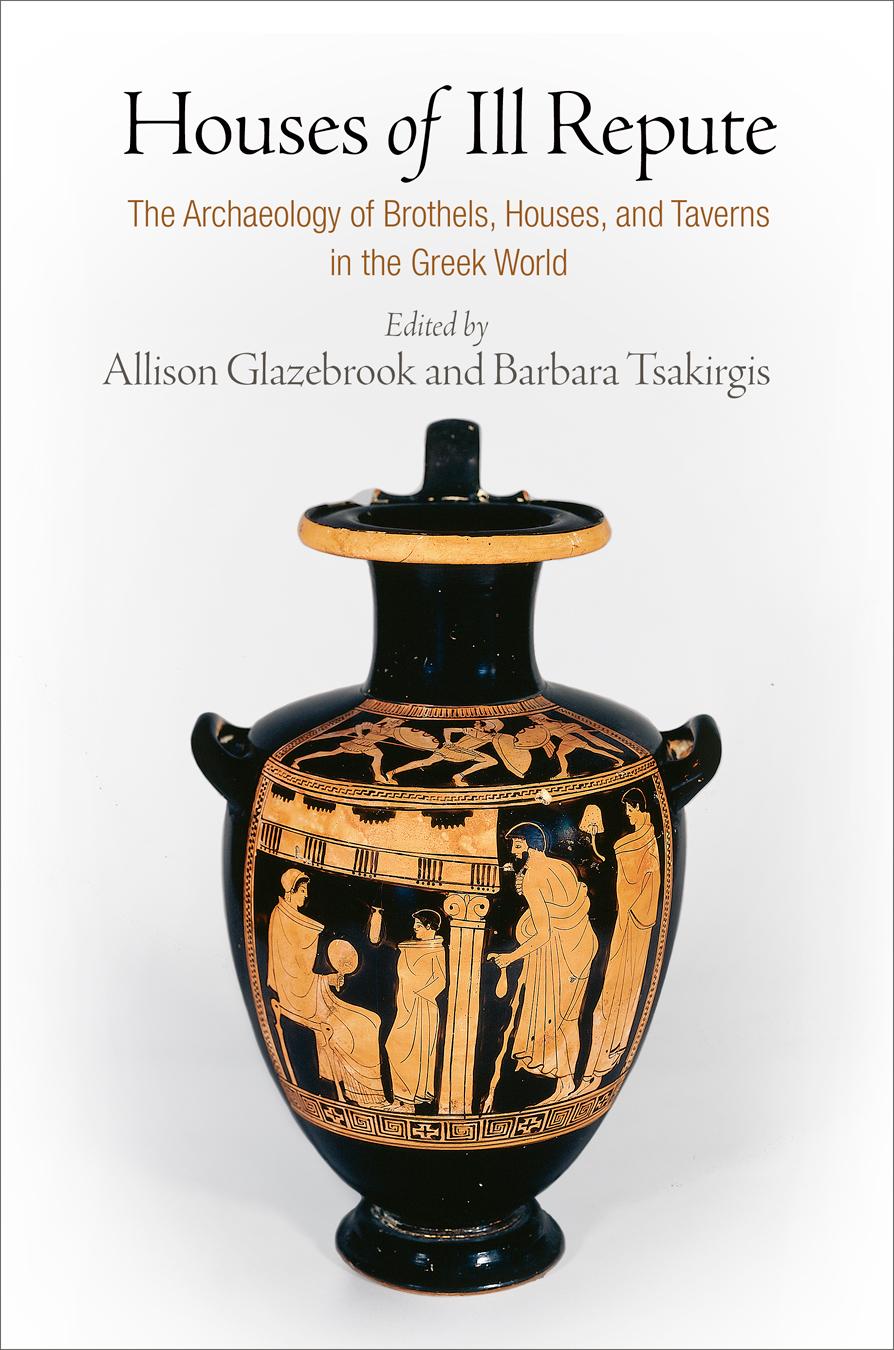
The study of ancient Greek urbanism has moved from examining the evidence for town planning and the organization of the city-state, or polis, to considerations of "everyday life." That is, it has moved from studying the public (fortifications, marketplaces, council houses, gymnasiums, temples, theaters, fountain houses) to studying the private (the physical remains of Greek houses). But what of those buildings that housed activities neither public nor private—brothels, taverns, and other homes of illicit activity? Can they be distinguished from houses? Were businesses like these run from homes? Classical Athenian writers attest to a diverse urban landscape that included tenement houses (sunoikiai), inns (diaitai, pandokeia), factories (ergasteria), taverns (kapelia), gambling dens (skirapheia), training schools (didaskaleia), and brothels (porneia), yet, despite our knowledge of specific terms, associating them with actual physical remains has not been easy. One such writer, Isaeus, mentions tenement houses that hosted prostitutes and wine sellers, while his contemporary Aeschines refers to doctors, smiths, fullers, carpenters, and pimps renting space. Were tenement houses not simply multi-inhabitant spaces but also multipurpose ones?
Houses of Ill Repute is the first book to focus on the difficulties of distinguishing private and semiprivate spaces. While others have studied houses or brothels, this volume looks at both together. The chapters, by leading scholars in the field, address such questions as "What is a house?" and "Did the business of prostitution leave behind a unique archaeological record?" Presenting several approaches to identifying and studying distinctions between domestic residences and houses of ill repute, and drawing on the fields of literature, history, and art history and theory, the volume's contributors provide a way forward for the study of domestic and entertainment spaces in the Hellenic world.
Contributors: Bradley A. Ault, Allison Glazebrook, Mark L. Lawall, Kathleen M. Lynch, David Scahill, Amy C. Smith, Monika Trümper, Barbara Tsakirgis.
Płać wygodnie kartą, Klarną, Apple Pay lub Google Pay. Nie jesteś zadowolony? Zawsze masz 14-dniową gwarancję zwrotu pieniędzy. Więcej przeczytasz w naszych warunkach. Masz pytania? Napisz do nas na hello@memmo.org.
Memmo ułatwia naukę – gdziekolwiek jesteś na świecie. U nas znajdziesz podręczniki i sprytne narzędzia do nauki w jednym miejscu: streszczenia, quizy, podcasty i fiszki. A do tego Ted, Twój kumpel do nauki, który odpowie na wszystko, co Cię nurtuje. Ponad 50 000 studentów już tu się uczy – stworzone, byś uczył się szybciej i mniej stresował.