
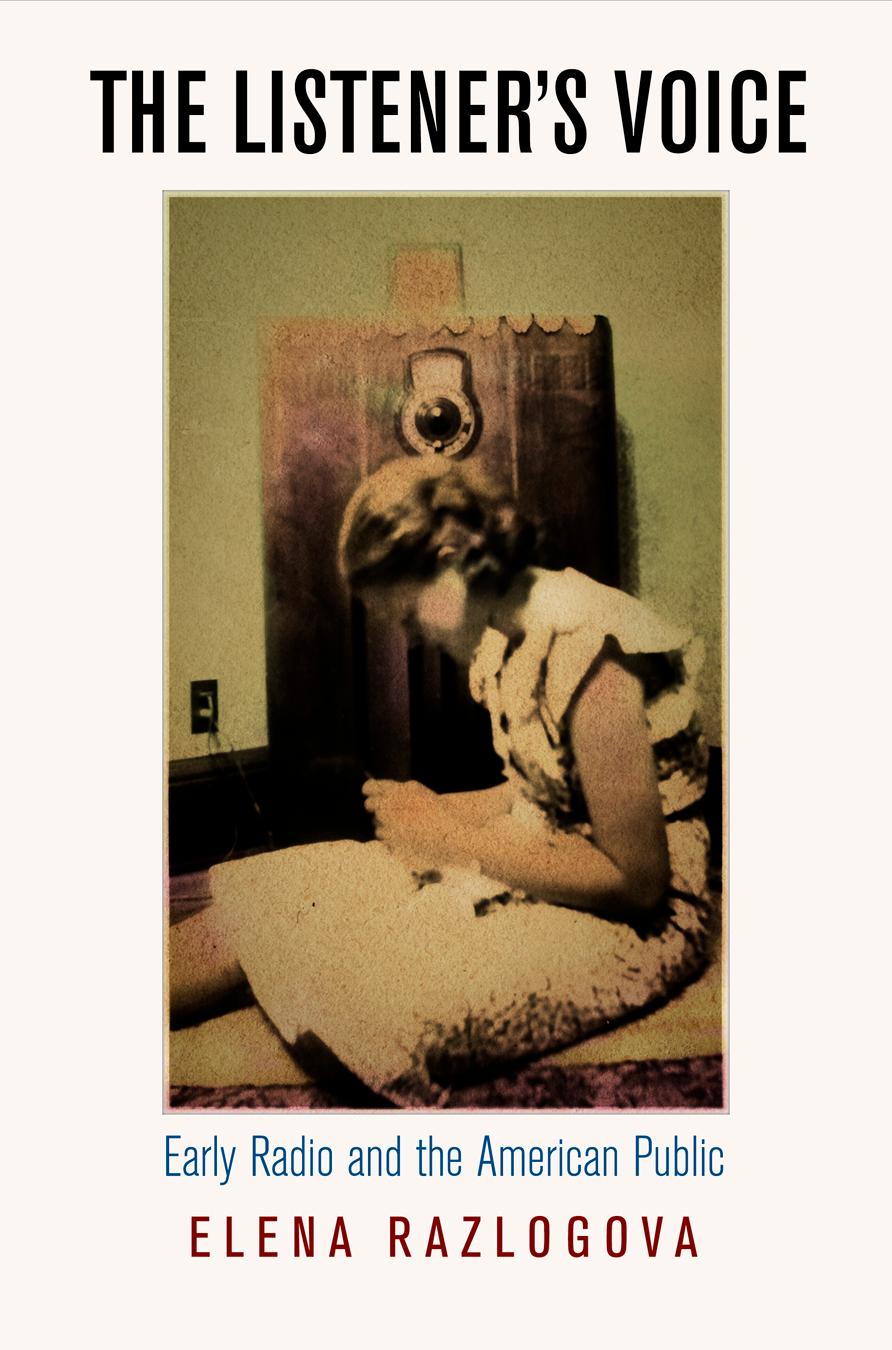
During the Jazz Age and Great Depression, radio broadcasters did not conjure their listening public with a throw of a switch; the public had a hand in its own making. The Listener's Voice describes how a diverse array of Americans—boxing fans, radio amateurs, down-and-out laborers, small-town housewives, black government clerks, and Mexican farmers—participated in the formation of American radio, its genres, and its operations.
Before the advent of sophisticated marketing research, radio producers largely relied on listeners' phone calls, telegrams, and letters to understand their audiences. Mining this rich archive, historian Elena Razlogova meticulously recreates the world of fans who undermined centralized broadcasting at each creative turn in radio history. Radio outlaws, from the earliest squatter stations and radio tube bootleggers to postwar "payola-hungry" rhythm and blues DJs, provided a crucial source of innovation for the medium. Engineers bent patent regulations. Network writers negotiated with devotees. Program managers invited high school students to spin records. Taken together, these and other practices embodied a participatory ethic that listeners articulated when they confronted national corporate networks and the formulaic ratings system that developed.
Using radio as a lens to examine a moral economy that Americans have imagined for their nation, The Listener's Voice demonstrates that tenets of cooperation and reciprocity embedded in today's free software, open access, and filesharing activities apply to earlier instances of cultural production in American history, especially at times when new media have emerged.
Płać wygodnie kartą, Klarną, Apple Pay lub Google Pay. Nie jesteś zadowolony? Zawsze masz 14-dniową gwarancję zwrotu pieniędzy. Więcej przeczytasz w naszych warunkach. Masz pytania? Napisz do nas na hello@memmo.org.
Memmo ułatwia naukę – gdziekolwiek jesteś na świecie. U nas znajdziesz podręczniki i sprytne narzędzia do nauki w jednym miejscu: streszczenia, quizy, podcasty i fiszki. A do tego Ted, Twój kumpel do nauki, który odpowie na wszystko, co Cię nurtuje. Ponad 50 000 studentów już tu się uczy – stworzone, byś uczył się szybciej i mniej stresował.