
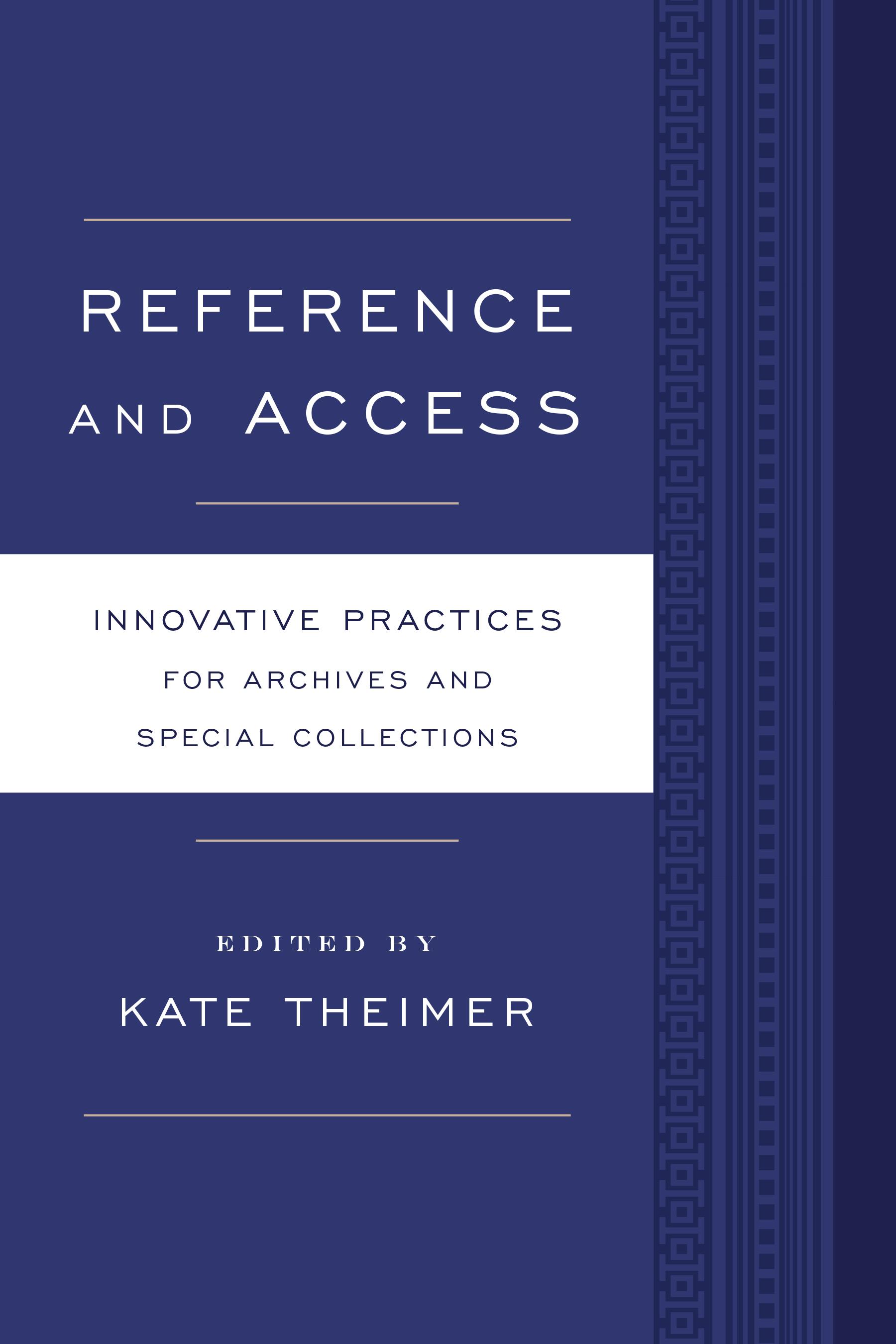
Reference and Access: Innovative Practices for Archives and Special Collections explores how archives of different sizes and types are increasing their effectiveness in serving the public and meeting internal needs. The book features twelve case studies that demonstrate new ways to interact with users to answer their questions, provide access to materials, support patrons in the research room, and manage reference and access processes.
The featured case studies are
Building Bridges: Closing the Divide between Minimally Processed Collections and ResearchersManaging Risk with a Virtual Reading Room: Two Born-Digital Projects Improvements on a Shoestring: Changing Reference Systems and Processes Twenty-First Century Security in a Twentieth-Century Space: Reviewing, Revising and Implementing New Security Practices in the Reading RoomTalking in the Night: Exploring Webchats to Serve New Audiences A Small Shop Meets a Big Challenge: Finding Creative Ways to Assist the Researchers of the Breath of Life Archival Institute for Indigenous Languages The Right Tool at the Right Time: Implementing Responsive Reproduction Policies and ProceduresGoing Mobile: Using iPads to Improve the Reading Room Experience Beyond “Trial by Fire”: Towards A More Active Approach to Training New Reference StaffAccess for All: Making Your Archives Website Accessible for People with DisabilitiesNo Ship of Fools: A Digital Humanities Collaboration to Enhance Access to Special CollectionsWebsites as a Digital Extension of Reference: Creating a Reference and IT Partnership for Web Usability Studies
Each of these case studies deconstructs reference and access services into their essential elements: interacting with people who have questions, providing access to materials that meet researcher needs, assisting researchers as they use materials, and managing the processes needed to support reference and access.
The volume will be useful to those working in archives and special collections as well as other cultural heritage organizations, and provides ideas ranging from the aspirational to the immediately implementable. It also provides students and educators in archives, library, and public history graduate programs a resource for understanding the issues driving change in the field today and the kinds of strategies archivists are using to meet these new challenges.
The featured case studies are
Building Bridges: Closing the Divide between Minimally Processed Collections and ResearchersManaging Risk with a Virtual Reading Room: Two Born-Digital Projects Improvements on a Shoestring: Changing Reference Systems and Processes Twenty-First Century Security in a Twentieth-Century Space: Reviewing, Revising and Implementing New Security Practices in the Reading RoomTalking in the Night: Exploring Webchats to Serve New Audiences A Small Shop Meets a Big Challenge: Finding Creative Ways to Assist the Researchers of the Breath of Life Archival Institute for Indigenous Languages The Right Tool at the Right Time: Implementing Responsive Reproduction Policies and ProceduresGoing Mobile: Using iPads to Improve the Reading Room Experience Beyond “Trial by Fire”: Towards A More Active Approach to Training New Reference StaffAccess for All: Making Your Archives Website Accessible for People with DisabilitiesNo Ship of Fools: A Digital Humanities Collaboration to Enhance Access to Special CollectionsWebsites as a Digital Extension of Reference: Creating a Reference and IT Partnership for Web Usability Studies
Each of these case studies deconstructs reference and access services into their essential elements: interacting with people who have questions, providing access to materials that meet researcher needs, assisting researchers as they use materials, and managing the processes needed to support reference and access.
The volume will be useful to those working in archives and special collections as well as other cultural heritage organizations, and provides ideas ranging from the aspirational to the immediately implementable. It also provides students and educators in archives, library, and public history graduate programs a resource for understanding the issues driving change in the field today and the kinds of strategies archivists are using to meet these new challenges.
Płać wygodnie kartą, Klarną, Apple Pay lub Google Pay. Nie jesteś zadowolony? Zawsze masz 14-dniową gwarancję zwrotu pieniędzy. Więcej przeczytasz w naszych warunkach. Masz pytania? Napisz do nas na hello@memmo.org.
Memmo ułatwia naukę – gdziekolwiek jesteś na świecie. U nas znajdziesz podręczniki i sprytne narzędzia do nauki w jednym miejscu: streszczenia, quizy, podcasty i fiszki. A do tego Ted, Twój kumpel do nauki, który odpowie na wszystko, co Cię nurtuje. Ponad 50 000 studentów już tu się uczy – stworzone, byś uczył się szybciej i mniej stresował.