
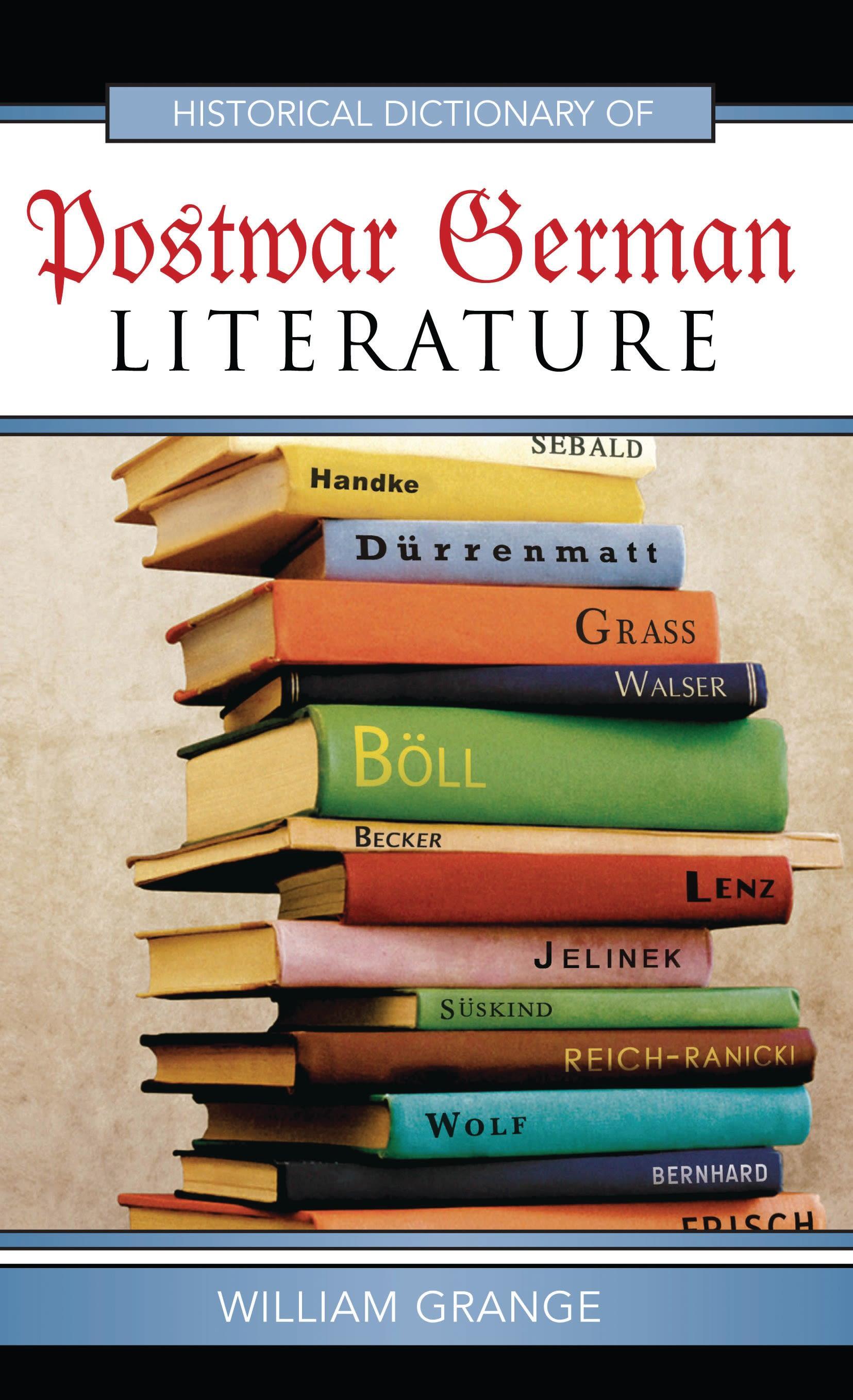
Some authors strongly criticized attempts to rebuild a German literary culture in the aftermath of World War II, while others actively committed themselves to "dealing with the German past." There are writers in Austria and Switzerland that find other contradictions of contemporary life troubling, while some find them funny or even worth celebrating. German postwar literature has, in the minds of some observers, developed a kind of split personality. In view of the traumatic monstrosities of the previous century that development may seem logical to some.
The Historical Dictionary of Postwar German Literature is devoted to modern literature produced in the German language, whether from Germany, Austria, Switzerland or writers using German in other countries. This volume covers an extensive period of time, beginning in 1945 at what was called "zero hour" for German literature and proceeds into the 21st century, concluding in 2008. This is done through a list of acronyms and abbreviations, a chronology, an introductory essay, a bibliography, and hundreds of cross-referenced dictionary entries on writers, such as Nobel Prize-winners Heinrich Böll, Günter Grass, Elias Canetti, Elfriede Jelinek, and W. G. Sebald. There are also entries on individual works, genres, movements, literary styles, and forms.
The Historical Dictionary of Postwar German Literature is devoted to modern literature produced in the German language, whether from Germany, Austria, Switzerland or writers using German in other countries. This volume covers an extensive period of time, beginning in 1945 at what was called "zero hour" for German literature and proceeds into the 21st century, concluding in 2008. This is done through a list of acronyms and abbreviations, a chronology, an introductory essay, a bibliography, and hundreds of cross-referenced dictionary entries on writers, such as Nobel Prize-winners Heinrich Böll, Günter Grass, Elias Canetti, Elfriede Jelinek, and W. G. Sebald. There are also entries on individual works, genres, movements, literary styles, and forms.
Płać wygodnie kartą, Klarną, Apple Pay lub Google Pay. Nie jesteś zadowolony? Zawsze masz 14-dniową gwarancję zwrotu pieniędzy. Więcej przeczytasz w naszych warunkach. Masz pytania? Napisz do nas na hello@memmo.org.
Memmo ułatwia naukę – gdziekolwiek jesteś na świecie. U nas znajdziesz podręczniki i sprytne narzędzia do nauki w jednym miejscu: streszczenia, quizy, podcasty i fiszki. A do tego Ted, Twój kumpel do nauki, który odpowie na wszystko, co Cię nurtuje. Ponad 50 000 studentów już tu się uczy – stworzone, byś uczył się szybciej i mniej stresował.