
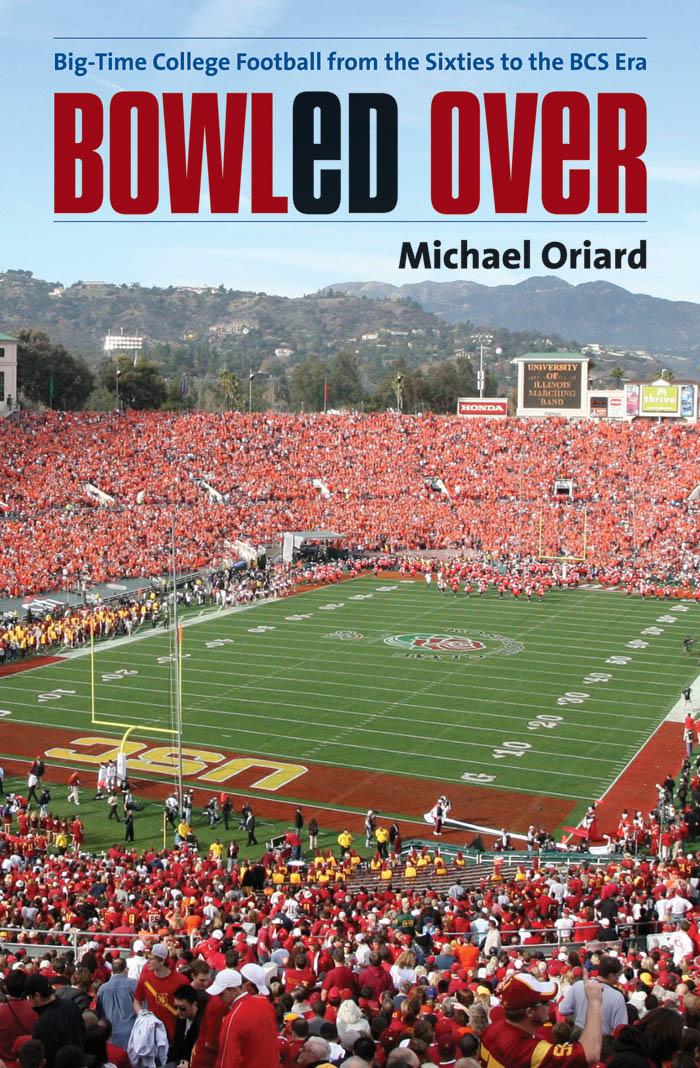
In this compellingly argued and deeply personal book, respected sports historian Michael Oriard — who was himself a former second-team All-American at Notre Dame — explores a wide range of trends that have changed the face of big-time college football and transformed the role of the student-athlete.
Oriard considers such issues as the politicization of football in the 1960s and the implications of the integration of college football. The heart of the book examines a handful of decisions by the NCAA in the early seventies — to make freshmen eligible to play, to lower admission standards, and, most critically, to replace four-year athletic scholarships with one-year renewable scholarships — that helped transform student-athletes into athlete-students and turned the college game into a virtual farm league for professional football.
Oriard then traces the subsequent history of the sport as it has tried to grapple with the fundamental contradiction of college football as both extracurricular activity and multi-billion-dollar mass entertainment. The relentless necessity to pursue revenue, Oriard argues, undermines attempts to maintain academic standards, and it fosters a football culture in which athletes are both excessively entitled and exploited.
As a former college football player, Oriard brings a unique perspective to his topic, and his sympathies are always with the players and for the game. This original and compelling study will interest everyone concerned about the future of college football.
Płać wygodnie kartą, Klarną, Apple Pay lub Google Pay. Nie jesteś zadowolony? Zawsze masz 14-dniową gwarancję zwrotu pieniędzy. Więcej przeczytasz w naszych warunkach. Masz pytania? Napisz do nas na hello@memmo.org.
Memmo ułatwia naukę – gdziekolwiek jesteś na świecie. U nas znajdziesz podręczniki i sprytne narzędzia do nauki w jednym miejscu: streszczenia, quizy, podcasty i fiszki. A do tego Ted, Twój kumpel do nauki, który odpowie na wszystko, co Cię nurtuje. Ponad 50 000 studentów już tu się uczy – stworzone, byś uczył się szybciej i mniej stresował.