
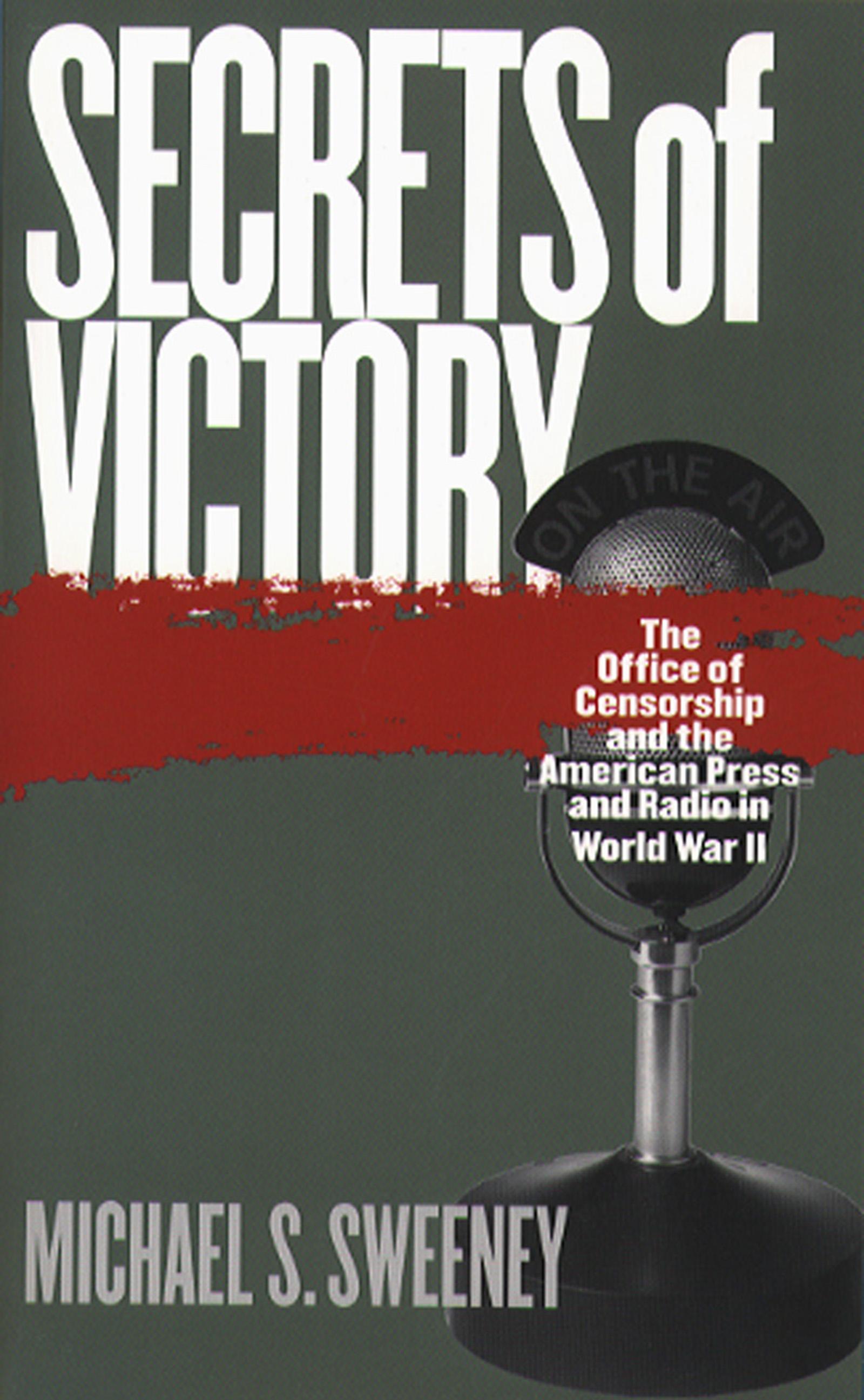
During World War II, the civilian Office of Censorship supervised a huge and surprisingly successful program of news management: the voluntary self-censorship of the American press. In January 1942, censorship codebooks were distributed to all American newspapers, magazines, and radio stations with the request that journalists adhere to the guidelines within. Remarkably, over the course of the war no print journalist, and only one radio journalist, ever deliberately violated the censorship code after having been made aware of it and understanding its intent.
Secrets of Victory examines the World War II censorship program and analyzes the reasons for its success. Using archival sources, including the Office of Censorship’s own records, Michael Sweeney traces the development of news media censorship from a pressing necessity after the attack on Pearl Harbor to the centralized yet efficient bureaucracy that persuaded thousands of journalists to censor themselves for the sake of national security. At the heart of this often dramatic story is the Office of Censorship’s director Byron Price. A former reporter himself, Price relied on cooperation with — rather than coercion of — American journalists in his fight to safeguard the nation’s secrets.
Płać wygodnie kartą, Klarną, Apple Pay lub Google Pay. Nie jesteś zadowolony? Zawsze masz 14-dniową gwarancję zwrotu pieniędzy. Więcej przeczytasz w naszych warunkach. Masz pytania? Napisz do nas na hello@memmo.org.
Memmo ułatwia naukę – gdziekolwiek jesteś na świecie. U nas znajdziesz podręczniki i sprytne narzędzia do nauki w jednym miejscu: streszczenia, quizy, podcasty i fiszki. A do tego Ted, Twój kumpel do nauki, który odpowie na wszystko, co Cię nurtuje. Ponad 50 000 studentów już tu się uczy – stworzone, byś uczył się szybciej i mniej stresował.