
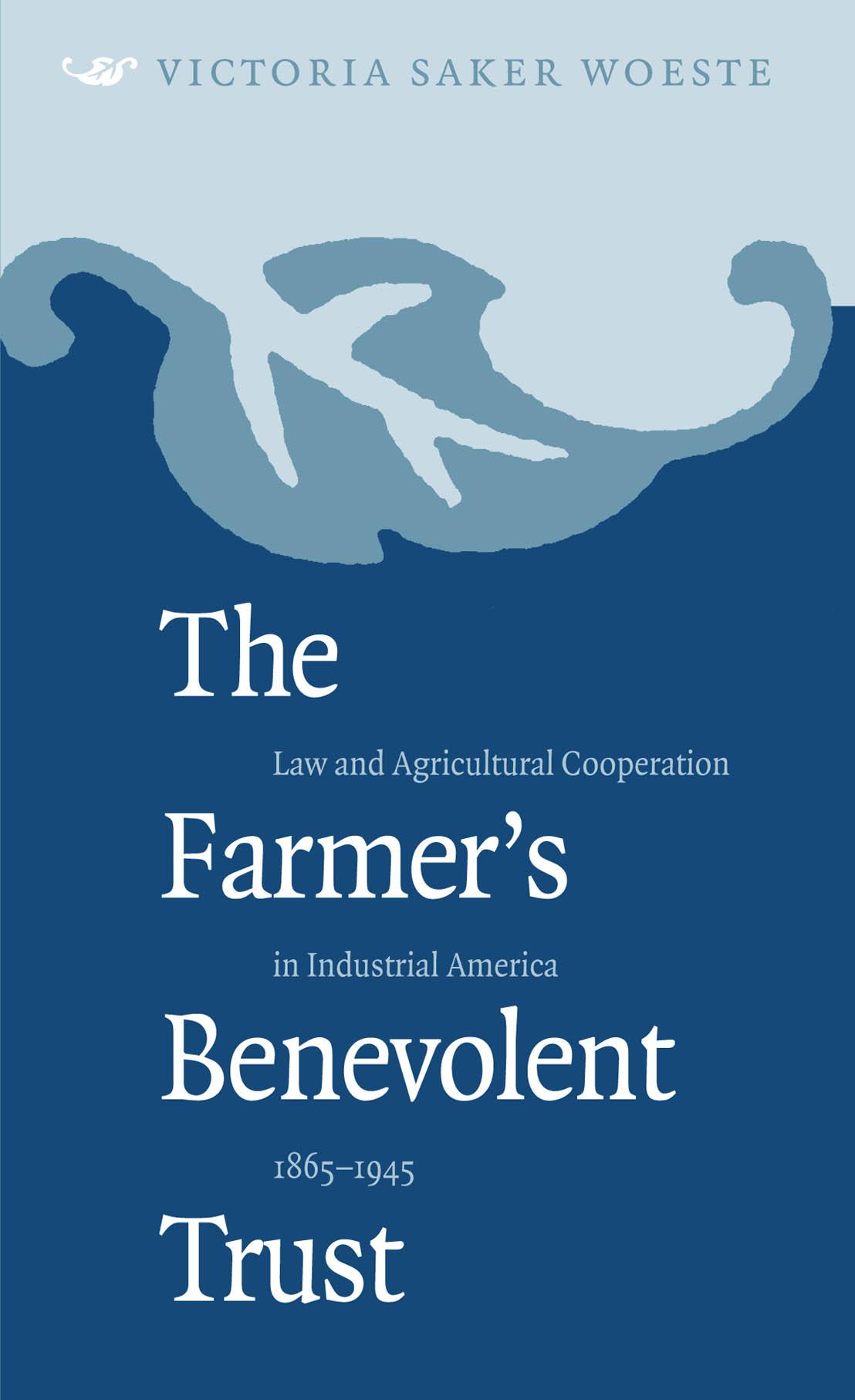
Americans have always regarded farming as a special calling, one
imbued with the Jeffersonian values of individualism and self-
sufficiency. As Victoria Saker Woeste demonstrates, farming’s
cultural image continued to shape Americans' expectations of
rural society long after industrialization radically transformed
the business of agriculture. Even as farmers enthusiastically
embraced cooperative marketing to create unprecedented industry-
wide monopolies and control prices, they claimed they were simply
preserving their traditional place in society. In fact, the new
legal form of cooperation far outpaced judicial and legislative
developments at both the state and federal levels, resulting in a
legal and political struggle to redefine the place of agriculture
in the industrial market.
Woeste shows that farmers were adept at both borrowing such
legal forms as the corporate trust for their own purposes and
obtaining legislative recognition of the new cooperative style.
In the process, however, the first rule of capitalism — every
person for him- or herself — trumped the traditional principle of
cooperation. After 1922, state and federal law wholly endorsed
cooperation’s new form. Indeed, says Woeste, because of its
corporate roots, this model of cooperation fit so neatly with the
regulatory paradigms of the first half of the twentieth century
that it became an essential policy of the modern administrative
state.
imbued with the Jeffersonian values of individualism and self-
sufficiency. As Victoria Saker Woeste demonstrates, farming’s
cultural image continued to shape Americans' expectations of
rural society long after industrialization radically transformed
the business of agriculture. Even as farmers enthusiastically
embraced cooperative marketing to create unprecedented industry-
wide monopolies and control prices, they claimed they were simply
preserving their traditional place in society. In fact, the new
legal form of cooperation far outpaced judicial and legislative
developments at both the state and federal levels, resulting in a
legal and political struggle to redefine the place of agriculture
in the industrial market.
Woeste shows that farmers were adept at both borrowing such
legal forms as the corporate trust for their own purposes and
obtaining legislative recognition of the new cooperative style.
In the process, however, the first rule of capitalism — every
person for him- or herself — trumped the traditional principle of
cooperation. After 1922, state and federal law wholly endorsed
cooperation’s new form. Indeed, says Woeste, because of its
corporate roots, this model of cooperation fit so neatly with the
regulatory paradigms of the first half of the twentieth century
that it became an essential policy of the modern administrative
state.
Płać wygodnie kartą, Klarną, Apple Pay lub Google Pay. Nie jesteś zadowolony? Zawsze masz 14-dniową gwarancję zwrotu pieniędzy. Więcej przeczytasz w naszych warunkach. Masz pytania? Napisz do nas na hello@memmo.org.
Memmo ułatwia naukę – gdziekolwiek jesteś na świecie. U nas znajdziesz podręczniki i sprytne narzędzia do nauki w jednym miejscu: streszczenia, quizy, podcasty i fiszki. A do tego Ted, Twój kumpel do nauki, który odpowie na wszystko, co Cię nurtuje. Ponad 50 000 studentów już tu się uczy – stworzone, byś uczył się szybciej i mniej stresował.
Może Ci się spodobać
Kup książkę0