
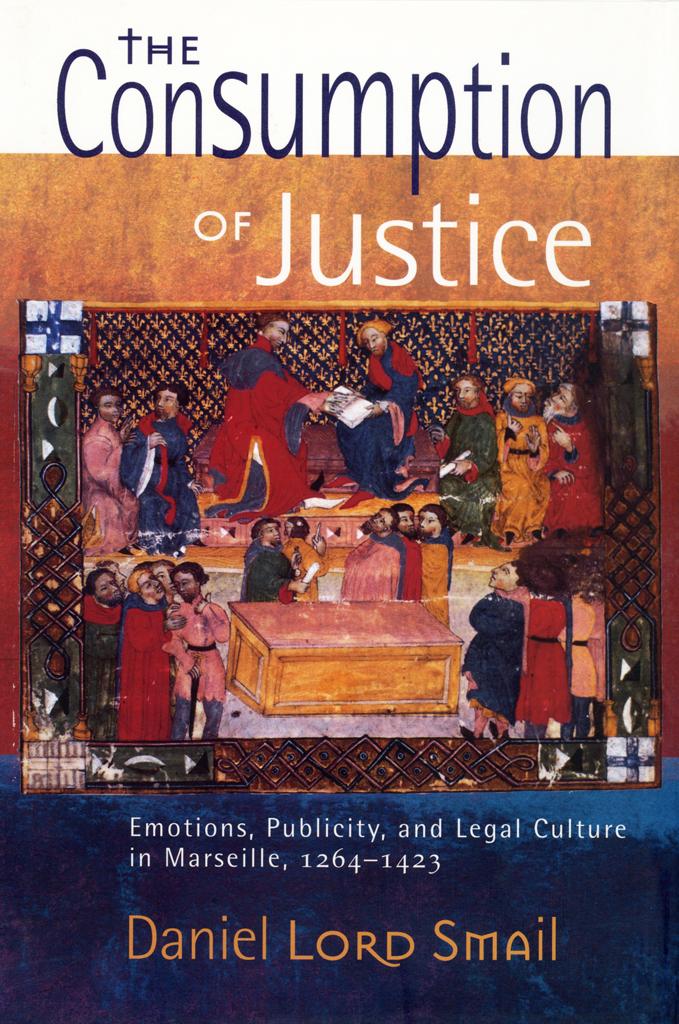
In the thirteenth and fourteenth centuries, the ideas and practices of justice in Europe underwent significant change as procedures were transformed and criminal and civil caseloads grew apace. Drawing on the rich judicial records of Marseille from the years 1264 to 1423, especially records of civil litigation, this book approaches the courts of law from the perspective of the users of the courts (the consumers of justice) and explains why men and women chose to invest resources in the law.
Smail shows that the courts were quickly adopted as a public stage on which litigants could take revenge on their enemies. Even as the new legal system served the interest of royal or communal authority, it also provided the consumers of justice with a way to broadcast their hatreds and social sanctions to a wider audience and negotiate their own community standing in the process. The emotions that had driven bloodfeuds and other forms of customary vengeance thus never went away, and instead were fully incorporated into the new procedures.
Płać wygodnie kartą, Klarną, Apple Pay lub Google Pay. Nie jesteś zadowolony? Zawsze masz 14-dniową gwarancję zwrotu pieniędzy. Więcej przeczytasz w naszych warunkach. Masz pytania? Napisz do nas na hello@memmo.org.
Memmo ułatwia naukę – gdziekolwiek jesteś na świecie. U nas znajdziesz podręczniki i sprytne narzędzia do nauki w jednym miejscu: streszczenia, quizy, podcasty i fiszki. A do tego Ted, Twój kumpel do nauki, który odpowie na wszystko, co Cię nurtuje. Ponad 50 000 studentów już tu się uczy – stworzone, byś uczył się szybciej i mniej stresował.