
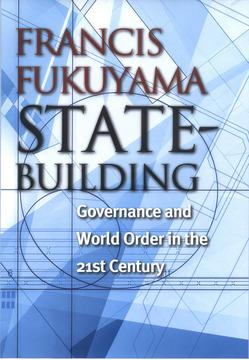
Francis Fukuyama famously predicted "the end of history" with the ascendancy of liberal democracy and global capitalism. The topic of his latest book is, therefore, surprising: the building of new nation-states. The end of history was never an automatic procedure, Fukuyama argues, and the well-governed polity was always its necessary precondition. "Weak or failed states are the source of many of the world's most serious problems," he believes. He traces what we know—and more often don't know—about how to transfer functioning public institutions to developing countries in ways that will leave something of permanent benefit to the citizens of the countries concerned. These are important lessons, especially as the United States wrestles with its responsibilities in Afghanistan, Iraq, and beyond.
Fukuyama begins State-Building with an account of the broad importance of "stateness." He rejects the notion that there can be a science of public administration, and discusses the causes of contemporary state weakness. He ends the book with a discussion of the consequences of weak states for international order, and the grounds on which the international community may legitimately intervene to prop them up.
Płać wygodnie kartą, Klarną, Apple Pay lub Google Pay. Nie jesteś zadowolony? Zawsze masz 14-dniową gwarancję zwrotu pieniędzy. Więcej przeczytasz w naszych warunkach. Masz pytania? Napisz do nas na hello@memmo.org.
Memmo ułatwia naukę – gdziekolwiek jesteś na świecie. U nas znajdziesz podręczniki i sprytne narzędzia do nauki w jednym miejscu: streszczenia, quizy, podcasty i fiszki. A do tego Ted, Twój kumpel do nauki, który odpowie na wszystko, co Cię nurtuje. Ponad 50 000 studentów już tu się uczy – stworzone, byś uczył się szybciej i mniej stresował.