
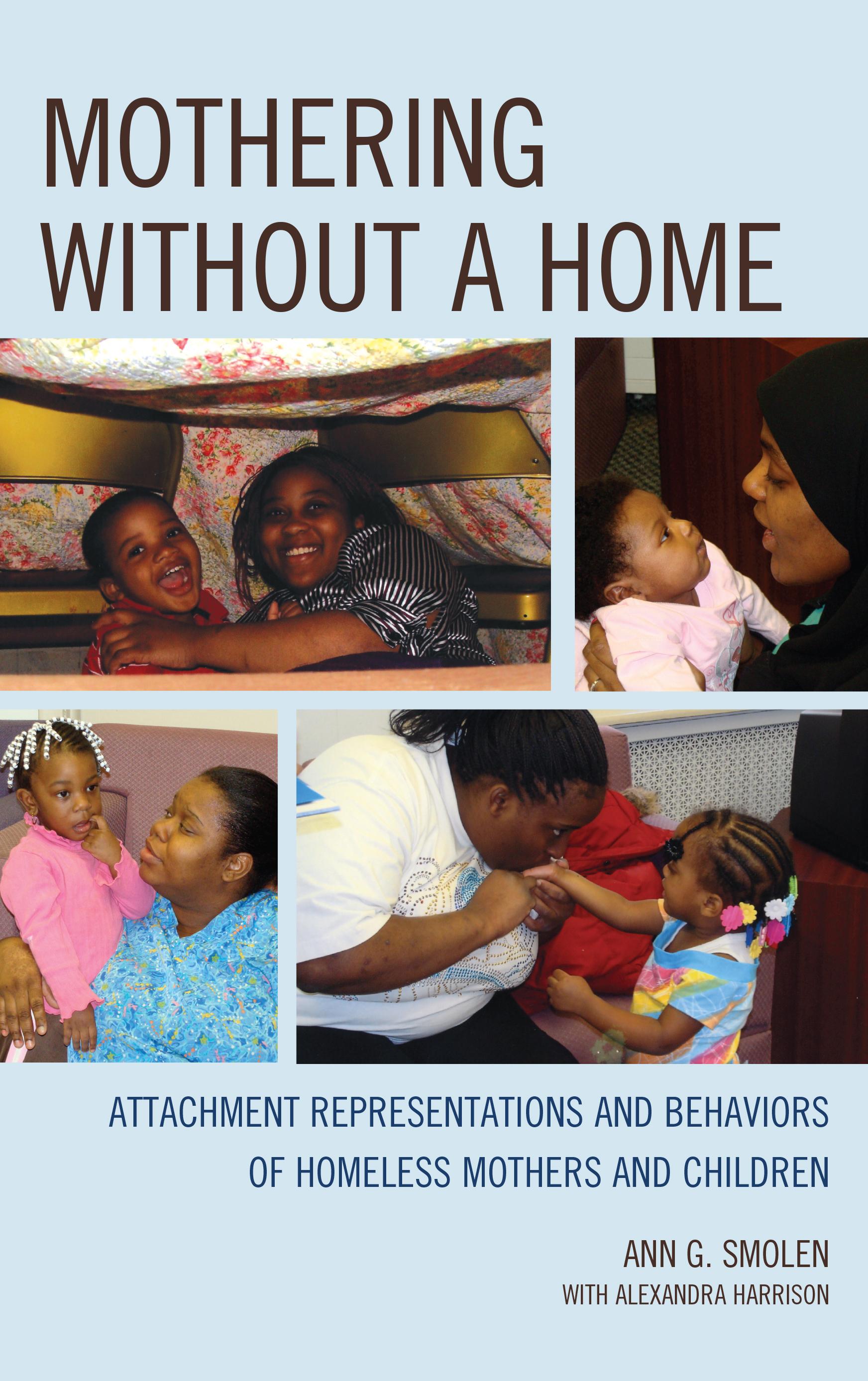
Homeless women and their children who reside in a transitional housing facility or shelter have experienced multiple traumas and disruptions in their earliest attachments. These multiple, chronic traumas often result in disorganized attachment disorders, which, in turn, affect all future development. Although there are a dearth of programs and interventions that work with disorganized attachment disorder within the homeless population, there are few studies that explore the difficulties that homeless mothers experience in forming positive attachments with their children.
Mothering without a Home: Attachment Representations and Behaviors of Homeless Mothers and Children explores the attachment style of homeless mothers and its effect on the resulting attachment style of their children. Ann Smolen utilizes psychoanalytically informed interventions with the goal of aiding these women in developing a deeper capacity to understand and be attuned to their children’s emotional needs.
Mothering without a Home: Attachment Representations and Behaviors of Homeless Mothers and Children explores the attachment style of homeless mothers and its effect on the resulting attachment style of their children. Ann Smolen utilizes psychoanalytically informed interventions with the goal of aiding these women in developing a deeper capacity to understand and be attuned to their children’s emotional needs.
Płać wygodnie kartą, Klarną, Apple Pay lub Google Pay. Nie jesteś zadowolony? Zawsze masz 14-dniową gwarancję zwrotu pieniędzy. Więcej przeczytasz w naszych warunkach. Masz pytania? Napisz do nas na hello@memmo.org.
Memmo ułatwia naukę – gdziekolwiek jesteś na świecie. U nas znajdziesz podręczniki i sprytne narzędzia do nauki w jednym miejscu: streszczenia, quizy, podcasty i fiszki. A do tego Ted, Twój kumpel do nauki, który odpowie na wszystko, co Cię nurtuje. Ponad 50 000 studentów już tu się uczy – stworzone, byś uczył się szybciej i mniej stresował.