
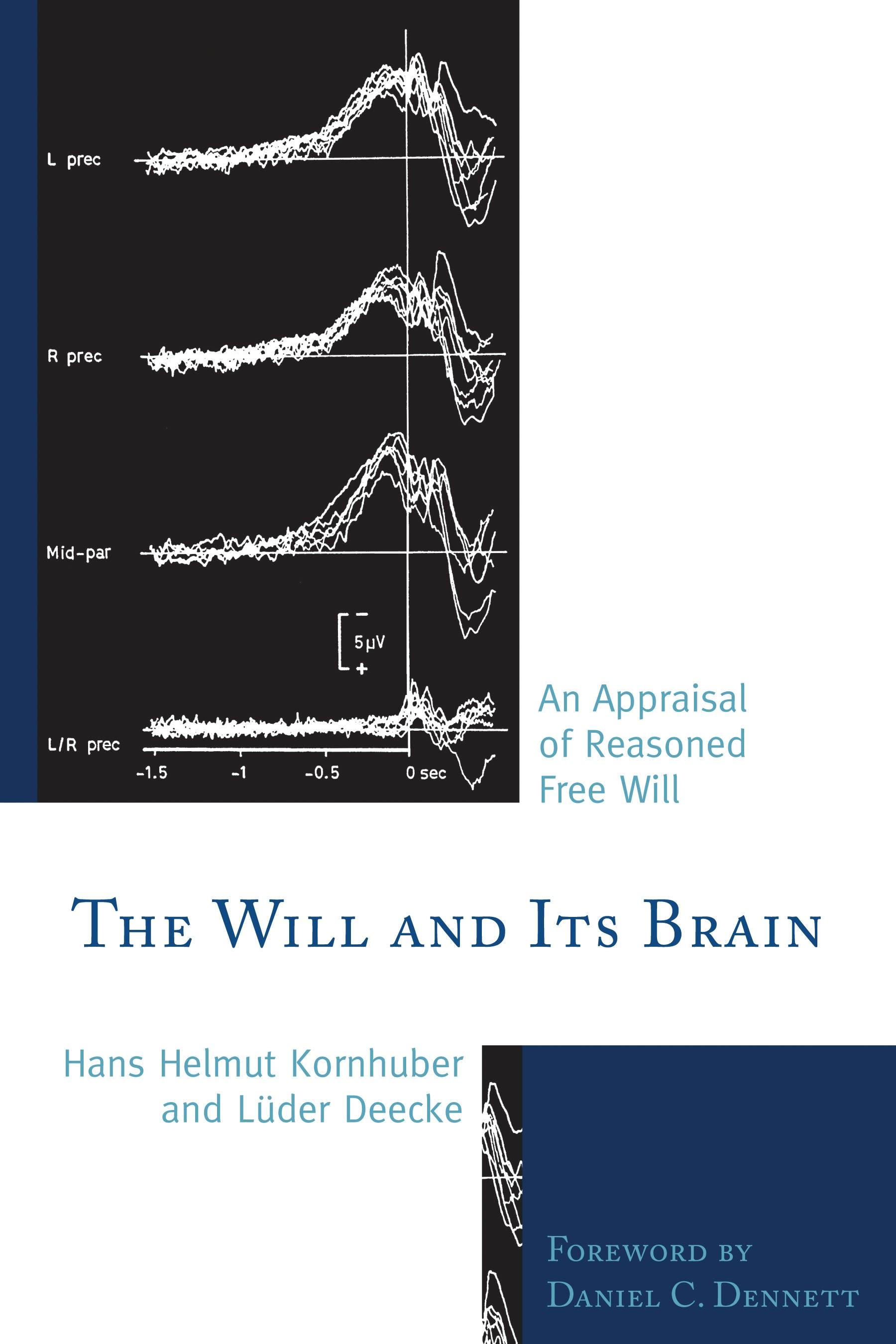
In 1964–1965, Hans Helmut Kornhuber and Lüder Deecke achieved a scientific breakthrough with the discovery of the Bereitschaftspotential (BP), or readiness potential. In The Will and its Brain, Kornhuber and Deecke present evidence that proves we can record activity from the human brain occurring prior to our volitional movements or actions. Such preparatory activity is generated by specific brain regions, particularly by the supplementary motor area (SMA) of the frontal lobe, which lies on the inner surface of the brain between the hemispheres. The primary (precentral) motor cortex (MI) later becomes activated in preparing for action. Consequently, the authors discriminate between two components of the preparatory activity of the Bereitschaftspotential: an early SMA-generated BP1 and a late MI-derived BP2. Between BP1 and BP2, the intentional activity runs over the so-called motor loop via the basal ganglia. Kornhuber and Deecke discuss these and other brain processing systems while focusing on the concept of free will. They claim that we, indeed, have free will. It may not be absolutely free, but free in terms of degrees. We can take efforts to increase our degrees of freedom through self-improvement, but we can also lose degrees of freedom through self-mismanagement.
Płać wygodnie kartą, Klarną, Apple Pay lub Google Pay. Nie jesteś zadowolony? Zawsze masz 14-dniową gwarancję zwrotu pieniędzy. Więcej przeczytasz w naszych warunkach. Masz pytania? Napisz do nas na hello@memmo.org.
Memmo ułatwia naukę – gdziekolwiek jesteś na świecie. U nas znajdziesz podręczniki i sprytne narzędzia do nauki w jednym miejscu: streszczenia, quizy, podcasty i fiszki. A do tego Ted, Twój kumpel do nauki, który odpowie na wszystko, co Cię nurtuje. Ponad 50 000 studentów już tu się uczy – stworzone, byś uczył się szybciej i mniej stresował.