
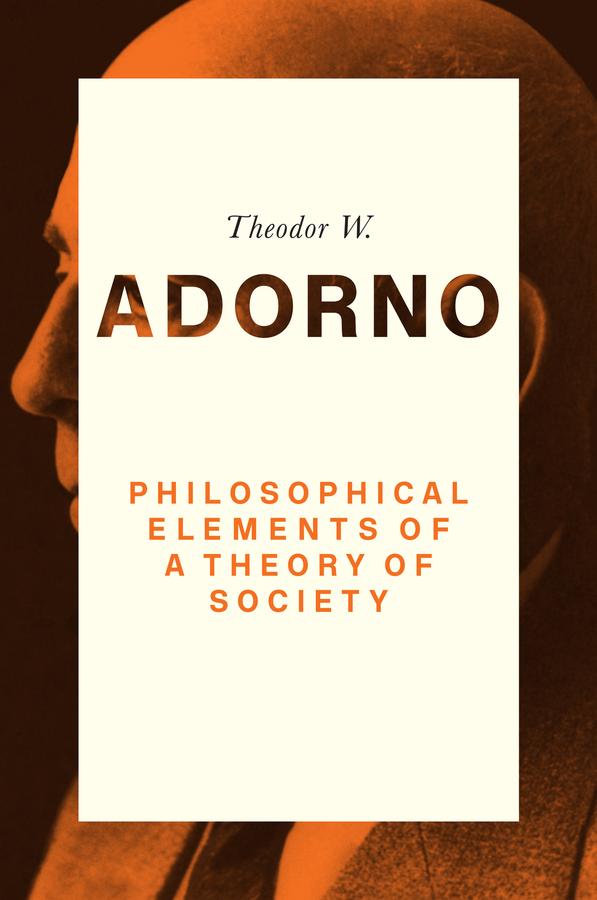
As an exile in America during the War, Theodor Adorno grew acquainted with the fundamentals of empirical social research, something which would shape the work he undertook in the early 1950s as co-director of the Frankfurt Institute for Social Research. Yet he also became increasingly aware of the ‘fetishism of method’ in sociology, and saw the serious limitations of theoretical work based solely on empirical findings.
In this lecture course given in 1964, Adorno develops a critique of both sociology and philosophy, emphasizing that theoretical work requires a specific mediation between the two disciplines. Adorno advocates a philosophical approach to social theory that challenges the drive towards uniformity and a lack of ambiguity, highlighting instead the fruitfulness of experience, in all its messy complexity, for critical social analysis. At the same time, he shows how philosophy must also realise that it requires sociology if it is to avoid falling for the old idealistic illusion that the totality of real conditions can be grasped through thought alone.
Masterfully bringing together philosophical and empirical approaches to an understanding of society, these lectures from one of the most important social thinkers of the 20th century will be of great interest to students and scholars in philosophy, sociology and the social sciences generally.
In this lecture course given in 1964, Adorno develops a critique of both sociology and philosophy, emphasizing that theoretical work requires a specific mediation between the two disciplines. Adorno advocates a philosophical approach to social theory that challenges the drive towards uniformity and a lack of ambiguity, highlighting instead the fruitfulness of experience, in all its messy complexity, for critical social analysis. At the same time, he shows how philosophy must also realise that it requires sociology if it is to avoid falling for the old idealistic illusion that the totality of real conditions can be grasped through thought alone.
Masterfully bringing together philosophical and empirical approaches to an understanding of society, these lectures from one of the most important social thinkers of the 20th century will be of great interest to students and scholars in philosophy, sociology and the social sciences generally.
Płać wygodnie kartą, Klarną, Apple Pay lub Google Pay. Nie jesteś zadowolony? Zawsze masz 14-dniową gwarancję zwrotu pieniędzy. Więcej przeczytasz w naszych warunkach. Masz pytania? Napisz do nas na hello@memmo.org.
Memmo ułatwia naukę – gdziekolwiek jesteś na świecie. U nas znajdziesz podręczniki i sprytne narzędzia do nauki w jednym miejscu: streszczenia, quizy, podcasty i fiszki. A do tego Ted, Twój kumpel do nauki, który odpowie na wszystko, co Cię nurtuje. Ponad 50 000 studentów już tu się uczy – stworzone, byś uczył się szybciej i mniej stresował.
Może Ci się spodobać
Kup książkę0