
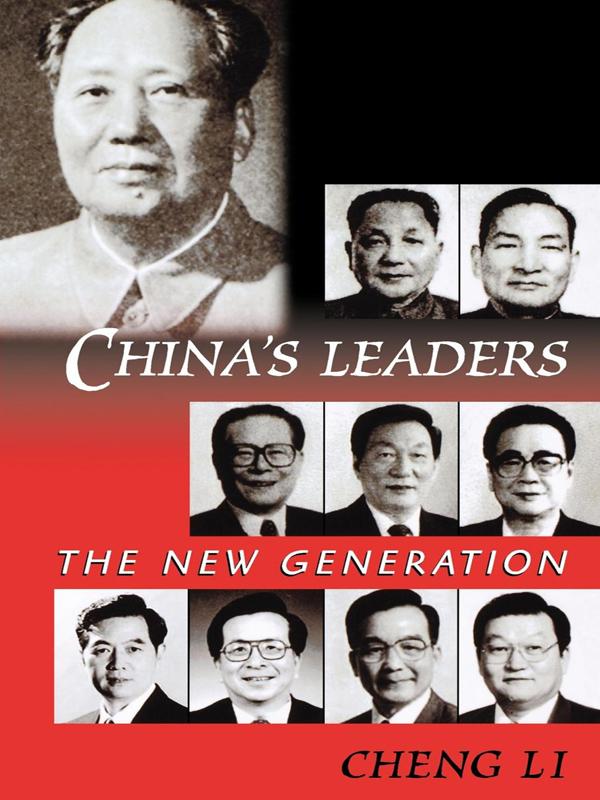
Who will govern China at the dawn of the twenty-first century? What are the social backgrounds and career paths of the new generation of leaders? How do they differ from their predecessors in their responses to perplexing economic and sociopolitical challenges? Drawing upon a wealth of both quantitative and qualitative data on the so-called fourth generation of leaders-those who were young during the Cultural Revolution-Cheng Li sheds valuable light on these key questions. He shows that this group is more diversified than previous generations of CCP leaders in formative experiences, political solidarity, ideological conviction, and occupational background. The author explores the contradictions between political leaders and non-elite peers in the same generation-those approaching middle age who were barred from education during the Mao era and now often are unemployed and disenchanted with the government. The book concludes with the intriguing notion that this generation of leaders may have a better understanding of its peers' needs and concerns and therefore may make the regime more accountable to its people, thus contributing to, rather than opposing, democratic development.
Płać wygodnie kartą, Klarną, Apple Pay lub Google Pay. Nie jesteś zadowolony? Zawsze masz 14-dniową gwarancję zwrotu pieniędzy. Więcej przeczytasz w naszych warunkach. Masz pytania? Napisz do nas na hello@memmo.org.
Memmo ułatwia naukę – gdziekolwiek jesteś na świecie. U nas znajdziesz podręczniki i sprytne narzędzia do nauki w jednym miejscu: streszczenia, quizy, podcasty i fiszki. A do tego Ted, Twój kumpel do nauki, który odpowie na wszystko, co Cię nurtuje. Ponad 50 000 studentów już tu się uczy – stworzone, byś uczył się szybciej i mniej stresował.