
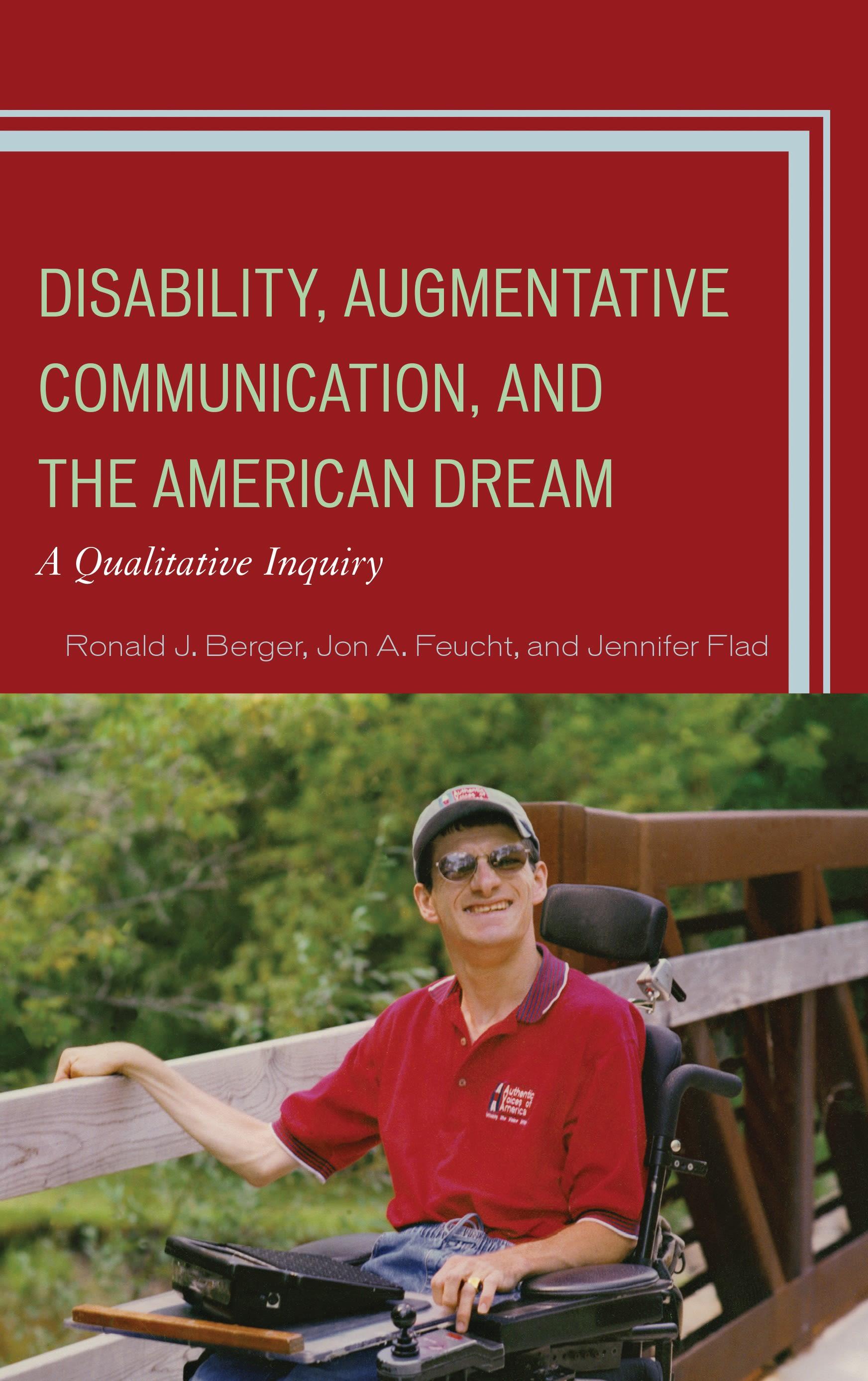
Disability, Augmentative Communication, and the American Dream is a collaborative effort to tell the life story of Jon A. Feucht, a man who was born with a form of cerebral palsy that left him reliant on a wheelchair for mobility, with limited use of his arms and an inability to speak without an assistive communication device. It is a story about finding one’s voice, about defying low expectations, about fulfilling one’s dreams, and about making a difference in the world.
Sociologist C. Wright Mills famously called for a “sociological imagination” that grapples with the intersection of biography and history in society and the ways in which personal troubles are related to public issues. Disability, Augmentative Communication, and the American Dream heeds this call through a qualitative “mixed–methods” study that situates Feucht’s life in broader social context, understanding disability not just as an individual experience but also as a social phenomenon. In the tradition of disability studies, it also illuminates an experience of disability that avoids reading it as tragic or pitiable.
Disability, Augmentative Communication, and the American Dream is intended as an analytical and empirical contribution to both disability studies and qualitative sociology, to be read by social science scholars and students taking courses in disability studies and qualitative research, as well as by professionals working in the fields of special education and speech pathology. Written in an accessible style, the book will also be of interest to lay readers who want to learn more about disability issues and the disability experience.
Sociologist C. Wright Mills famously called for a “sociological imagination” that grapples with the intersection of biography and history in society and the ways in which personal troubles are related to public issues. Disability, Augmentative Communication, and the American Dream heeds this call through a qualitative “mixed–methods” study that situates Feucht’s life in broader social context, understanding disability not just as an individual experience but also as a social phenomenon. In the tradition of disability studies, it also illuminates an experience of disability that avoids reading it as tragic or pitiable.
Disability, Augmentative Communication, and the American Dream is intended as an analytical and empirical contribution to both disability studies and qualitative sociology, to be read by social science scholars and students taking courses in disability studies and qualitative research, as well as by professionals working in the fields of special education and speech pathology. Written in an accessible style, the book will also be of interest to lay readers who want to learn more about disability issues and the disability experience.
Płać wygodnie kartą, Klarną, Apple Pay lub Google Pay. Nie jesteś zadowolony? Zawsze masz 14-dniową gwarancję zwrotu pieniędzy. Więcej przeczytasz w naszych warunkach. Masz pytania? Napisz do nas na hello@memmo.org.
Memmo ułatwia naukę – gdziekolwiek jesteś na świecie. U nas znajdziesz podręczniki i sprytne narzędzia do nauki w jednym miejscu: streszczenia, quizy, podcasty i fiszki. A do tego Ted, Twój kumpel do nauki, który odpowie na wszystko, co Cię nurtuje. Ponad 50 000 studentów już tu się uczy – stworzone, byś uczył się szybciej i mniej stresował.