
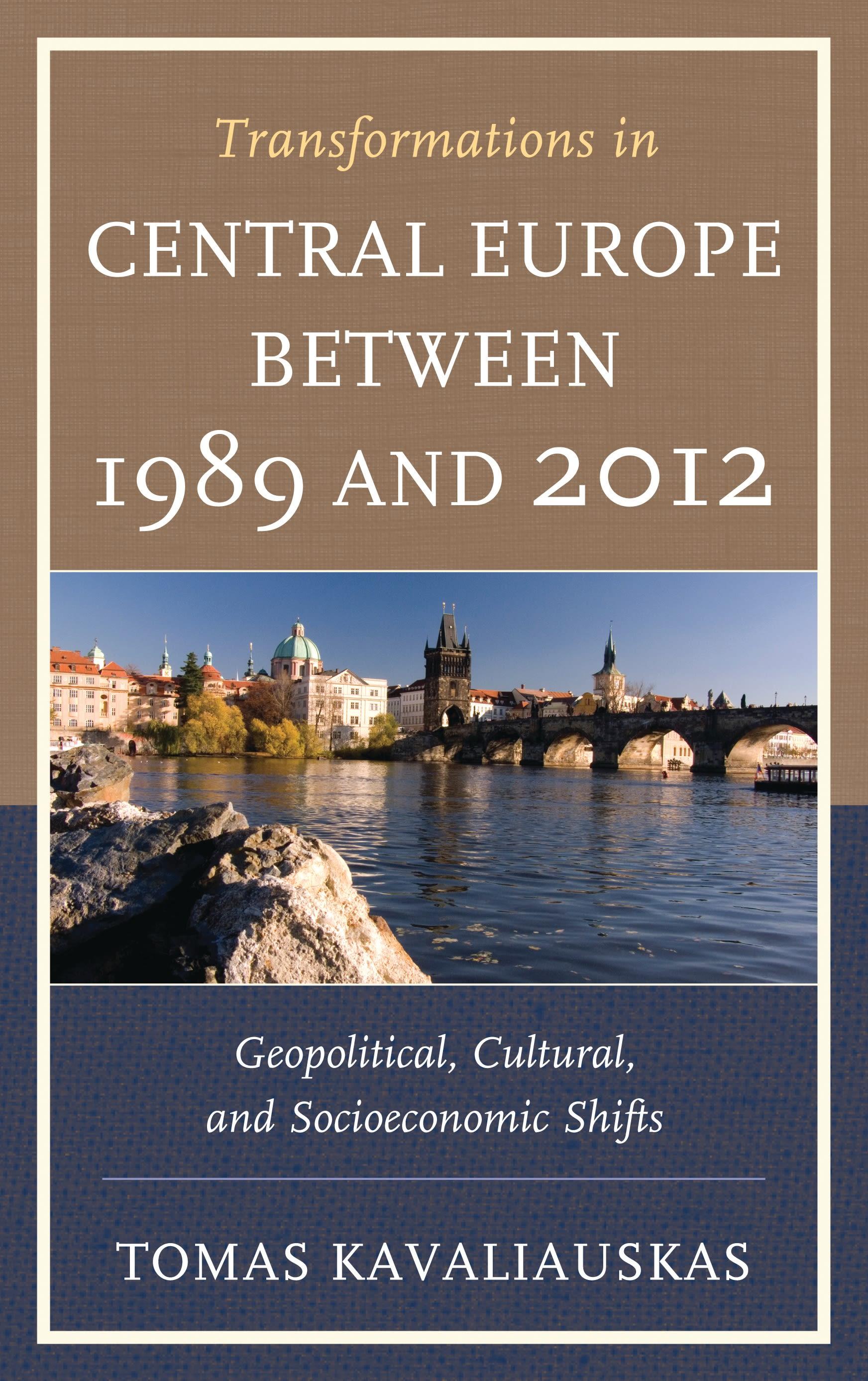
Transformations in Central Europe between 1989 and 2012: Geopolitical, Cultural, and Socioeconomic Shifts by Tomas Kavaliauskas, is an in-depth study of the transformations in Central Europe in the years since the fall of Communism. Using a comparative analysis of geopolitical, ethical, cultural, and socioeconomic shifts, this essential text investigates postcommunist countries including Estonia, Latvia, Lithuania, Poland, the Czech Republic, Slovakia, Hungary, Romania, Bulgaria, and Slovenia.
Next to transitological interpretations, this study ventures upon negative and positive freedom (Isaiah Berlin) in Central Europe after two decades of post-communist transition. Kavaliauskas questions the meaning of completeness of postcommunist transition, both geopolitical and socioeconomic, when there are many transformations that do not necessarily mean unequivocal progress. The author also analyses why Central Europe in 1989, armed with civil disobedience, could not maintain its moral politics. But the book touches sensitive issues of memory as well: an examination of May 9th is provided from the Russian and the Baltic perspectives, revealing two opposing world views regarding this date of liberation or occupation. Finally, Kavaliauskas analyzes the tragedy at Smolensk airport, which became an inseparable part of Central European identity. Transformations in Central Europe between 1989 and 2012 is an essential contribution to the literature on Central Europe and the lasting effects of Communism and its aftermath.
Next to transitological interpretations, this study ventures upon negative and positive freedom (Isaiah Berlin) in Central Europe after two decades of post-communist transition. Kavaliauskas questions the meaning of completeness of postcommunist transition, both geopolitical and socioeconomic, when there are many transformations that do not necessarily mean unequivocal progress. The author also analyses why Central Europe in 1989, armed with civil disobedience, could not maintain its moral politics. But the book touches sensitive issues of memory as well: an examination of May 9th is provided from the Russian and the Baltic perspectives, revealing two opposing world views regarding this date of liberation or occupation. Finally, Kavaliauskas analyzes the tragedy at Smolensk airport, which became an inseparable part of Central European identity. Transformations in Central Europe between 1989 and 2012 is an essential contribution to the literature on Central Europe and the lasting effects of Communism and its aftermath.
Płać wygodnie kartą, Klarną, Apple Pay lub Google Pay. Nie jesteś zadowolony? Zawsze masz 14-dniową gwarancję zwrotu pieniędzy. Więcej przeczytasz w naszych warunkach. Masz pytania? Napisz do nas na hello@memmo.org.
Memmo ułatwia naukę – gdziekolwiek jesteś na świecie. U nas znajdziesz podręczniki i sprytne narzędzia do nauki w jednym miejscu: streszczenia, quizy, podcasty i fiszki. A do tego Ted, Twój kumpel do nauki, który odpowie na wszystko, co Cię nurtuje. Ponad 50 000 studentów już tu się uczy – stworzone, byś uczył się szybciej i mniej stresował.