
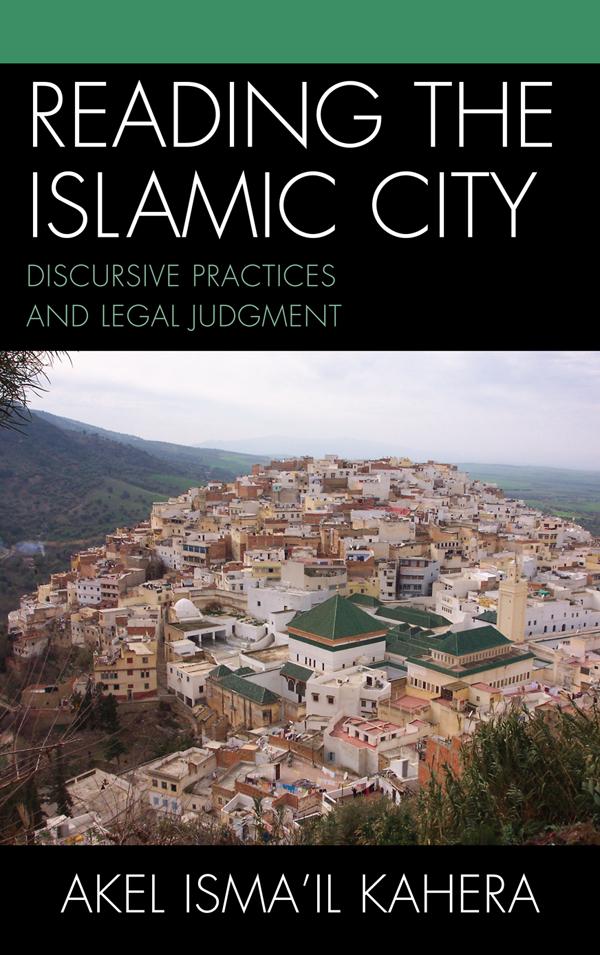
Reading the Islamic City offers insights into the implications the practices of the Maliki school of Islamic law have for the inhabitants of the Islamic city, the madinah. The problematic term madinah fundamentally indicates a phenomenon of building, dwelling, and urban settlement patterns that evolved after the 7th century CE in the Maghrib (North Africa) and al-Andalusia (Spain). Madinah involves multiple contexts that have socio-religious functions and symbolic connotations related to the faith and practice of Islam, and can be viewed in terms of a number of critiques such as everyday lives, boundaries, utopias, and dystopias. The book considers Foucault’s power/knowledge matrix as it applies to an erudite cadre of scholars and legal judgments in the realm of architecture and urbanism. It acknowledges the specificity of power/knowledge insofar as it provides a dominant framework to tackle property rights, custom, noise, privacy, and a host of other subjects. Scholars of urban studies, religion, history, and geography will greatly benefit from this vivid analysis of the relevance of the juridico-discursive practice of Maliki Law in a set of productive or formative discourses in the Islamic city.
Płać wygodnie kartą, Klarną, Apple Pay lub Google Pay. Nie jesteś zadowolony? Zawsze masz 14-dniową gwarancję zwrotu pieniędzy. Więcej przeczytasz w naszych warunkach. Masz pytania? Napisz do nas na hello@memmo.org.
Memmo ułatwia naukę – gdziekolwiek jesteś na świecie. U nas znajdziesz podręczniki i sprytne narzędzia do nauki w jednym miejscu: streszczenia, quizy, podcasty i fiszki. A do tego Ted, Twój kumpel do nauki, który odpowie na wszystko, co Cię nurtuje. Ponad 50 000 studentów już tu się uczy – stworzone, byś uczył się szybciej i mniej stresował.