
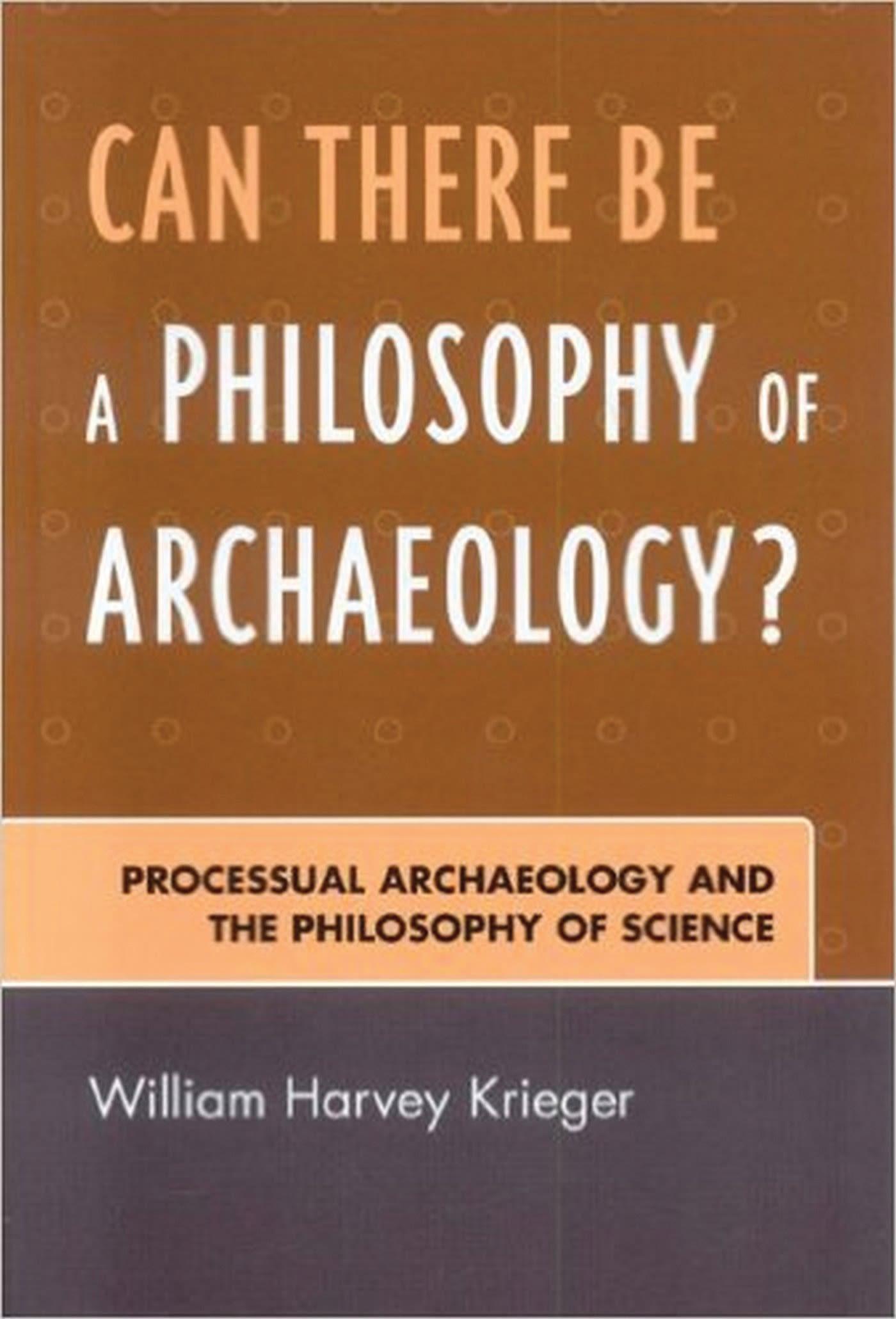
Can There Be a Philosophy of Archaeology? provides a historical and philosophical analysis of the rise and fall of the philosophical movement know as logical positivism, focusing on the effect of that movement on the budding science of archaeology. Significant problems resulted from the grafting of logical positivism onto what became known as processual, or new archaeology, and as a result of this failure, archaeologists distanced themselves from philosophers of science, believing that archaeology would be best served by a return to the dirt. By means of a thorough analysis of the real reasons for failures of logical empiricism and the new archaeology, as well as a series of archaeological case studies, Krieger shows the need for the resumption of dialogue and collaboration between the two groups. In an age where philosophers of science are just beginning to look beyond the standard examples of scientific practice, this book demonstrates that archaeological science can hold its own with other sciences and will be of interest to archaeologists and philosophers of science alike.
Płać wygodnie kartą, Klarną, Apple Pay lub Google Pay. Nie jesteś zadowolony? Zawsze masz 14-dniową gwarancję zwrotu pieniędzy. Więcej przeczytasz w naszych warunkach. Masz pytania? Napisz do nas na hello@memmo.org.
Memmo ułatwia naukę – gdziekolwiek jesteś na świecie. U nas znajdziesz podręczniki i sprytne narzędzia do nauki w jednym miejscu: streszczenia, quizy, podcasty i fiszki. A do tego Ted, Twój kumpel do nauki, który odpowie na wszystko, co Cię nurtuje. Ponad 50 000 studentów już tu się uczy – stworzone, byś uczył się szybciej i mniej stresował.