
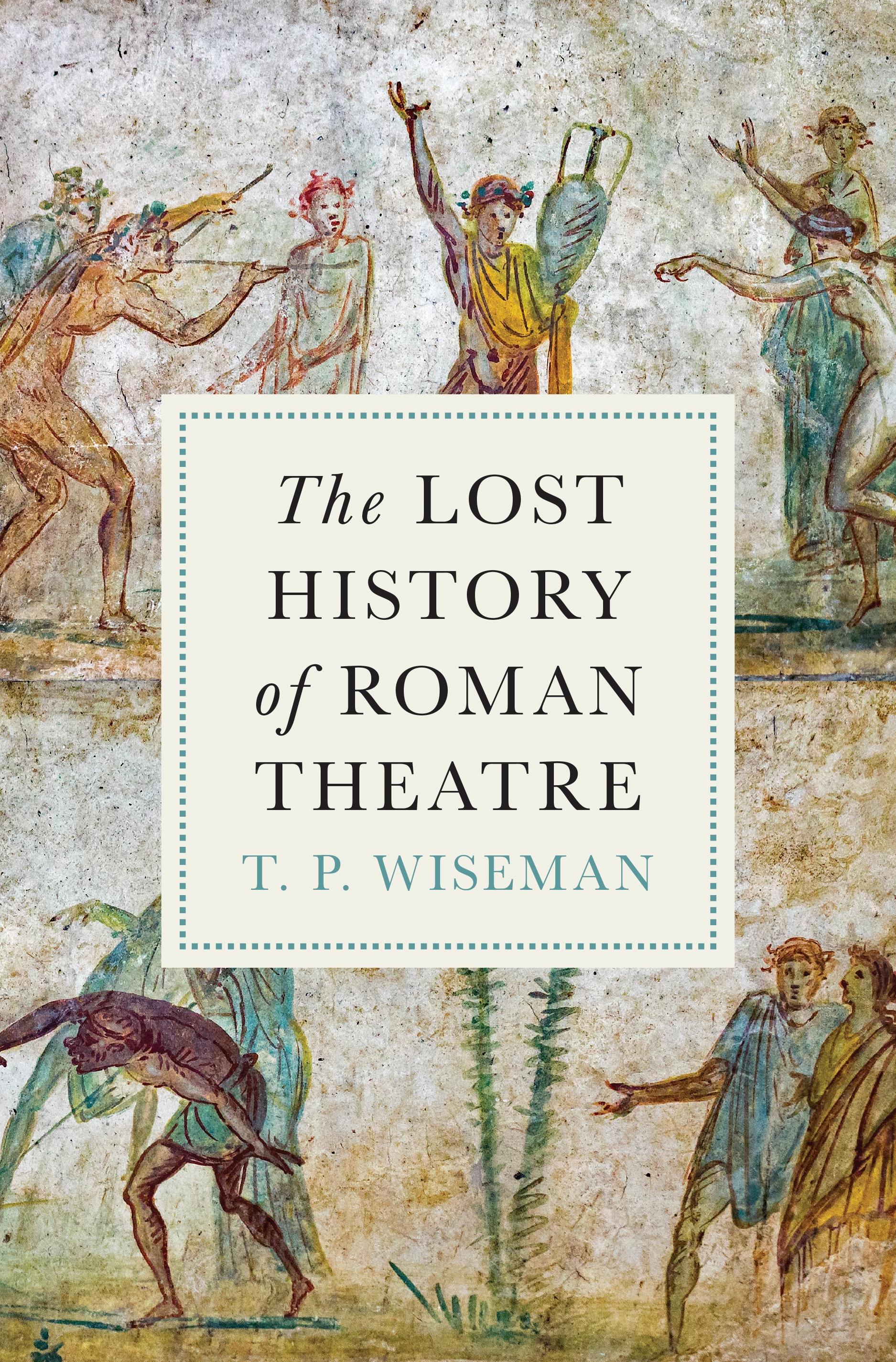
Investigating the origins of theatre in archaic Rome
Theatre was an integral part of Roman civic, religious and political life for nearly a thousand years, but our understanding of it is skewed by the haphazard survival of usable evidence. The widely accepted date for the beginning of Roman drama is 240 BC, but that is only the date of the first known dramatic works. Theatre as a public spectacle was created in Athens and in Greek Sicily at the end of the sixth century BC, when the culture of Rome, to judge by the archaeological evidence, was itself thoroughly Greek. There is therefore no need to imagine that the Romans knew nothing of drama until centuries after its inception. In The Lost History of Roman Theatre, the distinguished classics scholar T. P. Wiseman reexamines the often-obscured origins of Roman theatre.
In a series of detailed investigations, Wiseman explores material ignored or inadequately treated in the modern literature, including previously overlooked information in Cicero’s letters, speeches and dialogues about what theatre meant to Romans of his era. He further shows that the various styles of drama presented on the Roman stage were listed by grammarians in late antiquity who were using well-informed histories of drama now lost, and brings to light a wide range of evidence, visual as well as textual, from all that thousand-year stretch of time, to offer a new sense of the range and richness of the Romans’ experience of theatre.
Płać wygodnie kartą, Klarną, Apple Pay lub Google Pay. Nie jesteś zadowolony? Zawsze masz 14-dniową gwarancję zwrotu pieniędzy. Więcej przeczytasz w naszych warunkach. Masz pytania? Napisz do nas na hello@memmo.org.
Memmo ułatwia naukę – gdziekolwiek jesteś na świecie. U nas znajdziesz podręczniki i sprytne narzędzia do nauki w jednym miejscu: streszczenia, quizy, podcasty i fiszki. A do tego Ted, Twój kumpel do nauki, który odpowie na wszystko, co Cię nurtuje. Ponad 50 000 studentów już tu się uczy – stworzone, byś uczył się szybciej i mniej stresował.