
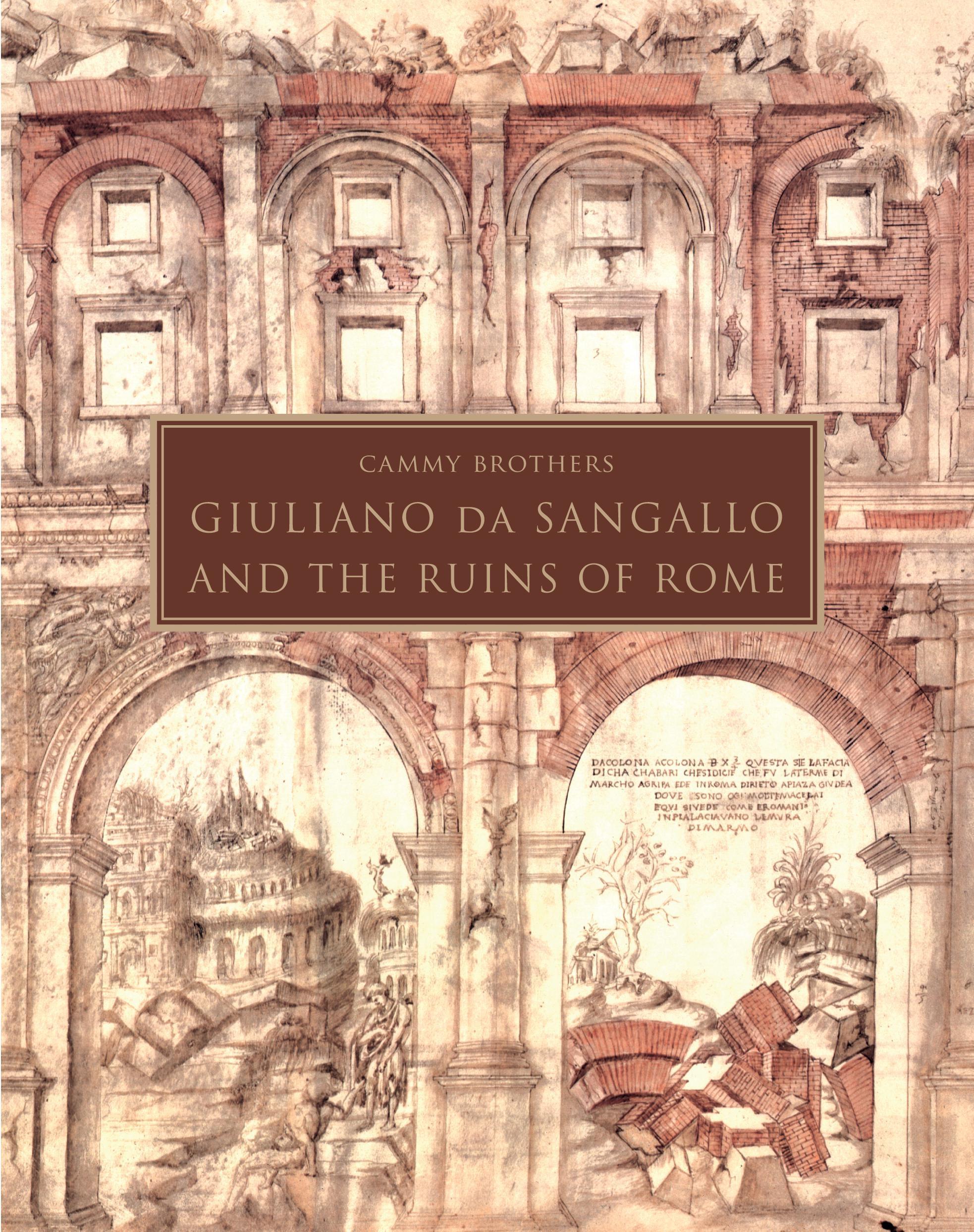
An illuminating reassessment of the architect whose innovative drawings of ruins shaped the enduring image of ancient Rome
Giuliano da Sangallo (1443–1516) was one of the first architects to draw the ruins and artifacts of ancient Rome in a systematic way. Cammy Brothers shows how Giuliano played a crucial role in the Renaissance recovery of antiquity, and how his work transformed the broken fragments of Rome's past into the image of a city made whole.
Drawing new insights from the Codex Barberini and the Taccuino Senese—two exquisite collections of Giuliano's drawings on parchment—Brothers reveals how the Florentine architect devoted enormous energy to the representation of ruins, and how his studies of Rome formed an integral part of his work as a designer. She argues that Giuliano's inventive approach, which has often been mischaracterized as fantastical or naive, infused the architect's craft with the sensibilities of a poet and painter. Brothers demonstrates how his drawings form the basis for a reevaluation of the meaning and method of the Renaissance study of ancient artifacts, and brings to life the transformative moment when artists and architects began to view the fragments of ancient Rome not as broken artifacts of little interest but as objects of aesthetic contemplation.
Featuring a wealth of Giuliano's magnificent drawings, this compelling book provides an incomparable lens through which to explore essential questions about the aesthetic value, significance, and the uses of the past for today's architects.
Płać wygodnie kartą, Klarną, Apple Pay lub Google Pay. Nie jesteś zadowolony? Zawsze masz 14-dniową gwarancję zwrotu pieniędzy. Więcej przeczytasz w naszych warunkach. Masz pytania? Napisz do nas na hello@memmo.org.
Memmo ułatwia naukę – gdziekolwiek jesteś na świecie. U nas znajdziesz podręczniki i sprytne narzędzia do nauki w jednym miejscu: streszczenia, quizy, podcasty i fiszki. A do tego Ted, Twój kumpel do nauki, który odpowie na wszystko, co Cię nurtuje. Ponad 50 000 studentów już tu się uczy – stworzone, byś uczył się szybciej i mniej stresował.