
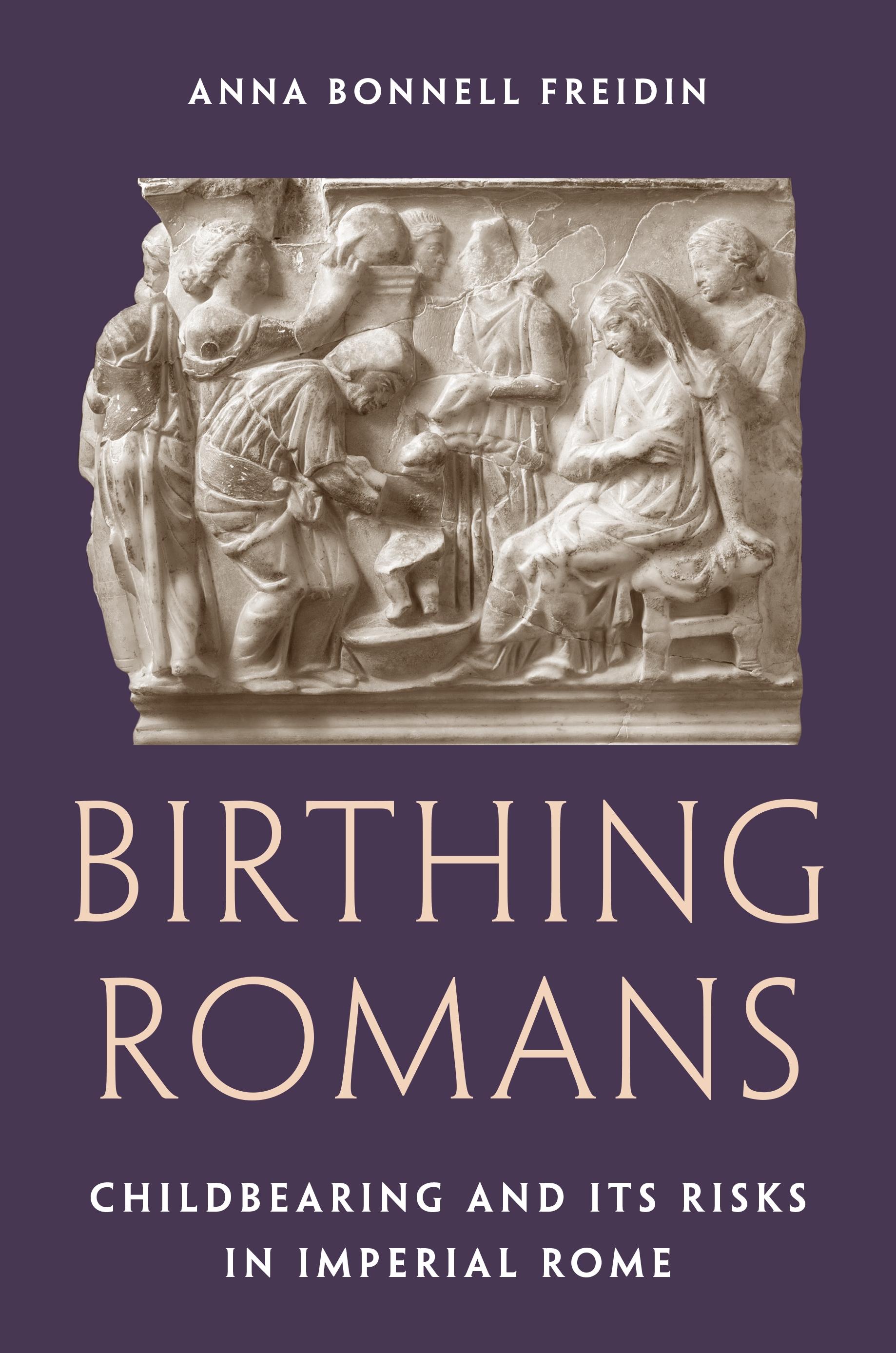
How Romans coped with the anxieties and risks of childbirth
Across the vast expanse of the Roman Empire, anxieties about childbirth tied individuals to one another, to the highest levels of imperial politics, even to the movements of the stars. Birthing Romans sheds critical light on the diverse ways pregnancy and childbirth were understood, experienced, and managed in ancient Rome during the first three centuries of the Common Era.
In this beautifully written book, Anna Bonnell Freidin asks how inhabitants of the Roman Empire—especially women and girls—understood their bodies and constructed communities of care to mitigate and make sense of the risks of pregnancy and childbirth. Drawing on medical texts, legal documents, poetry, amulets, funerary art, and more, she shows how these communities were deeply human yet never just human. Freidin demonstrates how patients and caregivers took their place alongside divine and material agencies to guard against the risks inherent to childbearing. She vividly illustrates how these efforts and vital networks offer a new window onto Romans’ anxieties about order, hierarchy, and the individual’s place in the empire and cosmos.
Unearthing a risky world that is both familiar and not our own, Birthing Romans reveals how mistakes, misfortunes, and interventions in childbearing were seen to have far-reaching consequences, reverberating across generations and altering the course of people’s lives, their family histories, and even the fate of an empire.
Płać wygodnie kartą, Klarną, Apple Pay lub Google Pay. Nie jesteś zadowolony? Zawsze masz 14-dniową gwarancję zwrotu pieniędzy. Więcej przeczytasz w naszych warunkach. Masz pytania? Napisz do nas na hello@memmo.org.
Memmo ułatwia naukę – gdziekolwiek jesteś na świecie. U nas znajdziesz podręczniki i sprytne narzędzia do nauki w jednym miejscu: streszczenia, quizy, podcasty i fiszki. A do tego Ted, Twój kumpel do nauki, który odpowie na wszystko, co Cię nurtuje. Ponad 50 000 studentów już tu się uczy – stworzone, byś uczył się szybciej i mniej stresował.