
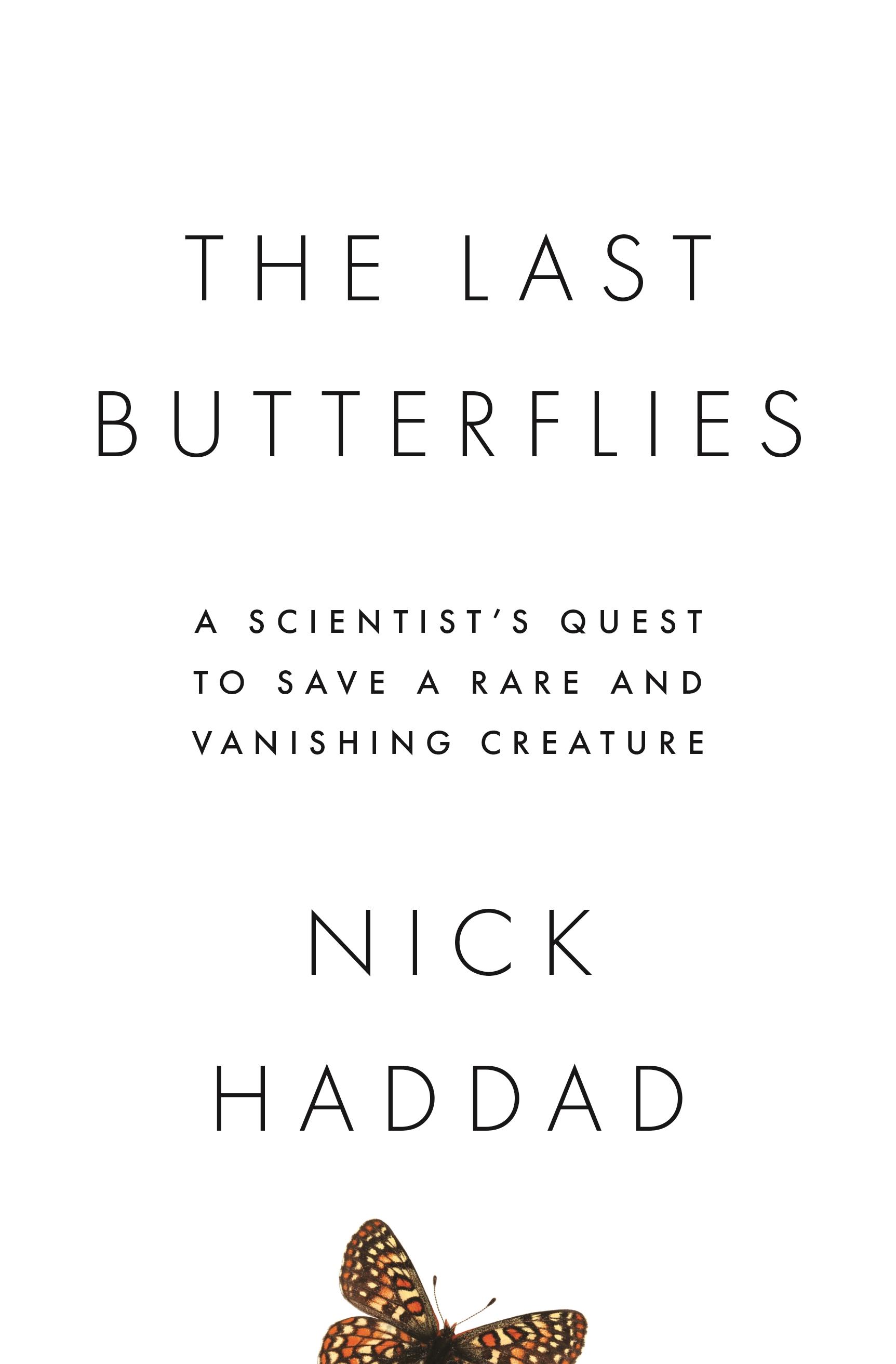
A remarkable look at the rarest butterflies, how global changes threaten their existence, and how we can bring them back from near-extinction
Most of us have heard of such popular butterflies as the Monarch or Painted Lady. But what about the Fender’s Blue? Or the St. Francis’ Satyr? Because of their extreme rarity, these butterflies are not well-known, yet they are remarkable species with important lessons to teach us. The Last Butterflies spotlights the rarest of these creatures—some numbering no more than what can be held in one hand. Drawing from his own first-hand experiences, Nick Haddad explores the challenges of tracking these vanishing butterflies, why they are disappearing, and why they are worth saving. He also provides startling insights into the effects of human activity and environmental change on the planet’s biodiversity.
Weaving a vivid and personal narrative with ideas from ecology and conservation, Haddad illustrates the race against time to reverse the decline of six butterfly species. Many scientists mistakenly assume we fully understand butterflies’ natural histories. Yet, as with the Large Blue in England, we too often know too little and the conservation consequences are dire. Haddad argues that a hands-off approach is not effective and that in many instances, like for the Fender’s Blue and Bay Checkerspot, active and aggressive management is necessary. With deliberate conservation, rare butterflies can coexist with people, inhabit urban fringes, and, in the case of the St. Francis’ Satyr, even reside on bomb ranges and military land. Haddad shows that through the efforts to protect and restore butterflies, we might learn how to successfully confront conservation issues for all animals and plants.
A moving account of extinction, recovery, and hope, The Last Butterflies demonstrates the great value of these beautiful insects to science, conservation, and people.
Płać wygodnie kartą, Klarną, Apple Pay lub Google Pay. Nie jesteś zadowolony? Zawsze masz 14-dniową gwarancję zwrotu pieniędzy. Więcej przeczytasz w naszych warunkach. Masz pytania? Napisz do nas na hello@memmo.org.
Memmo ułatwia naukę – gdziekolwiek jesteś na świecie. U nas znajdziesz podręczniki i sprytne narzędzia do nauki w jednym miejscu: streszczenia, quizy, podcasty i fiszki. A do tego Ted, Twój kumpel do nauki, który odpowie na wszystko, co Cię nurtuje. Ponad 50 000 studentów już tu się uczy – stworzone, byś uczył się szybciej i mniej stresował.