
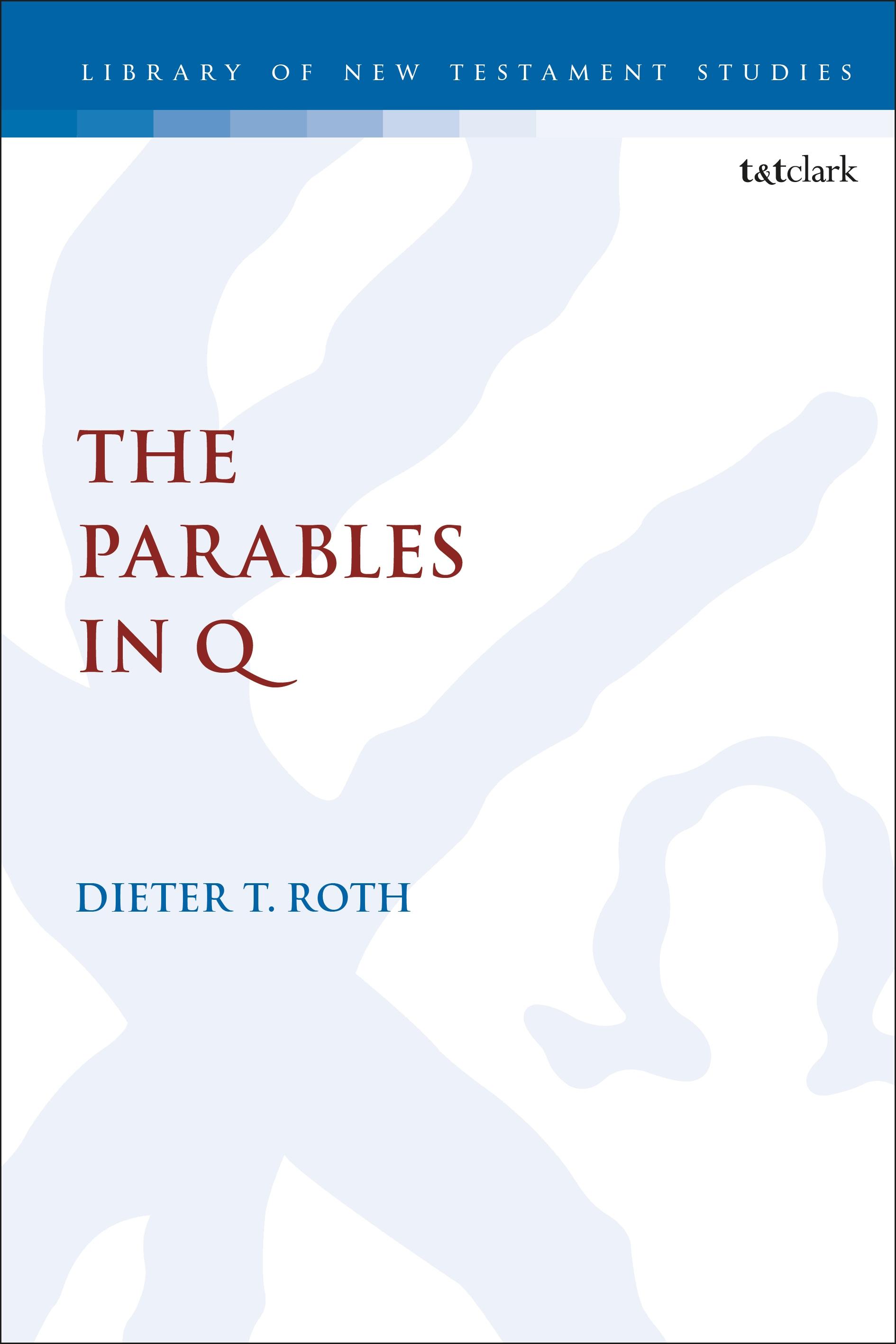
Few New Testament topics have been discussed as often and as intensely as Q, the hypothesized second major source alongside the gospel of Mark for the gospels of Matthew and Luke, and the parables. And yet, no monograph to date has been devoted to considering the parables in Q. In addition to filling this gap in New Testament scholarship, Dieter T. Roth addresses the need to move scholarship on both Q and the parables forward along methodological and interpretive lines.
Roth considers Q not as a text behind Matthew and Luke that needs to be reconstructed but rather as an intertext between Matthew and Luke that offered plots, characters, and images in parables that were taken up by Matthew and Luke and utilized in their own respective texts. In addition, Roth draws on recent parables research in his examination of the 27 parables in Q (two spoken by John the Baptist, one by the Centurion, and 24 by Jesus) in order to consider their purpose and function in this early Christian text.
Roth considers Q not as a text behind Matthew and Luke that needs to be reconstructed but rather as an intertext between Matthew and Luke that offered plots, characters, and images in parables that were taken up by Matthew and Luke and utilized in their own respective texts. In addition, Roth draws on recent parables research in his examination of the 27 parables in Q (two spoken by John the Baptist, one by the Centurion, and 24 by Jesus) in order to consider their purpose and function in this early Christian text.
Płać wygodnie kartą, Klarną, Apple Pay lub Google Pay. Nie jesteś zadowolony? Zawsze masz 14-dniową gwarancję zwrotu pieniędzy. Więcej przeczytasz w naszych warunkach. Masz pytania? Napisz do nas na hello@memmo.org.
Memmo ułatwia naukę – gdziekolwiek jesteś na świecie. U nas znajdziesz podręczniki i sprytne narzędzia do nauki w jednym miejscu: streszczenia, quizy, podcasty i fiszki. A do tego Ted, Twój kumpel do nauki, który odpowie na wszystko, co Cię nurtuje. Ponad 50 000 studentów już tu się uczy – stworzone, byś uczył się szybciej i mniej stresował.