
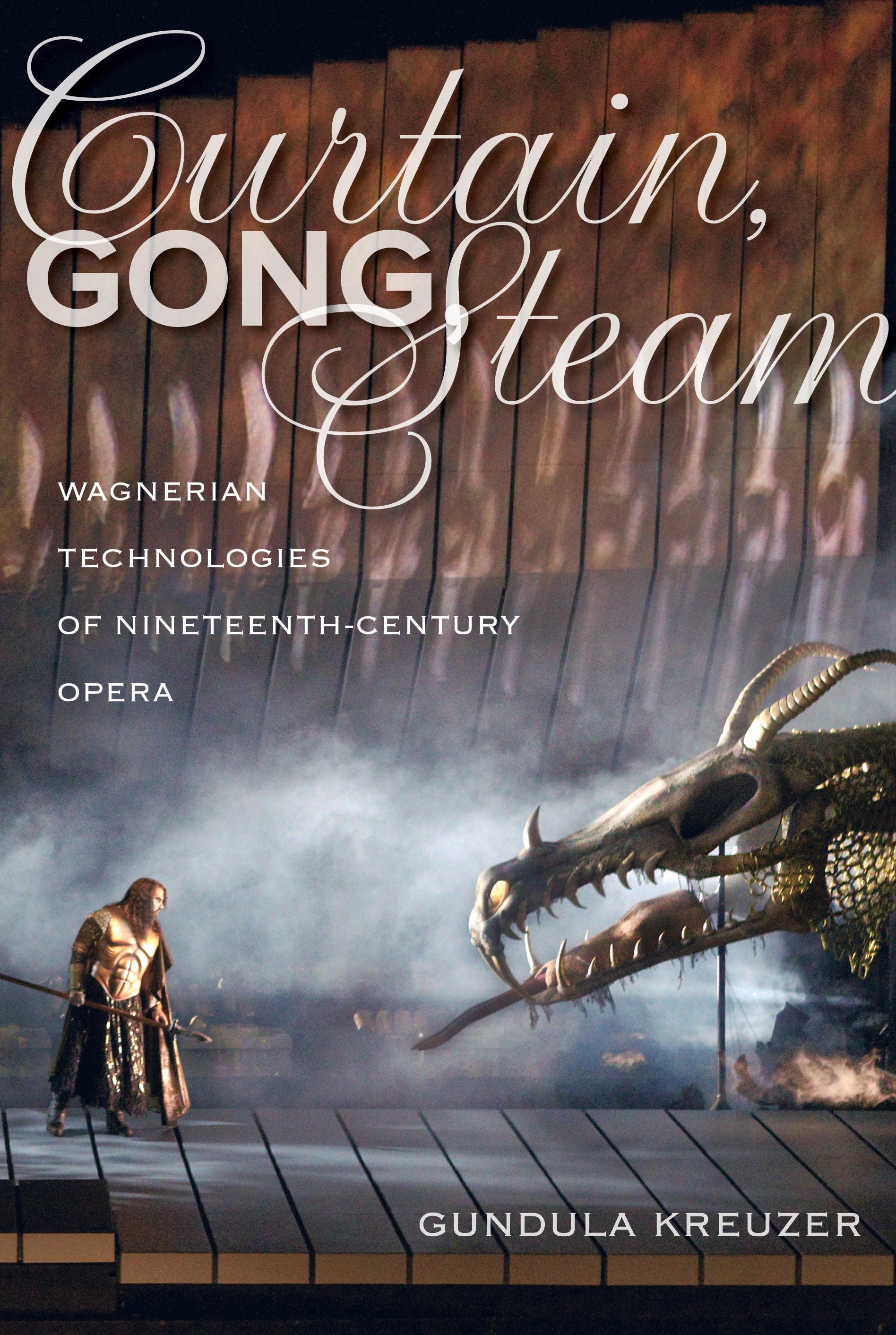
In this innovative book, Gundula Kreuzer argues for the foundational role of technologies in the conception, production, and study of nineteenth-century opera. She shows how composers increasingly incorporated novel audiovisual effects in their works and how the uses and meanings of the required apparatuses changed through the twentieth century, sometimes still resonating in stagings, performance art, and popular culture today. Focusing on devices (which she dubs “Wagnerian technologies”) intended to amalgamate opera’s various media while veiling their mechanics, Kreuzer offers a practical counternarrative to Wagner’s idealist theories of total illusionism. At the same time, Curtain, Gong, Steam’s multifaceted exploration of the three titular technologies repositions Wagner as catalyst more than inventor in the history of operatic production. With its broad chronological and geographical scope, this book deepens our understanding of the material and mechanical conditions of historical operatic practice as well as of individual works, both well known and obscure.
Płać wygodnie kartą, Klarną, Apple Pay lub Google Pay. Nie jesteś zadowolony? Zawsze masz 14-dniową gwarancję zwrotu pieniędzy. Więcej przeczytasz w naszych warunkach. Masz pytania? Napisz do nas na hello@memmo.org.
Memmo ułatwia naukę – gdziekolwiek jesteś na świecie. U nas znajdziesz podręczniki i sprytne narzędzia do nauki w jednym miejscu: streszczenia, quizy, podcasty i fiszki. A do tego Ted, Twój kumpel do nauki, który odpowie na wszystko, co Cię nurtuje. Ponad 50 000 studentów już tu się uczy – stworzone, byś uczył się szybciej i mniej stresował.
Może Ci się spodobać
Kup książkę0