
A free book version of this title is available through Luminos, University of California Press’s new open access publishing program for monographs. Visit www.luminosoa.org to learn more.
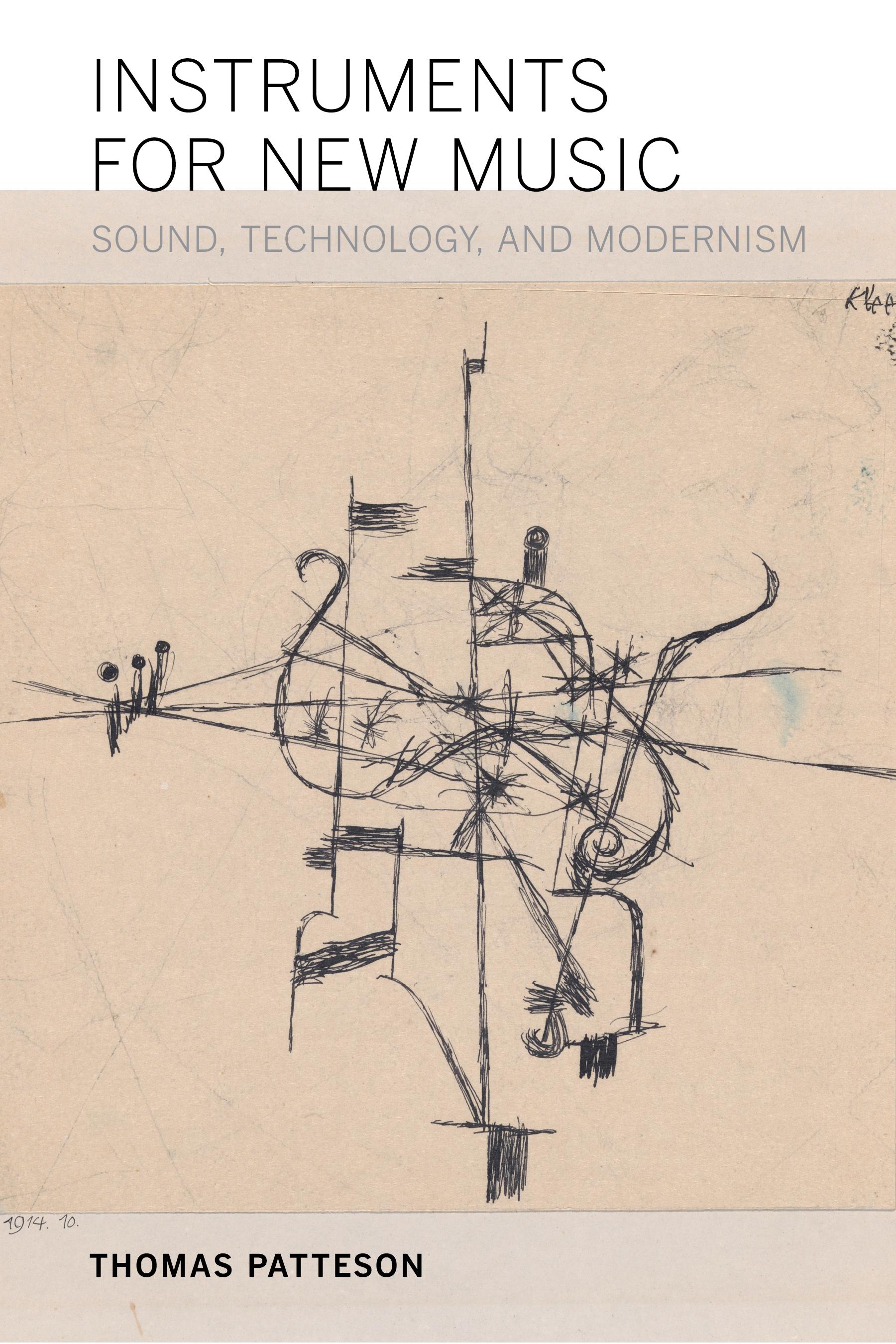
Player pianos, radio-electric circuits, gramophone records, and optical sound film—these were the cutting-edge acoustic technologies of the early twentieth century, and for many musicians and artists of the time, these devices were also the implements of a musical revolution. Instruments for New Music traces a diffuse network of cultural agents who shared the belief that a truly modern music could be attained only through a radical challenge to the technological foundations of the art. Centered in Germany during the 1920s and 1930s, the movement to create new instruments encompassed a broad spectrum of experiments, from the exploration of microtonal tunings and exotic tone colors to the ability to compose directly for automatic musical machines. This movement comprised composers, inventors, and visual artists, including Paul Hindemith, Ernst Toch, Jörg Mager, Friedrich Trautwein, László Moholy-Nagy, Walter Ruttmann, and Oskar Fischinger. Patteson’s fascinating study combines an artifact-oriented history of new music in the early twentieth century with an astute revisiting of still-relevant debates about the relationship between technology and the arts.
Player pianos, radio-electric circuits, gramophone records, and optical sound film—these were the cutting-edge acoustic technologies of the early twentieth century, and for many musicians and artists of the time, these devices were also the implements of a musical revolution. Instruments for New Music traces a diffuse network of cultural agents who shared the belief that a truly modern music could be attained only through a radical challenge to the technological foundations of the art. Centered in Germany during the 1920s and 1930s, the movement to create new instruments encompassed a broad spectrum of experiments, from the exploration of microtonal tunings and exotic tone colors to the ability to compose directly for automatic musical machines. This movement comprised composers, inventors, and visual artists, including Paul Hindemith, Ernst Toch, Jörg Mager, Friedrich Trautwein, László Moholy-Nagy, Walter Ruttmann, and Oskar Fischinger. Patteson’s fascinating study combines an artifact-oriented history of new music in the early twentieth century with an astute revisiting of still-relevant debates about the relationship between technology and the arts.
Płać wygodnie kartą, Klarną, Apple Pay lub Google Pay. Nie jesteś zadowolony? Zawsze masz 14-dniową gwarancję zwrotu pieniędzy. Więcej przeczytasz w naszych warunkach. Masz pytania? Napisz do nas na hello@memmo.org.
Memmo ułatwia naukę – gdziekolwiek jesteś na świecie. U nas znajdziesz podręczniki i sprytne narzędzia do nauki w jednym miejscu: streszczenia, quizy, podcasty i fiszki. A do tego Ted, Twój kumpel do nauki, który odpowie na wszystko, co Cię nurtuje. Ponad 50 000 studentów już tu się uczy – stworzone, byś uczył się szybciej i mniej stresował.
Może Ci się spodobać
Kup książkę0