
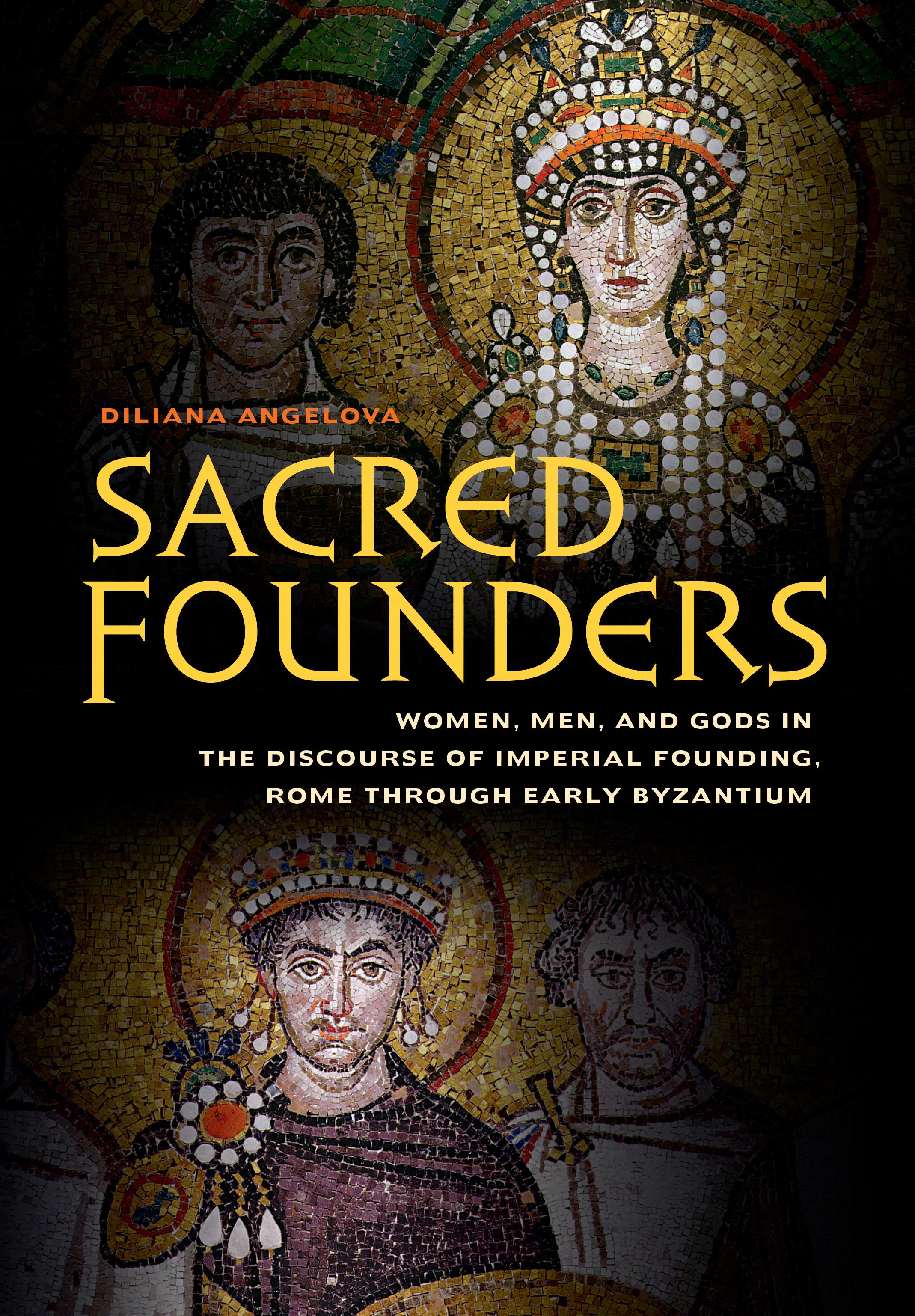
Diliana Angelova argues that from the time of Augustus through early Byzantium, a discourse of “sacred founders”—articulated in artwork, literature, imperial honors, and the built environment—helped legitimize the authority of the emperor and his family. The discourse coalesced around the central idea, bound to a myth of origins, that imperial men and women were sacred founders of the land, mirror images of the empire’s divine founders. When Constantine and his formidable mother Helena established a new capital for the Roman Empire, they initiated the Christian transformation of this discourse by brilliantly reformulating the founding myth. Over time, this transformation empowered imperial women, strengthened the cult of the Virgin Mary, fueled contests between church and state, and provoked an arresting synthesis of imperial and Christian art. Sacred Founders presents a bold interpretive framework that unearths deep continuities between the ancient and medieval worlds, recovers a forgotten transformation in female imperial power, and offers a striking reinterpretation of early Christian art.
Płać wygodnie kartą, Klarną, Apple Pay lub Google Pay. Nie jesteś zadowolony? Zawsze masz 14-dniową gwarancję zwrotu pieniędzy. Więcej przeczytasz w naszych warunkach. Masz pytania? Napisz do nas na hello@memmo.org.
Memmo ułatwia naukę – gdziekolwiek jesteś na świecie. U nas znajdziesz podręczniki i sprytne narzędzia do nauki w jednym miejscu: streszczenia, quizy, podcasty i fiszki. A do tego Ted, Twój kumpel do nauki, który odpowie na wszystko, co Cię nurtuje. Ponad 50 000 studentów już tu się uczy – stworzone, byś uczył się szybciej i mniej stresował.
Może Ci się spodobać
Kup książkę0