
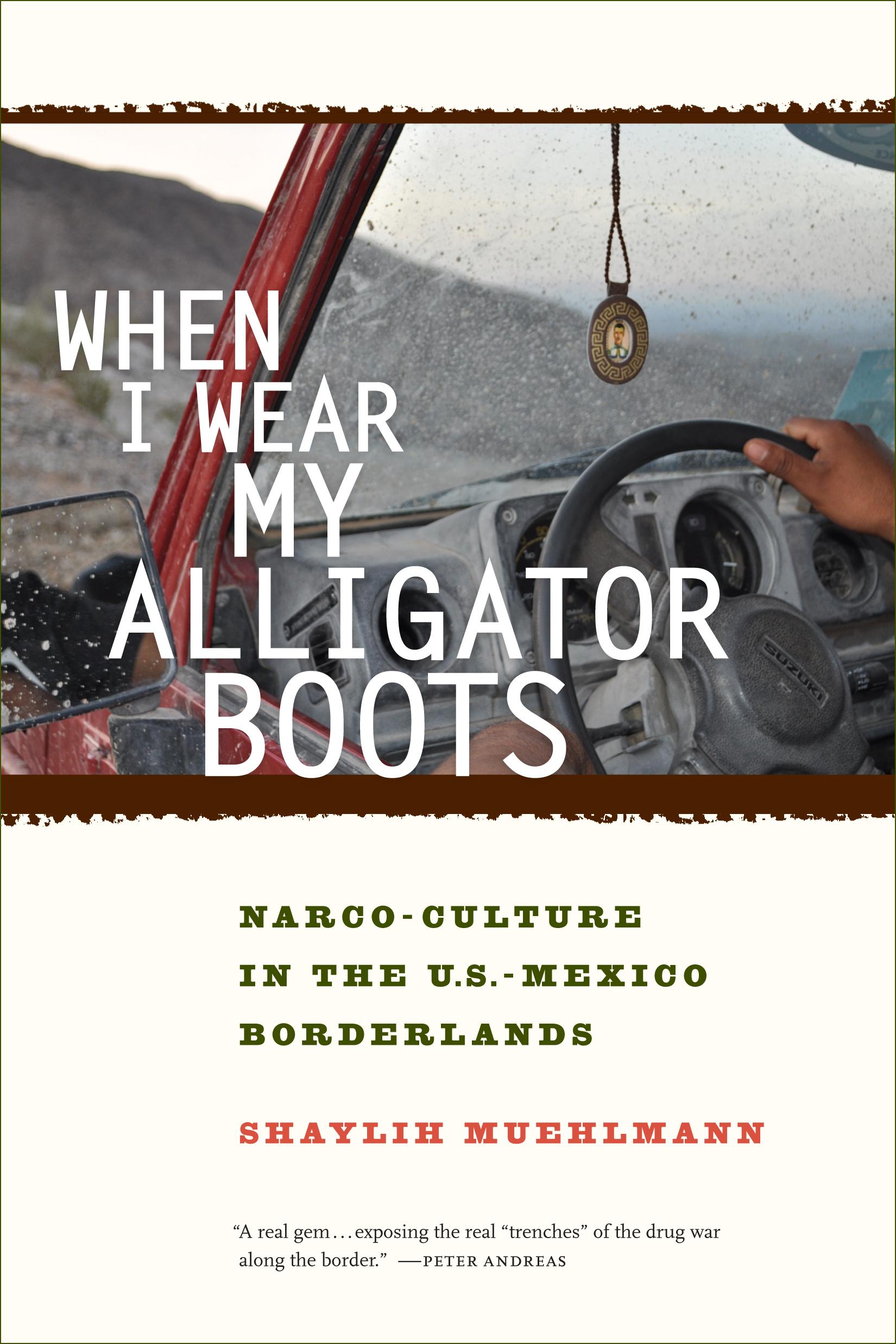
When I Wear My Alligator Boots examines how the lives of dispossessed men and women are affected by the rise of narcotrafficking along the U.S.-Mexico border. In particular, the book explores a crucial tension at the heart of the "war on drugs": despite the violence and suffering brought on by drug cartels, for the rural poor in Mexico’s north, narcotrafficking offers one of the few paths to upward mobility and is a powerful source of cultural meanings and local prestige.
In the borderlands, traces of the drug trade are everywhere: from gang violence in cities to drug addiction in rural villages, from the vibrant folklore popularized in the narco-corridos of Norteña music to the icon of Jesús Malverde, the "patron saint" of narcos, tucked beneath the shirts of local people. In When I Wear My Alligator Boots, the author explores the everyday reality of the drug trade by living alongside its low-level workers, who live at the edges of the violence generated by the militarization of the war on drugs. Rather than telling the story of the powerful cartel leaders, the book focuses on the women who occasionally make their sandwiches, the low-level businessmen who launder their money, the addicts who consume their products, the mules who carry their money and drugs across borders, and the men and women who serve out prison sentences when their bosses' operations go awry.
In the borderlands, traces of the drug trade are everywhere: from gang violence in cities to drug addiction in rural villages, from the vibrant folklore popularized in the narco-corridos of Norteña music to the icon of Jesús Malverde, the "patron saint" of narcos, tucked beneath the shirts of local people. In When I Wear My Alligator Boots, the author explores the everyday reality of the drug trade by living alongside its low-level workers, who live at the edges of the violence generated by the militarization of the war on drugs. Rather than telling the story of the powerful cartel leaders, the book focuses on the women who occasionally make their sandwiches, the low-level businessmen who launder their money, the addicts who consume their products, the mules who carry their money and drugs across borders, and the men and women who serve out prison sentences when their bosses' operations go awry.
Płać wygodnie kartą, Klarną, Apple Pay lub Google Pay. Nie jesteś zadowolony? Zawsze masz 14-dniową gwarancję zwrotu pieniędzy. Więcej przeczytasz w naszych warunkach. Masz pytania? Napisz do nas na hello@memmo.org.
Memmo ułatwia naukę – gdziekolwiek jesteś na świecie. U nas znajdziesz podręczniki i sprytne narzędzia do nauki w jednym miejscu: streszczenia, quizy, podcasty i fiszki. A do tego Ted, Twój kumpel do nauki, który odpowie na wszystko, co Cię nurtuje. Ponad 50 000 studentów już tu się uczy – stworzone, byś uczył się szybciej i mniej stresował.
Może Ci się spodobać
Kup książkę0