
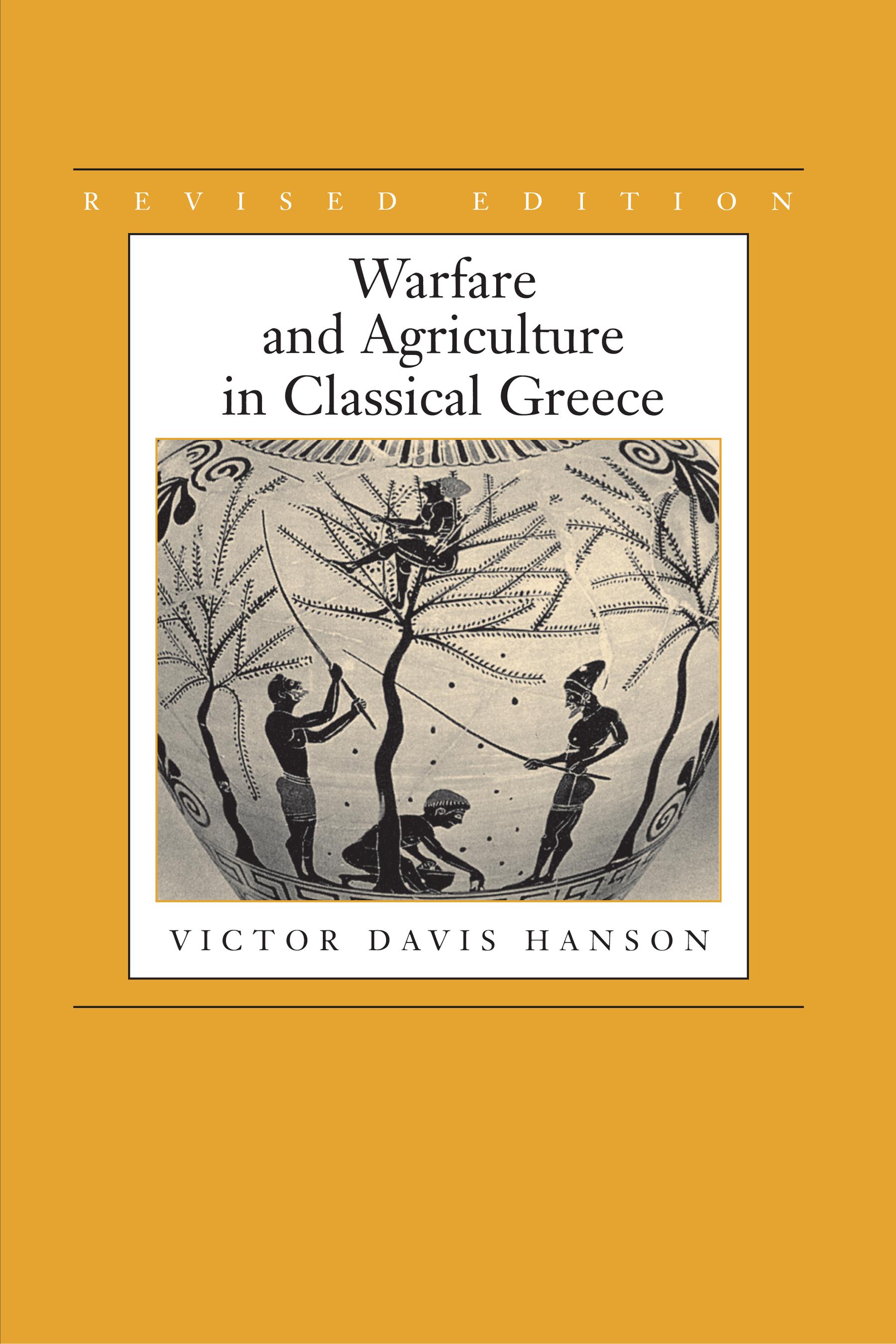
The ancient Greeks were for the most part a rural, not an urban, society. And for much of the Classical period, war was more common than peace. Almost all accounts of ancient history assume that farming and fighting were critical events in the lives of the citizenry. Yet never before have we had a comprehensive modern study of the relationship between agriculture and warfare in the Greek world. In this completely revised edition of Warfare and Agriculture in Classical Greece, Victor Davis Hanson provides a systematic review of Greek agriculture and warfare and describes the relationship between these two important aspects of life in ancient communities. With careful attention to agronomic as well as military details, this well-written, thoroughly researched study reveals the remarkable resilience of those farmland communities.
In the past, scholars have assumed that the agricultural infrastructure of ancient society was often ruined by attack, as, for example, Athens was relegated to poverty in the aftermath of the Persian and later Peloponnesian invasions. Hanson's study shows, however, that in reality attacks on agriculture rarely resulted in famines or permanent agrarian depression. Trees and vines are hard to destroy, and grainfields are only briefly vulnerable to torching. In addition, ancient armies were rather inefficient systematic ravagers and instead used other tactics, such as occupying their enemies' farms to incite infantry battle. Warfare and Agriculture in Classical Greece suggests that for all ancient societies, rural depression and desolation came about from more subtle phenomena—taxes, changes in political and social structure, and new cultural values—rather than from destructive warfare.
In the past, scholars have assumed that the agricultural infrastructure of ancient society was often ruined by attack, as, for example, Athens was relegated to poverty in the aftermath of the Persian and later Peloponnesian invasions. Hanson's study shows, however, that in reality attacks on agriculture rarely resulted in famines or permanent agrarian depression. Trees and vines are hard to destroy, and grainfields are only briefly vulnerable to torching. In addition, ancient armies were rather inefficient systematic ravagers and instead used other tactics, such as occupying their enemies' farms to incite infantry battle. Warfare and Agriculture in Classical Greece suggests that for all ancient societies, rural depression and desolation came about from more subtle phenomena—taxes, changes in political and social structure, and new cultural values—rather than from destructive warfare.
Płać wygodnie kartą, Klarną, Apple Pay lub Google Pay. Nie jesteś zadowolony? Zawsze masz 14-dniową gwarancję zwrotu pieniędzy. Więcej przeczytasz w naszych warunkach. Masz pytania? Napisz do nas na hello@memmo.org.
Memmo ułatwia naukę – gdziekolwiek jesteś na świecie. U nas znajdziesz podręczniki i sprytne narzędzia do nauki w jednym miejscu: streszczenia, quizy, podcasty i fiszki. A do tego Ted, Twój kumpel do nauki, który odpowie na wszystko, co Cię nurtuje. Ponad 50 000 studentów już tu się uczy – stworzone, byś uczył się szybciej i mniej stresował.
Może Ci się spodobać
Kup książkę0