
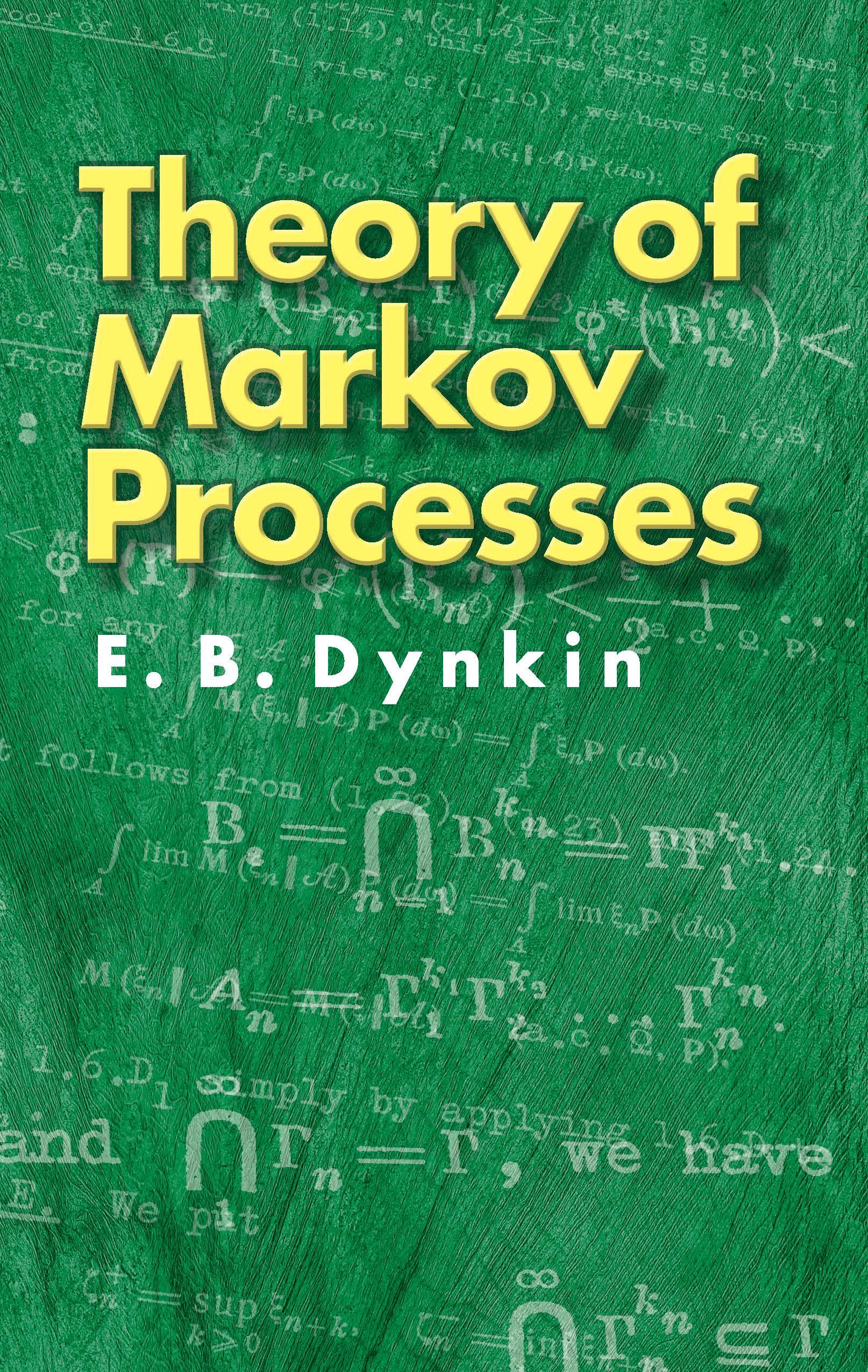
An investigation of the logical foundations of the theory behind Markov random processes, this text explores subprocesses, transition functions, and conditions for boundedness and continuity. Rather than focusing on probability measures individually, the work explores connections between functions. An elementary grasp of the theory of Markov processes is assumed.
Starting with a brief survey of relevant concepts and theorems from measure theory, the text investigates operations that permit an inspection of the class of Markov processes corresponding to a given transition function. It advances to the more complicated operations of generating a subprocess, followed by examinations of the construction of Markov processes with given transition functions, the concept of a strictly "Markov process," and the conditions required for boundedness and continuity of a Markov process. Addenda, notes, references, and indexes supplement the text.
Starting with a brief survey of relevant concepts and theorems from measure theory, the text investigates operations that permit an inspection of the class of Markov processes corresponding to a given transition function. It advances to the more complicated operations of generating a subprocess, followed by examinations of the construction of Markov processes with given transition functions, the concept of a strictly "Markov process," and the conditions required for boundedness and continuity of a Markov process. Addenda, notes, references, and indexes supplement the text.
Płać wygodnie kartą, Klarną, Apple Pay lub Google Pay. Nie jesteś zadowolony? Zawsze masz 14-dniową gwarancję zwrotu pieniędzy. Więcej przeczytasz w naszych warunkach. Masz pytania? Napisz do nas na hello@memmo.org.
Memmo ułatwia naukę – gdziekolwiek jesteś na świecie. U nas znajdziesz podręczniki i sprytne narzędzia do nauki w jednym miejscu: streszczenia, quizy, podcasty i fiszki. A do tego Ted, Twój kumpel do nauki, który odpowie na wszystko, co Cię nurtuje. Ponad 50 000 studentów już tu się uczy – stworzone, byś uczył się szybciej i mniej stresował.
Może Ci się spodobać
Kup książkę0