
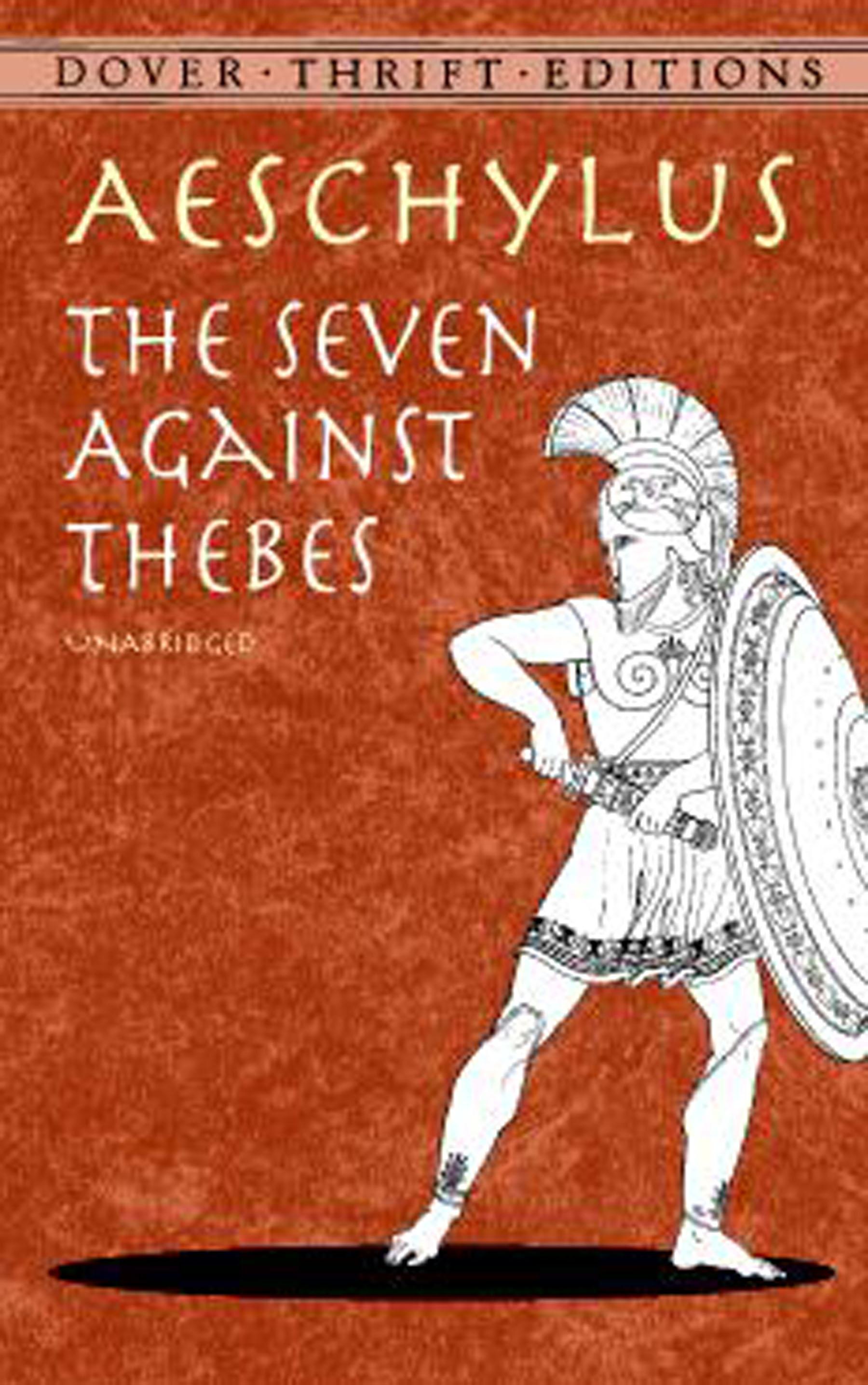
Often called the father of Greek tragedy, Aeschylus (525–456 B.C.) was the earliest and possibly the greatest of the Greek tragic poets. Altogether he may have written as many as 90 plays (including satyr plays as well as tragedies), but only seven have survived.
The Seven Against Thebes (first produced in 467 B.C.) was the final play in a trilogy (the other two are lost) dramatizing the well-known legend of Laius and his son Oedipus. In this culminating play, Oedipus is dead after his banishment from Thebes, and his two sons vie for the crown. The victor, Eteocles, expels his brother, Polynices, who flees to Argos and recruits a force of seven champions to lead an assault on Thebes. The tragic outcome is the fulfillment of the curse of Oedipus — that his sons should divide their inheritance with the sword.
Although Sophocles' treatment of the Oedipus legend is better known, the dialogue and imagery in Aeschylus's play retain an immediacy that resonates with modern readers and audiences. The result is a deeply moving theatrical milestone that is essential reading for students of literature, drama, and the classics.
Płać wygodnie kartą, Klarną, Apple Pay lub Google Pay. Nie jesteś zadowolony? Zawsze masz 14-dniową gwarancję zwrotu pieniędzy. Więcej przeczytasz w naszych warunkach. Masz pytania? Napisz do nas na hello@memmo.org.
Memmo ułatwia naukę – gdziekolwiek jesteś na świecie. U nas znajdziesz podręczniki i sprytne narzędzia do nauki w jednym miejscu: streszczenia, quizy, podcasty i fiszki. A do tego Ted, Twój kumpel do nauki, który odpowie na wszystko, co Cię nurtuje. Ponad 50 000 studentów już tu się uczy – stworzone, byś uczył się szybciej i mniej stresował.