
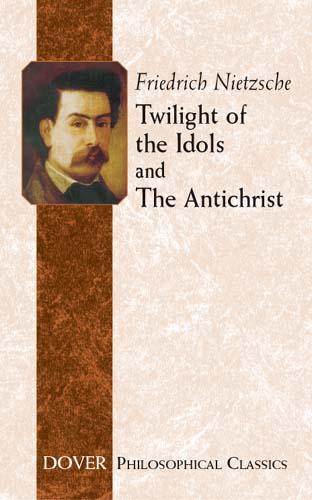
"Books for everybody are always malodorous books: the smell of petty people clings to them," scoffed Friedrich Nietzsche. These two works, Twilight of the Idols and The Antichrist, crowned the radical philosopher's career of writing books that are decidedly not for everyone. Written in 1888, while Nietzsche was at the height of his brilliance — but shortly before the onset of the insanity that gripped him until his death in 1900 — they blaze with provocative, inflammatory rhetoric.
Nietzsche's "grand declaration of war," Twilight of the Idols examines what we worship and why. Intended by the author as a general introduction to his philosophy, it assails "idols" of Western philosophy and culture (Socratic rationality and Christian morality among them) and sets the scene for The Antichrist. In addition to its full-scale attack on Christianity and Jesus Christ, The Antichrist denounces organized religion as a whole. H. L. Mencken declared that "it is, to many sensitive men, in the worst possible taste, but at bottom it is enormously apt and effective — on the surface, it is undoubtedly a good show." Students of philosophy, history, and German literature will find these works essential to an understanding of Nietzschean philosophy.
Płać wygodnie kartą, Klarną, Apple Pay lub Google Pay. Nie jesteś zadowolony? Zawsze masz 14-dniową gwarancję zwrotu pieniędzy. Więcej przeczytasz w naszych warunkach. Masz pytania? Napisz do nas na hello@memmo.org.
Memmo ułatwia naukę – gdziekolwiek jesteś na świecie. U nas znajdziesz podręczniki i sprytne narzędzia do nauki w jednym miejscu: streszczenia, quizy, podcasty i fiszki. A do tego Ted, Twój kumpel do nauki, który odpowie na wszystko, co Cię nurtuje. Ponad 50 000 studentów już tu się uczy – stworzone, byś uczył się szybciej i mniej stresował.