
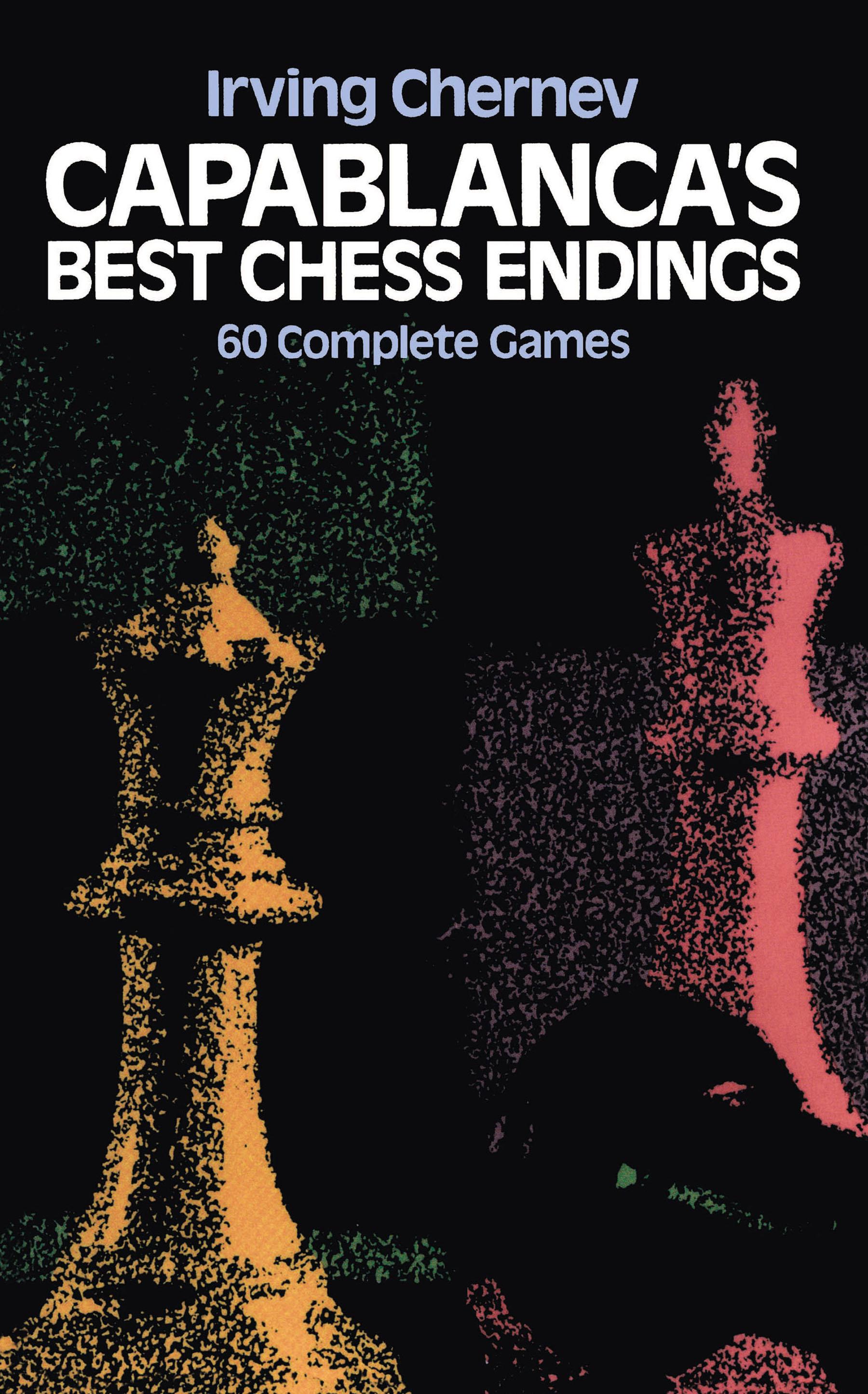
Chess endings have an immediacy lacking in chess endgame or chess problems: endings are not theoretical or composed, but actual board positions, the point in every game when the superfluous falls away, leaving only the essential. José Raúl Capablanca (1888–1942) had no need for isolated artistic theory or compositions — he composed and created chess art as he played. All of his genius — intuitive, tactical, strategic, logical — all of his art shines clearest in his endings, as he himself was proud to declare, advising others to study them carefully. "In order to improve your game," he said, "you must study the endgame before anything else; for whereas the endings can be studied and mastered by themselves, the middle game and the opening must be studied in relation to the endgame."
The best way to follow Capablanca's advice is through this — the only book devoted to his great endings, 60 complete games emphasizing the grand finale but annotated throughout.
Irving Chernev communicates in his notes the mystery and wonder as well as the delight in discovering again and again the original, fertile mind of chess's greatest born player. "Virtuoso," "exquisite," "profound," "inspired," "elegant," and "fiendish ingenuity" describe match and tournament games and endings against Alekhine, Steiner, Marshall, Nimzowitsch, Lasker, Réti, and others, the best in the contemporary chess world. Capablanca's eleventh game in the 1901 Cuban championship (which he won, aged 12) "surpasses any accomplishment by such other prodigies as Morphy, Reshevsky, and Fischer." From age 12 through the last game in the book (nearly four decades later against Reshevsky at Nottingham, 1936), Capablanca fashions endgames in tense tournament atmosphere that seem like delicate, precise instruments dreamt at leisure.
Here then is the essence of Capablanca, analyzed for the instruction of players and the pleasure of chess connoisseurs. Included are indexes of openings, themes in the endings, and opponents, as well as a bibliography and record of tournament and match play. Capablanca: for players, the epitome of the endgame; for readers, a classic chess study.
Płać wygodnie kartą, Klarną, Apple Pay lub Google Pay. Nie jesteś zadowolony? Zawsze masz 14-dniową gwarancję zwrotu pieniędzy. Więcej przeczytasz w naszych warunkach. Masz pytania? Napisz do nas na hello@memmo.org.
Memmo ułatwia naukę – gdziekolwiek jesteś na świecie. U nas znajdziesz podręczniki i sprytne narzędzia do nauki w jednym miejscu: streszczenia, quizy, podcasty i fiszki. A do tego Ted, Twój kumpel do nauki, który odpowie na wszystko, co Cię nurtuje. Ponad 50 000 studentów już tu się uczy – stworzone, byś uczył się szybciej i mniej stresował.