
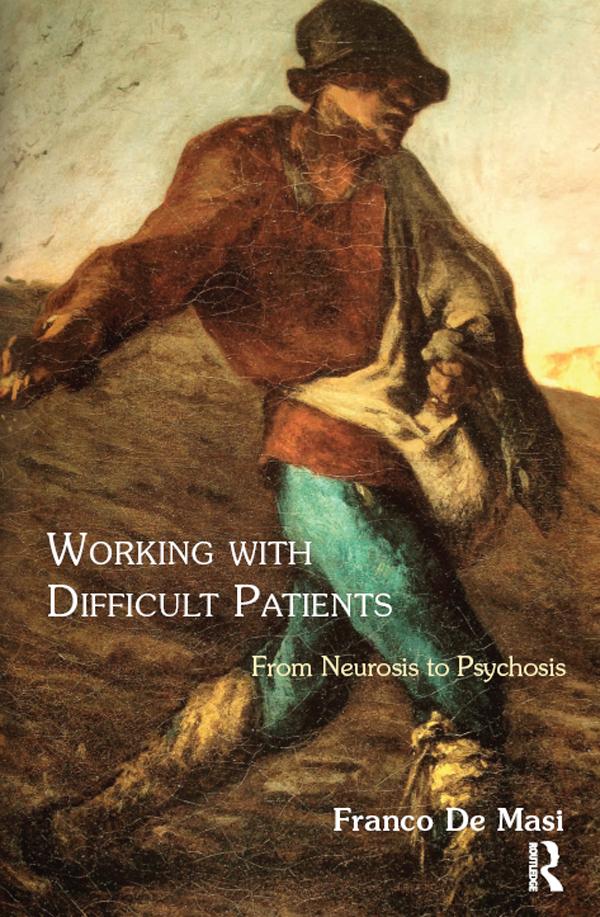
In this book the author examines the series of connections that give rise to the intimate relationship between environment and individual in the construction of emotional suffering, emphasising both the undisputed pathogenic action of environmental stimuli and the active participation of whoever is obliged to suffer the negative situation. The author shows that the way in which one tries to escape suffering is what often seriously jeopardises growth. Working with Difficult Patients points out the intrinsic link between some forms of mental suffering and the distorted responses that the patient has received from his or her original environment. For this reason the author explores the concept of the emotional trauma in particular, since this trauma, which occurs in the primary relationship, often impels the child into relational withdrawal and towards constructing pathological structures that will accompany him or her for the rest of their life. The chapters are ordered according to a scale of increasing treatment difficulty, which is proportional to the potential pathogenicity of the underlying psychopathological structure.
Płać wygodnie kartą, Klarną, Apple Pay lub Google Pay. Nie jesteś zadowolony? Zawsze masz 14-dniową gwarancję zwrotu pieniędzy. Więcej przeczytasz w naszych warunkach. Masz pytania? Napisz do nas na hello@memmo.org.
Memmo ułatwia naukę – gdziekolwiek jesteś na świecie. U nas znajdziesz podręczniki i sprytne narzędzia do nauki w jednym miejscu: streszczenia, quizy, podcasty i fiszki. A do tego Ted, Twój kumpel do nauki, który odpowie na wszystko, co Cię nurtuje. Ponad 50 000 studentów już tu się uczy – stworzone, byś uczył się szybciej i mniej stresował.