
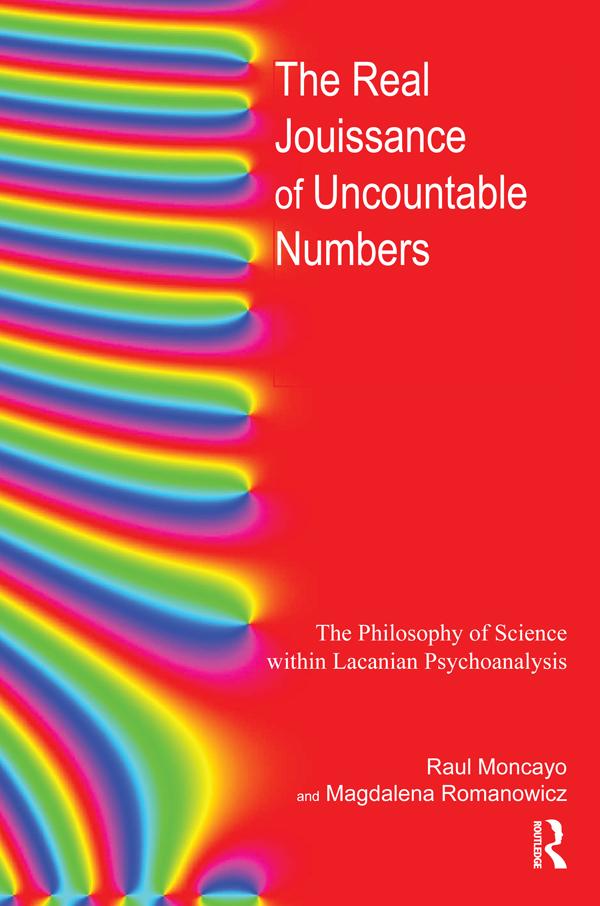
Lacan critiqued imaginary intuition for confusing direct perception with unconscious pre-conceptions about people and the world. The emphasis on description goes hand in hand with a rejection of theory and the science of the unconscious and a belief in the naive self-transparency of the world. At the same time, knowing in and of the Real requires a place beyond thinking, multi-valued forms of logic, mathematical equations, and different conceptions of causality, acausality, and chance. This book explores some of the mathematical problems raised by Lacan's use of numbers and the interconnection between mathematics and psychoanalytic ideas. Within any system, mathematical or otherwise, there are holes, or acausal cores and remainders of indecidability. It is this senseless point of non-knowledge that makes change, and the emergence of the new, possible within a system. This book differentiates between two types of void, and aligns them with the Lacanian concepts of a true and a false hole and the psychoanalytic theory of primary repression.
Płać wygodnie kartą, Klarną, Apple Pay lub Google Pay. Nie jesteś zadowolony? Zawsze masz 14-dniową gwarancję zwrotu pieniędzy. Więcej przeczytasz w naszych warunkach. Masz pytania? Napisz do nas na hello@memmo.org.
Memmo ułatwia naukę – gdziekolwiek jesteś na świecie. U nas znajdziesz podręczniki i sprytne narzędzia do nauki w jednym miejscu: streszczenia, quizy, podcasty i fiszki. A do tego Ted, Twój kumpel do nauki, który odpowie na wszystko, co Cię nurtuje. Ponad 50 000 studentów już tu się uczy – stworzone, byś uczył się szybciej i mniej stresował.
Może Ci się spodobać
Kup książkę0