
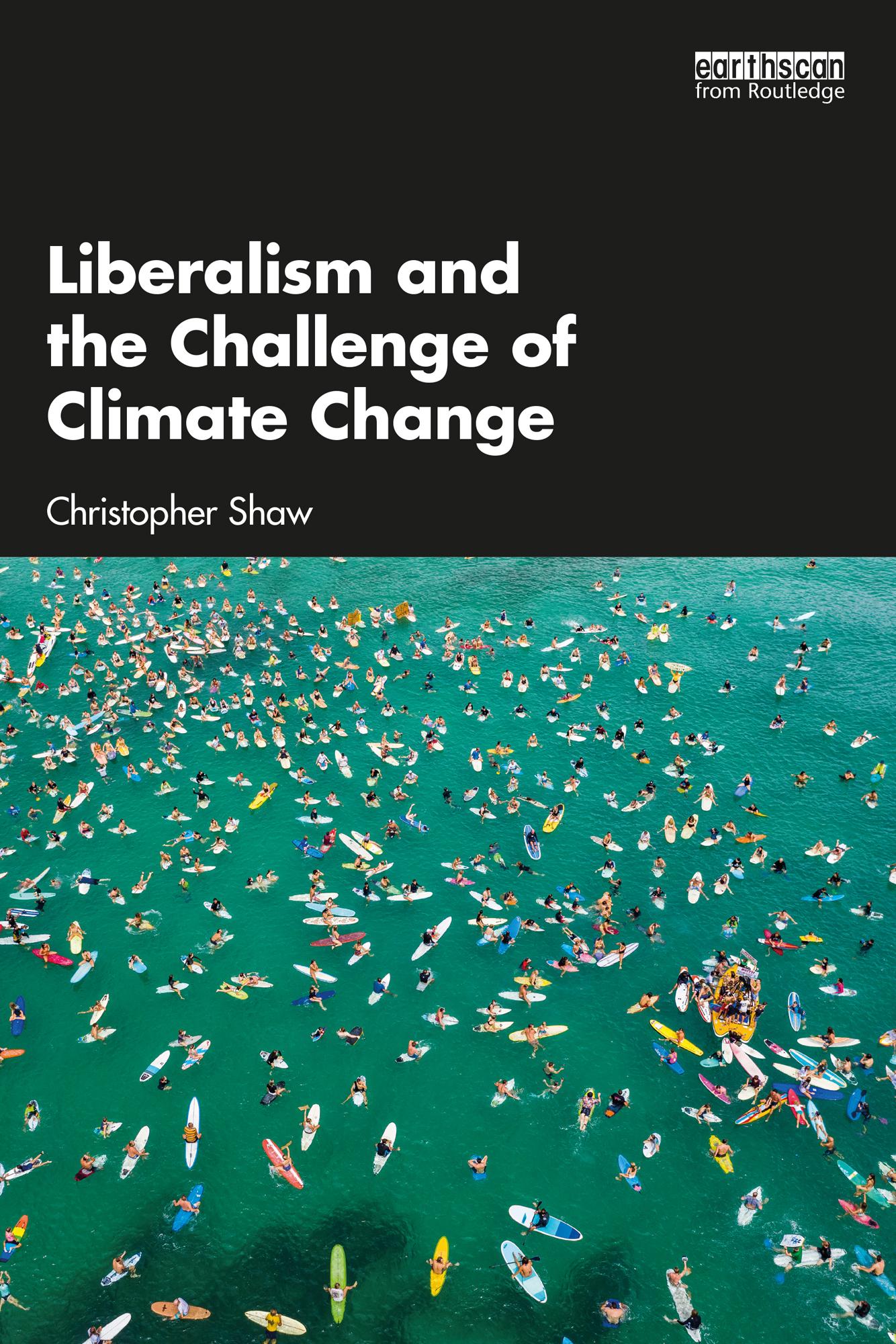
In this book Christopher Shaw analyses how liberalism has shaped our understanding of climate change and how liberalism is legitimated in the face of a crisis for which liberalism has no answers.
The language and symbolism we use to make sense of climate change arose in the post-World War II liberal institutions of the West. This language and symbolism, in neutralising the philosophical and ideological challenge climate change poses to the legitimacy of free market liberalism, has also closed off the possibility of imagining a different kind of future for humanity. The book is structured around a repurposing of the ‘guardrail’ concept, commonly used in climate science narratives to communicate the boundary between safe and dangerous climate change. Five discursive ‘guardrails’ are identified, which define a boundary between safe and dangerous ideas about how to respond to climate change. The theoretical treatment of these issues is complemented with data from interviews with opinion-formers, decision-makers and campaigners, exploring what models of human nature and political possibilities guide their approach to the politics of climate change governance.
This book will be of great interest to students and scholars of climate change, liberal politics, environmental communication and environmental politics and philosophy, in general.
Płać wygodnie kartą, Klarną, Apple Pay lub Google Pay. Nie jesteś zadowolony? Zawsze masz 14-dniową gwarancję zwrotu pieniędzy. Więcej przeczytasz w naszych warunkach. Masz pytania? Napisz do nas na hello@memmo.org.
Memmo ułatwia naukę – gdziekolwiek jesteś na świecie. U nas znajdziesz podręczniki i sprytne narzędzia do nauki w jednym miejscu: streszczenia, quizy, podcasty i fiszki. A do tego Ted, Twój kumpel do nauki, który odpowie na wszystko, co Cię nurtuje. Ponad 50 000 studentów już tu się uczy – stworzone, byś uczył się szybciej i mniej stresował.