
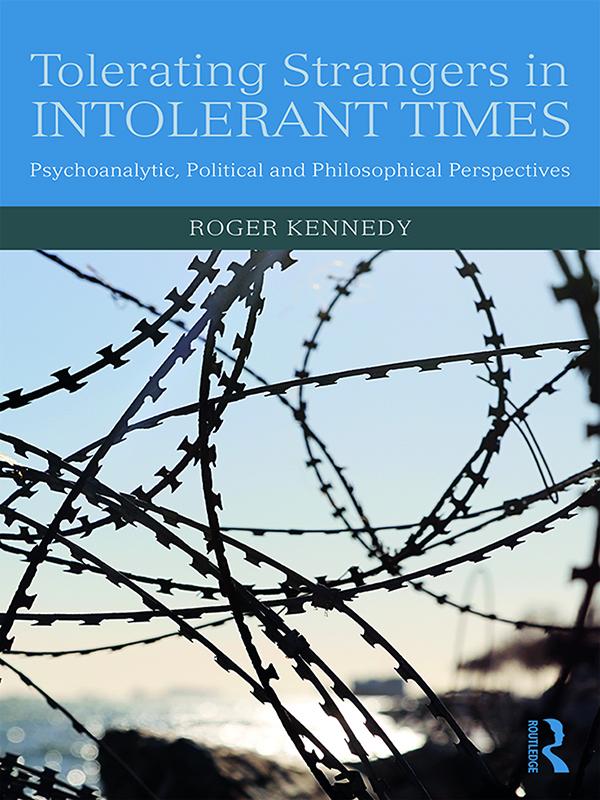
In this interdisciplinary and wide-ranging study, Roger Kennedy looks at the roots of tolerance and intolerance as well as the role of the stranger and strangeness in provoking basic fears about our identity. He argues that a fear of a loss of attachment to one’s home might account for many prejudiced and intolerant attitudes to refugees and migrants; that basic fears about being displaced by so-called ‘strangers’ from our precious and precarious sense of a psychic home can tear communities apart, as well as lead to discrimination against those who appear to be different.
Present day intolerance includes fears about the ‘hordes’ of immigrants confused with realistic fears about terrorist attacks, populist fears about loss of cultural integrity and with it a sense of powerlessness, and fearful debates about such basics as truth, including the so-called ‘post truth’ issue. Such fears, as explored in the book, mirror old arguments going back centuries to the early enlightenment thinkers and even before, when the parameters of discussion about tolerance were mainly around religious tolerance. There is urgency about addressing these kinds of issue once more at a time when the ‘ground rules’ of what makes for a civilized society seem to be under threat. Kennedy argues that society needs a ‘tolerance process’, in which critical thinking and respectful judgment can take place in an atmosphere of debate and reasonably open communication, when issues around what can and cannot be tolerated about different beliefs, practices and attitudes in people in our own and other cultures, are examined and debated.
Tolerating Strangers in Intolerant Times, with the help of psychoanalytic, literary, social and political thinking, looks at what such a tolerance process could look like in a world increasingly prone to intolerance and prejudice. It will appeal to psychoanalysts as well as scholars of politics and philosophy.
Płać wygodnie kartą, Klarną, Apple Pay lub Google Pay. Nie jesteś zadowolony? Zawsze masz 14-dniową gwarancję zwrotu pieniędzy. Więcej przeczytasz w naszych warunkach. Masz pytania? Napisz do nas na hello@memmo.org.
Memmo ułatwia naukę – gdziekolwiek jesteś na świecie. U nas znajdziesz podręczniki i sprytne narzędzia do nauki w jednym miejscu: streszczenia, quizy, podcasty i fiszki. A do tego Ted, Twój kumpel do nauki, który odpowie na wszystko, co Cię nurtuje. Ponad 50 000 studentów już tu się uczy – stworzone, byś uczył się szybciej i mniej stresował.