
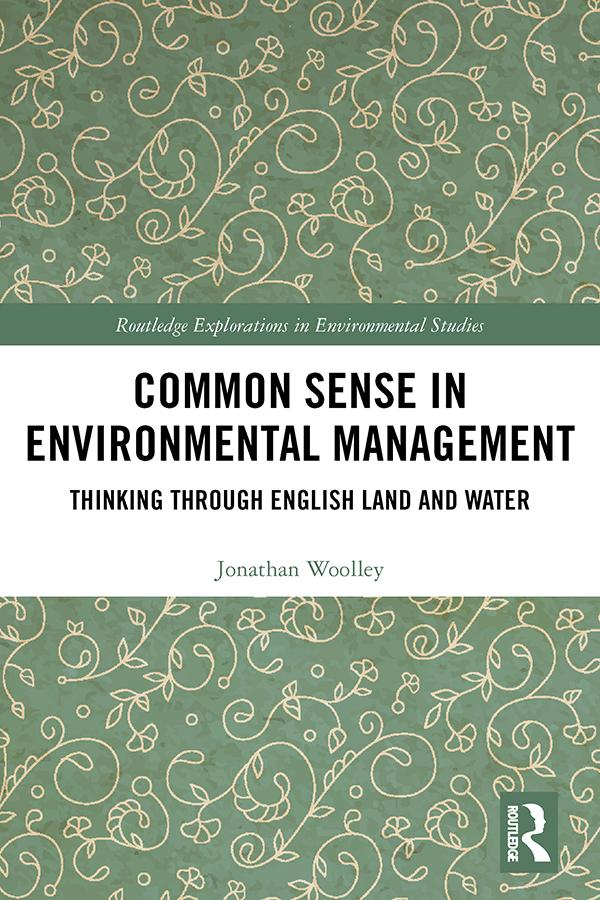
Common Sense in Environmental Management examines common sense not in theory, but in practice. Jonathan Woolley argues that common sense as a concept is rooted in English experiences of landscape and land management and examines it ethnographically - unveiling common sense as key to understanding how British nature and public life are transforming in the present day.
Common sense encourages English people to tacitly assume that the management of land and other resources should organically converge on a consensus that yields self-evident, practical results. Furthermore, the English then tend to assume that their own position reflects that consensus. Other stakeholders are not seen as having legitimate but distinct expertise and interests – but are rather viewed as being stupid and/or immoral, for ignoring self-evident, pragmatic truths. Compromise is therefore less likely, and land management practices become entrenched and resistant to innovation and improvement. Through a detailed ethnographic study of the Norfolk Broads, this book explores how environmental policy and land management in rural areas could be more effective if a truly common sense was restored in the way we manage our shared environment.
Using academic and lay deployments of common sense as a route into the political economy of rural environments, this book will be of great interest to scholars and students of socio-cultural anthropology, sociology, human geography, cultural studies, social history, and the environmental humanities.
Płać wygodnie kartą, Klarną, Apple Pay lub Google Pay. Nie jesteś zadowolony? Zawsze masz 14-dniową gwarancję zwrotu pieniędzy. Więcej przeczytasz w naszych warunkach. Masz pytania? Napisz do nas na hello@memmo.org.
Memmo ułatwia naukę – gdziekolwiek jesteś na świecie. U nas znajdziesz podręczniki i sprytne narzędzia do nauki w jednym miejscu: streszczenia, quizy, podcasty i fiszki. A do tego Ted, Twój kumpel do nauki, który odpowie na wszystko, co Cię nurtuje. Ponad 50 000 studentów już tu się uczy – stworzone, byś uczył się szybciej i mniej stresował.