
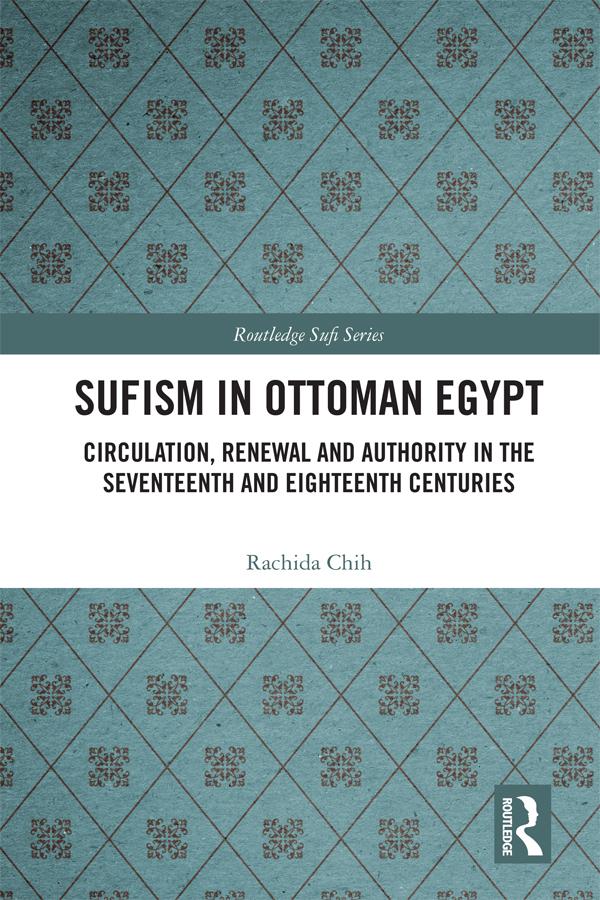
This book analyses the development of Sufism in Ottoman Egypt, during the seventeenth and eighteenth centuries. Examining the cultural, socio-economic and political backdrop against which Sufism gained prominence, it looks at its influence in both the institutions for religious learning and popular piety.
The study seeks to broaden the observed space of Sufism in Ottoman Egypt by placing it within its imperial and international context, highlighting on one hand the specificities of Egyptian Sufism, and on the other the links that it maintained with other spiritual traditions that influenced it. Studying Sufism as a global phenomenon, taking into account its religious, cultural, social and political dimensions, this book also focuses on the education of the increasing number of aspirants on the Sufi path, as well as on the social and political role of the Sufi masters in a period of constant and often violent political upheaval. It ultimately argues that, starting in medieval times, Egypt was simultaneously attracting foreign scholars inward and transmitting ideas outward, but these exchanges intensified during the seventeenth and eighteenth centuries as a result of the new imperial context in which the country and its people found themselves. Hence, this book demonstrates that the concept of ‘neosufism’ should be dispensed with and that the Ottoman period in no way constituted a time of decline for religious culture, or the beginning of a normative and fundamentalist Islam.
Sufism in Ottoman Egypt provides a valuable contribution to the new historiographical approach to the period, challenging the prevailing teleology. As such, it will prove useful to students and scholars of Islam, Sufism and religious history, as well as Middle Eastern history more generally.
Płać wygodnie kartą, Klarną, Apple Pay lub Google Pay. Nie jesteś zadowolony? Zawsze masz 14-dniową gwarancję zwrotu pieniędzy. Więcej przeczytasz w naszych warunkach. Masz pytania? Napisz do nas na hello@memmo.org.
Memmo ułatwia naukę – gdziekolwiek jesteś na świecie. U nas znajdziesz podręczniki i sprytne narzędzia do nauki w jednym miejscu: streszczenia, quizy, podcasty i fiszki. A do tego Ted, Twój kumpel do nauki, który odpowie na wszystko, co Cię nurtuje. Ponad 50 000 studentów już tu się uczy – stworzone, byś uczył się szybciej i mniej stresował.