
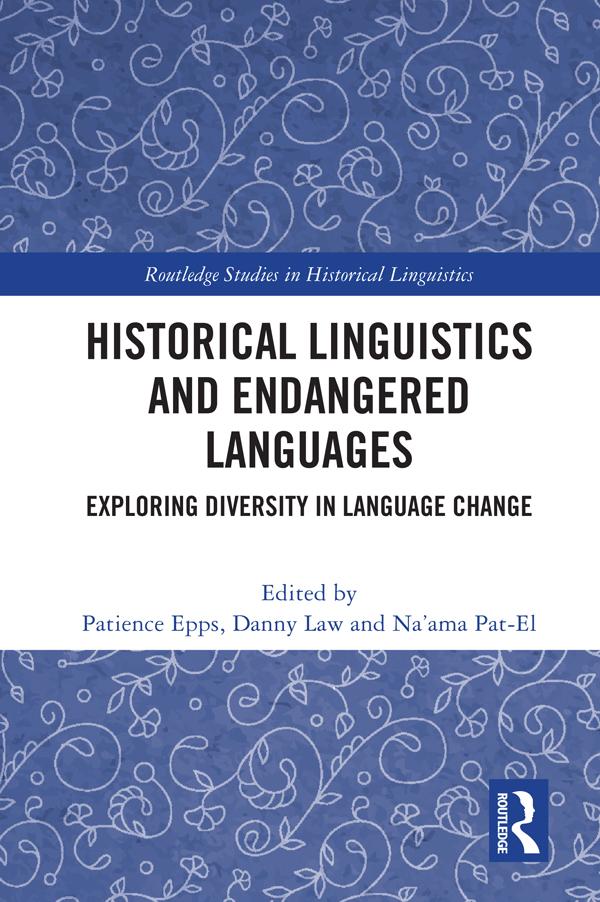
This collection showcases the contributions of the study of endangered and understudied languages to historical linguistic analysis, and the broader relevance of diachronic approaches toward developing better informed approaches to language documentation and description.
The volume brings together perspectives from both established and up-and-coming scholars and represents a globally and linguistically diverse range of languages.The collected papers demonstrate the ways in which endangered languages can challenge existing models of language change based on more commonly studied languages, and can generate innovative insights into linguistic phenomena such as pathways of grammaticalization, forms and dynamics of contact-driven change, and the diachronic relationship between lexical and grammatical categories. In so doing, the book highlights the idea that processes and outcomes of language change long held to be universally relevant may be more sensitive to cultural and typological variability than previously assumed.
Taken as a whole, this collection brings together perspectives from language documentation and historical linguistics to point the way forward for richer understandings of both language change and documentary-descriptive approaches, making this key reading for scholars in these fields.
Płać wygodnie kartą, Klarną, Apple Pay lub Google Pay. Nie jesteś zadowolony? Zawsze masz 14-dniową gwarancję zwrotu pieniędzy. Więcej przeczytasz w naszych warunkach. Masz pytania? Napisz do nas na hello@memmo.org.
Memmo ułatwia naukę – gdziekolwiek jesteś na świecie. U nas znajdziesz podręczniki i sprytne narzędzia do nauki w jednym miejscu: streszczenia, quizy, podcasty i fiszki. A do tego Ted, Twój kumpel do nauki, który odpowie na wszystko, co Cię nurtuje. Ponad 50 000 studentów już tu się uczy – stworzone, byś uczył się szybciej i mniej stresował.