
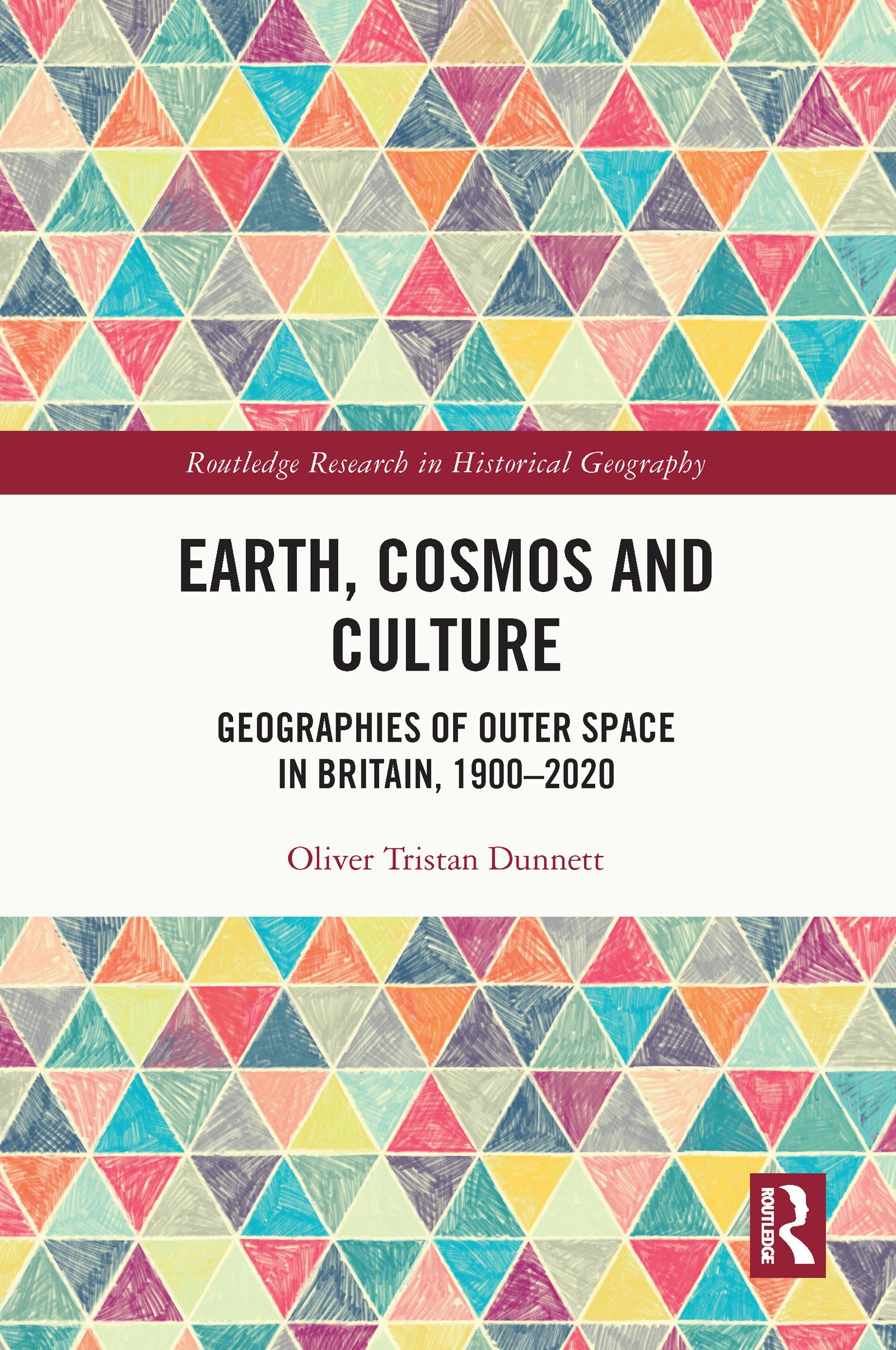
This book traces the development of diverse British cultures of outer space, utilizing key geographical concepts such as landscape, place, and national identity.
It examines the early visionary ideas of writers H. G. Wells and Olaf Stapledon, the ambitious British space programme of the 1960s, and narrations of British cultural identity that accompanied the space missions of Helen Sharman, Beagle 2 and Tim Peake. The exploration of British cultures of outer space throughout the book helps understand the emergence of the British Interplanetary Society. It also explains its significance in pre-war and post-war periods through an analysis of the roles of influential figures such as Arthur C. Clarke and Patrick Moore. The chapters explore utopian and dystopian representations of space exploration, examine the mysterious phenomenon of UFO culture, and consider plans for humanity’s imagined future across interstellar space. Throughout the book geography is advocated as a home for critical studies of outer space, illuminating its significance in terms of the reciprocal relationships between exploration and the sublime, science and the imagination, Earth and cosmos.
As an emergent field of research in the social sciences, this book makes an excellent contribution to the study of the outer space in Britain and abroad developing a distinctive kind of outer spatial geography with major implications for future teaching and research.
Płać wygodnie kartą, Klarną, Apple Pay lub Google Pay. Nie jesteś zadowolony? Zawsze masz 14-dniową gwarancję zwrotu pieniędzy. Więcej przeczytasz w naszych warunkach. Masz pytania? Napisz do nas na hello@memmo.org.
Memmo ułatwia naukę – gdziekolwiek jesteś na świecie. U nas znajdziesz podręczniki i sprytne narzędzia do nauki w jednym miejscu: streszczenia, quizy, podcasty i fiszki. A do tego Ted, Twój kumpel do nauki, który odpowie na wszystko, co Cię nurtuje. Ponad 50 000 studentów już tu się uczy – stworzone, byś uczył się szybciej i mniej stresował.