
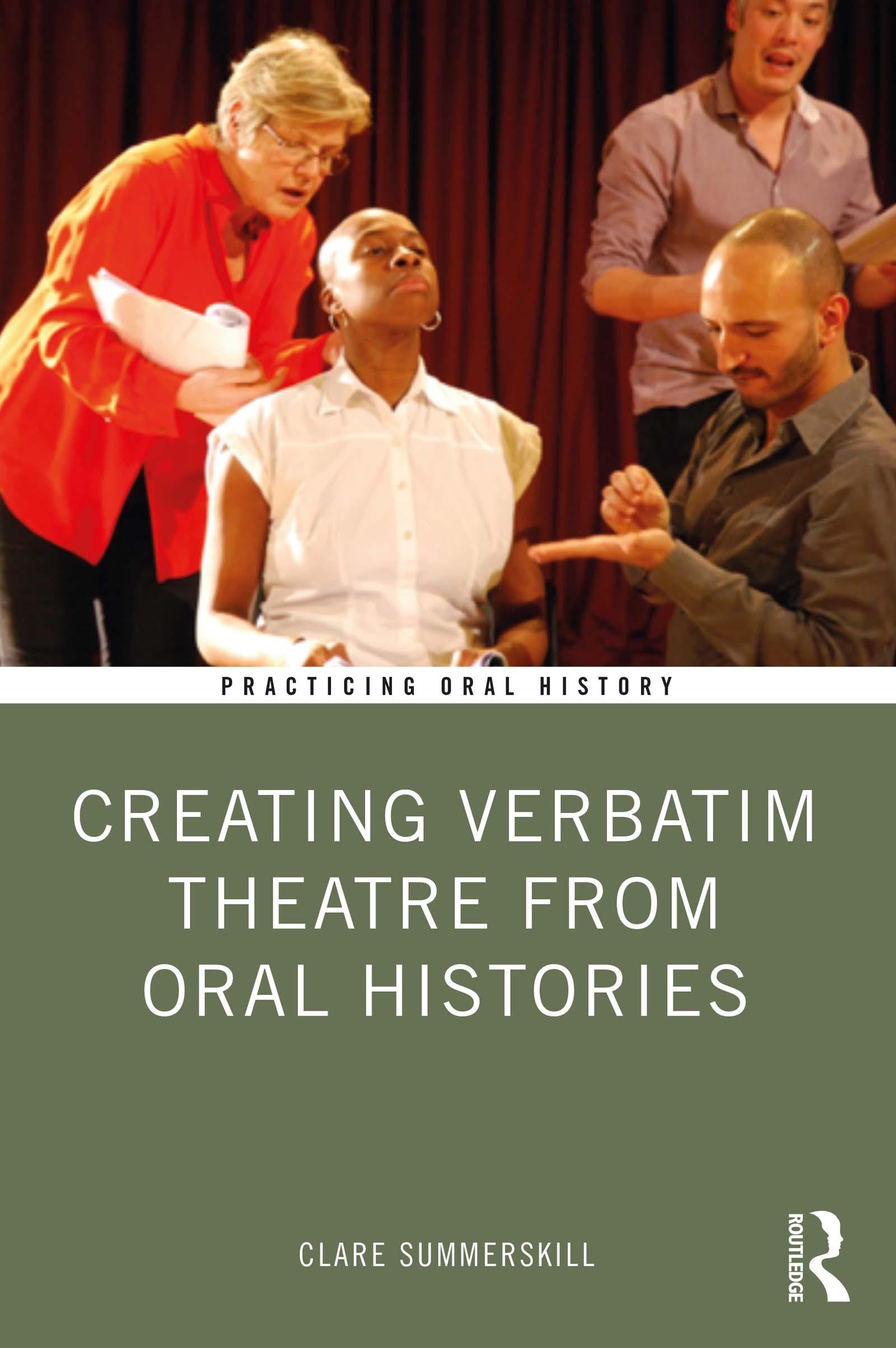
Offering a roadmap for practicing verbatim theatre (plays created from oral histories), this book outlines theatre processes through the lens of oral history and draws upon oral history scholarship to bring best practices from that discipline to theatre practitioners.
This book opens with an overview of oral history and verbatim theatre, considering the ways in which existing oral history debates can inform verbatim theatre processes and highlights necessary ethical considerations within each field, which are especially prevalent when working with narrators from marginalised communities. It provides a step-by-step guide to creating plays from interviews and contains practical guidance for determining the scope of a theatre project: identifying narrators and conducting interviews, developing a script from excerpts of interview transcripts and outlining a variety of ways to create verbatim theatre productions. By bringing together this explicit discussion of oral history in relationship to theatre based on personal testimonies, the reader gains insight into each field and the close relationship between the two.
Supported by international case studies that cover a wide range of working methods and productions, including The Laramie Project and Parramatta Girls, this is the perfect guide for oral historians producing dramatic representations of the material they have sourced through interviews, and for writers creating professional theatre productions, community projects or student plays.
Płać wygodnie kartą, Klarną, Apple Pay lub Google Pay. Nie jesteś zadowolony? Zawsze masz 14-dniową gwarancję zwrotu pieniędzy. Więcej przeczytasz w naszych warunkach. Masz pytania? Napisz do nas na hello@memmo.org.
Memmo ułatwia naukę – gdziekolwiek jesteś na świecie. U nas znajdziesz podręczniki i sprytne narzędzia do nauki w jednym miejscu: streszczenia, quizy, podcasty i fiszki. A do tego Ted, Twój kumpel do nauki, który odpowie na wszystko, co Cię nurtuje. Ponad 50 000 studentów już tu się uczy – stworzone, byś uczył się szybciej i mniej stresował.