
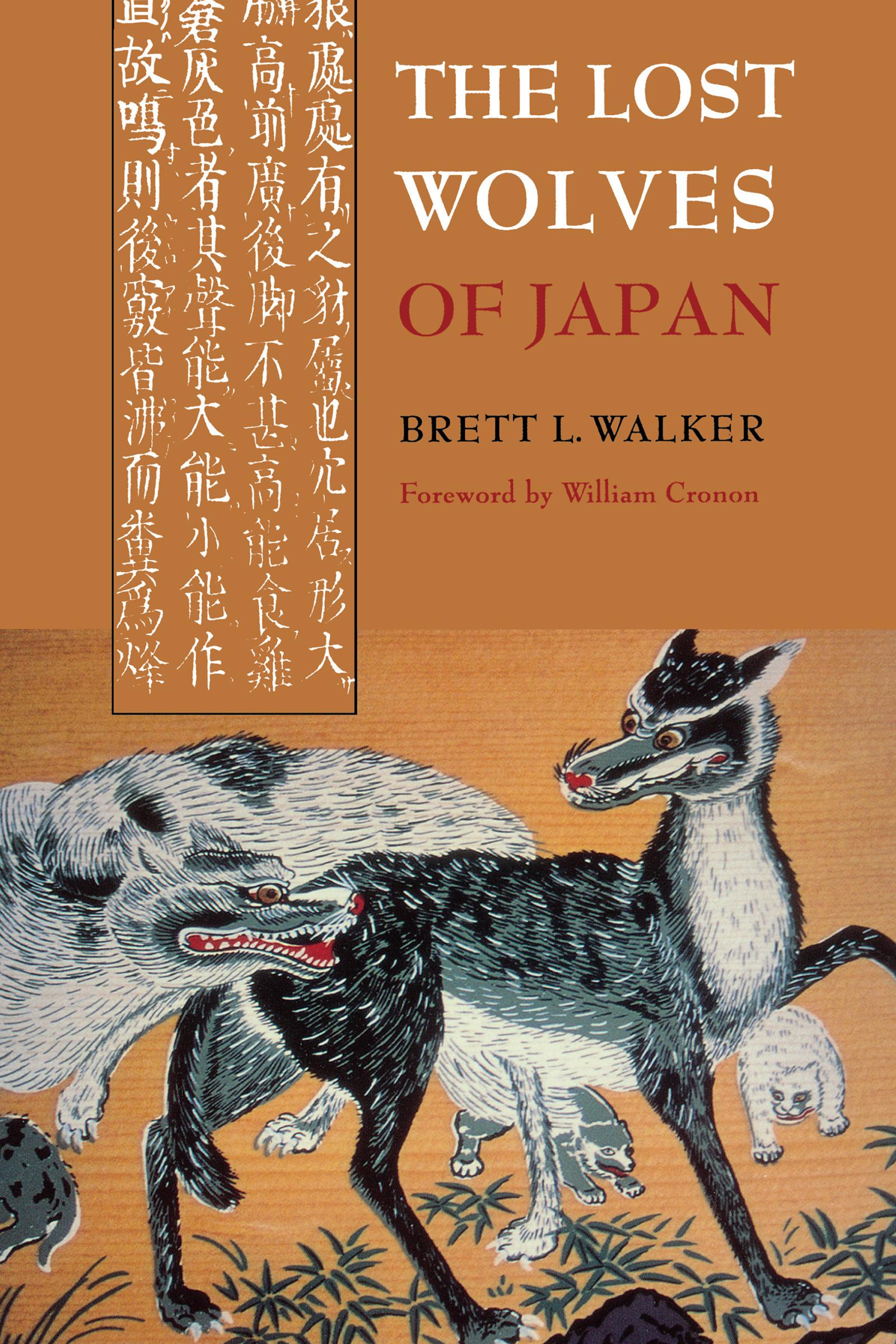
Many Japanese once revered the wolf as Oguchi no Magami, or Large-Mouthed Pure God, but as Japan began its modern transformation wolves lost their otherworldly status and became noxious animals that needed to be killed. By 1905 they had disappeared from the country. In this spirited and absorbing narrative, Brett Walker takes a deep look at the scientific, cultural, and environmental dimensions of wolf extinction in Japan and tracks changing attitudes toward nature through Japan's long history.
Grain farmers once worshiped wolves at shrines and left food offerings near their dens, beseeching the elusive canine to protect their crops from the sharp hooves and voracious appetites of wild boars and deer. Talismans and charms adorned with images of wolves protected against fire, disease, and other calamities and brought fertility to agrarian communities and to couples hoping to have children. The Ainu people believed that they were born from the union of a wolflike creature and a goddess.
In the eighteenth century, wolves were seen as rabid man-killers in many parts of Japan. Highly ritualized wolf hunts were instigated to cleanse the landscape of what many considered as demons. By the nineteenth century, however, the destruction of wolves had become decidedly unceremonious, as seen on the island of Hokkaido. Through poisoning, hired hunters, and a bounty system, one of the archipelago's largest carnivores was systematically erased.
The story of wolf extinction exposes the underside of Japan's modernization. Certain wolf scientists still camp out in Japan to listen for any trace of the elusive canines. The quiet they experience reminds us of the profound silence that awaits all humanity when, as the Japanese priest Kenko taught almost seven centuries ago, we "look on fellow sentient creatures without feeling compassion."
Płać wygodnie kartą, Klarną, Apple Pay lub Google Pay. Nie jesteś zadowolony? Zawsze masz 14-dniową gwarancję zwrotu pieniędzy. Więcej przeczytasz w naszych warunkach. Masz pytania? Napisz do nas na hello@memmo.org.
Memmo ułatwia naukę – gdziekolwiek jesteś na świecie. U nas znajdziesz podręczniki i sprytne narzędzia do nauki w jednym miejscu: streszczenia, quizy, podcasty i fiszki. A do tego Ted, Twój kumpel do nauki, który odpowie na wszystko, co Cię nurtuje. Ponad 50 000 studentów już tu się uczy – stworzone, byś uczył się szybciej i mniej stresował.