
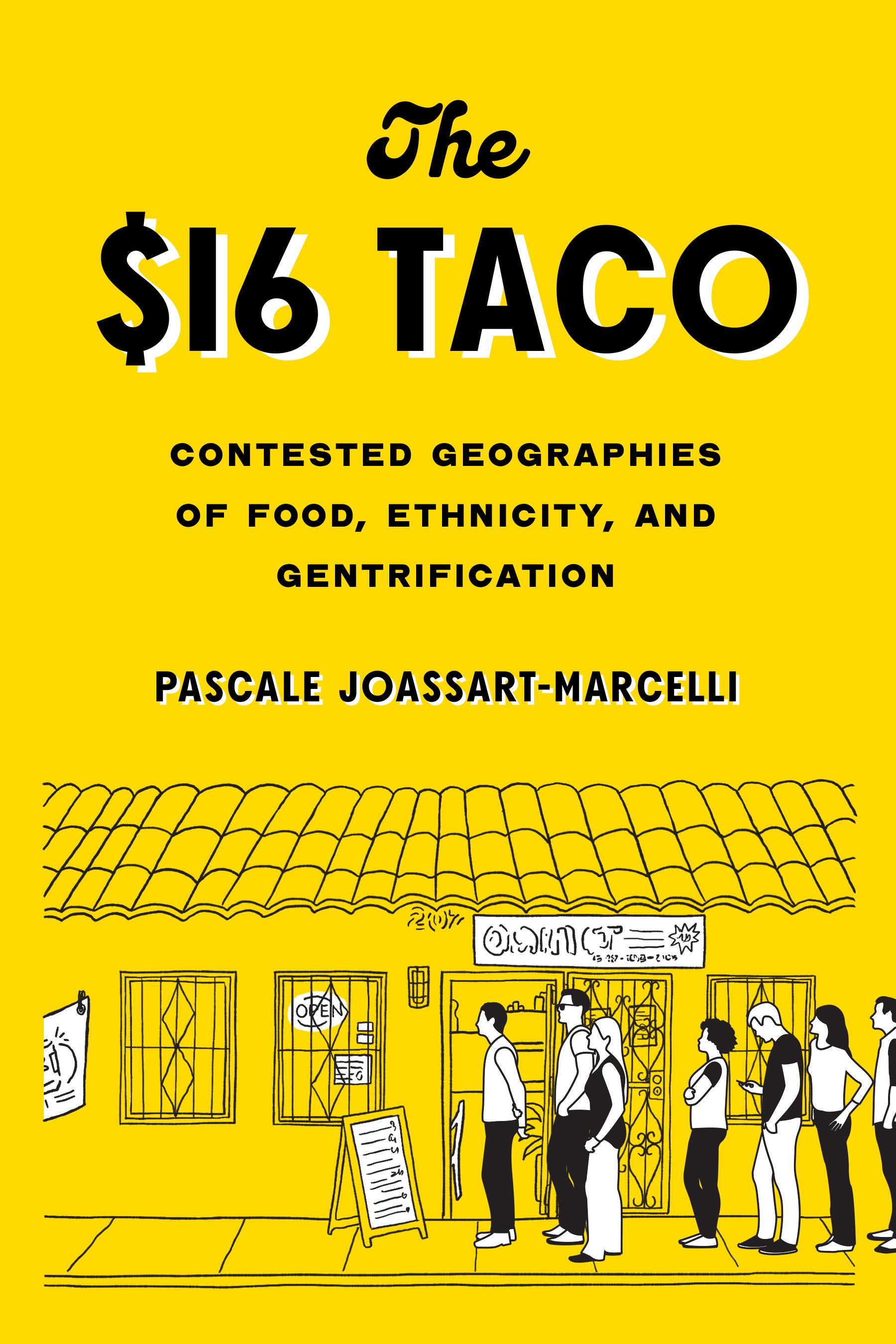
Having “discovered” the flavors of barbacoa, bibimbap, bánh mi, sambusas, and pupusas, white middle-class eaters are increasingly venturing into historically segregated neighborhoods in search of “authentic” eateries run by—and for—immigrants and people of color. This interest in “ethnic” food and places, fueled by media attention and capitalized on by developers, contributes to gentrification, and the very people who produced these vibrant foodscapes are increasingly excluded from them.
Drawing on extensive fieldwork, geographer Pascale Joassart-Marcelli traces the transformation of three urban San Diego neighborhoods whose foodscapes are shifting from serving the needs of longtime minoritized residents who face limited food access to pleasing the tastes of wealthier and whiter newcomers. The $16 Taco illustrates how food can both emplace and displace immigrants, shedding light on the larger process of gentrification and the emotional, cultural, economic, and physical displacement it produces. It also highlights the contested food geographies of immigrants and people of color by documenting their contributions to the cultural food economy and everyday struggles to reclaim ethnic foodscapes and lead flourishing and hunger-free lives. Joassart-Marcelli offers valuable lessons for cities where food-related development projects transform neighborhoods at the expense of the communities they claim to celebrate.
Płać wygodnie kartą, Klarną, Apple Pay lub Google Pay. Nie jesteś zadowolony? Zawsze masz 14-dniową gwarancję zwrotu pieniędzy. Więcej przeczytasz w naszych warunkach. Masz pytania? Napisz do nas na hello@memmo.org.
Memmo ułatwia naukę – gdziekolwiek jesteś na świecie. U nas znajdziesz podręczniki i sprytne narzędzia do nauki w jednym miejscu: streszczenia, quizy, podcasty i fiszki. A do tego Ted, Twój kumpel do nauki, który odpowie na wszystko, co Cię nurtuje. Ponad 50 000 studentów już tu się uczy – stworzone, byś uczył się szybciej i mniej stresował.