
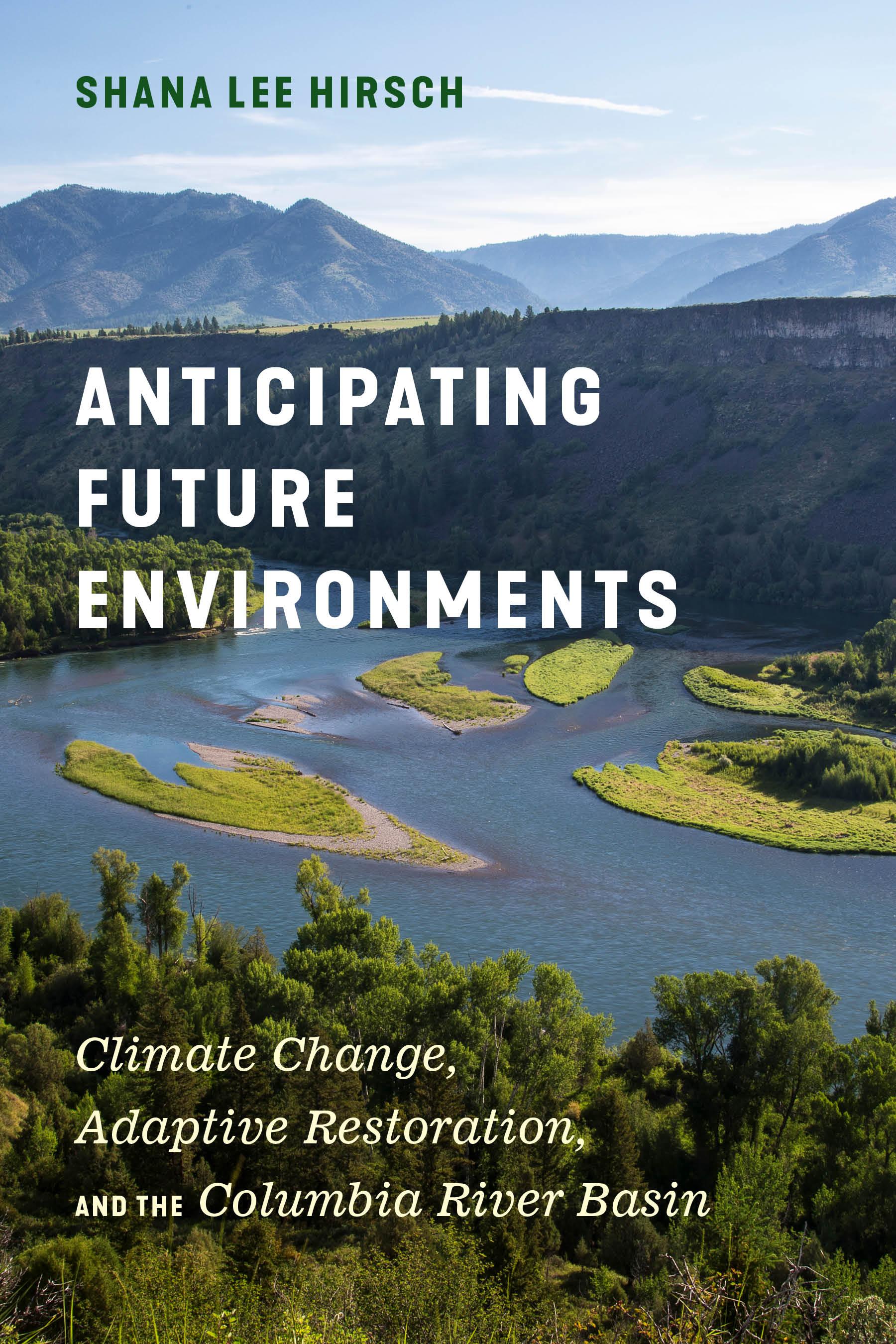
Drought. Wildfire. Extreme flooding. How does climate change affect the daily work of scientists? Ecological restoration is often premised on the idea of returning a region to an earlier, healthier state. Yet the effects of climate change undercut that premise and challenge the ways scientists can work, destabilizing the idea of “normalcy” and revealing the politics that shape what scientists can do. How can the practice of ecological restoration shift to anticipate an increasingly dynamic future? And how does a scientific field itself adapt to climate change?
Restoration efforts in the Columbia River Basin—a vast and diverse landscape experiencing warming waters, less snowpack, and greater fluctuations in precipitation—may offer answers to some of these questions. Shana Hirsch tells the story of restoration science in the basin, surveying its past and detailing the work of today’s salmon habitat restoration efforts. Her analysis offers critical insight into scientific practices, emerging approaches and ways of thinking, the incorporation of future climate change scenarios into planning, and the ultimate transformation—or adaptation—of the science of ecological restoration. For scientists and environmental managers around the globe, Anticipating Future Environments will shed light on how to more effectively cope with climate change.
Płać wygodnie kartą, Klarną, Apple Pay lub Google Pay. Nie jesteś zadowolony? Zawsze masz 14-dniową gwarancję zwrotu pieniędzy. Więcej przeczytasz w naszych warunkach. Masz pytania? Napisz do nas na hello@memmo.org.
Memmo ułatwia naukę – gdziekolwiek jesteś na świecie. U nas znajdziesz podręczniki i sprytne narzędzia do nauki w jednym miejscu: streszczenia, quizy, podcasty i fiszki. A do tego Ted, Twój kumpel do nauki, który odpowie na wszystko, co Cię nurtuje. Ponad 50 000 studentów już tu się uczy – stworzone, byś uczył się szybciej i mniej stresował.