
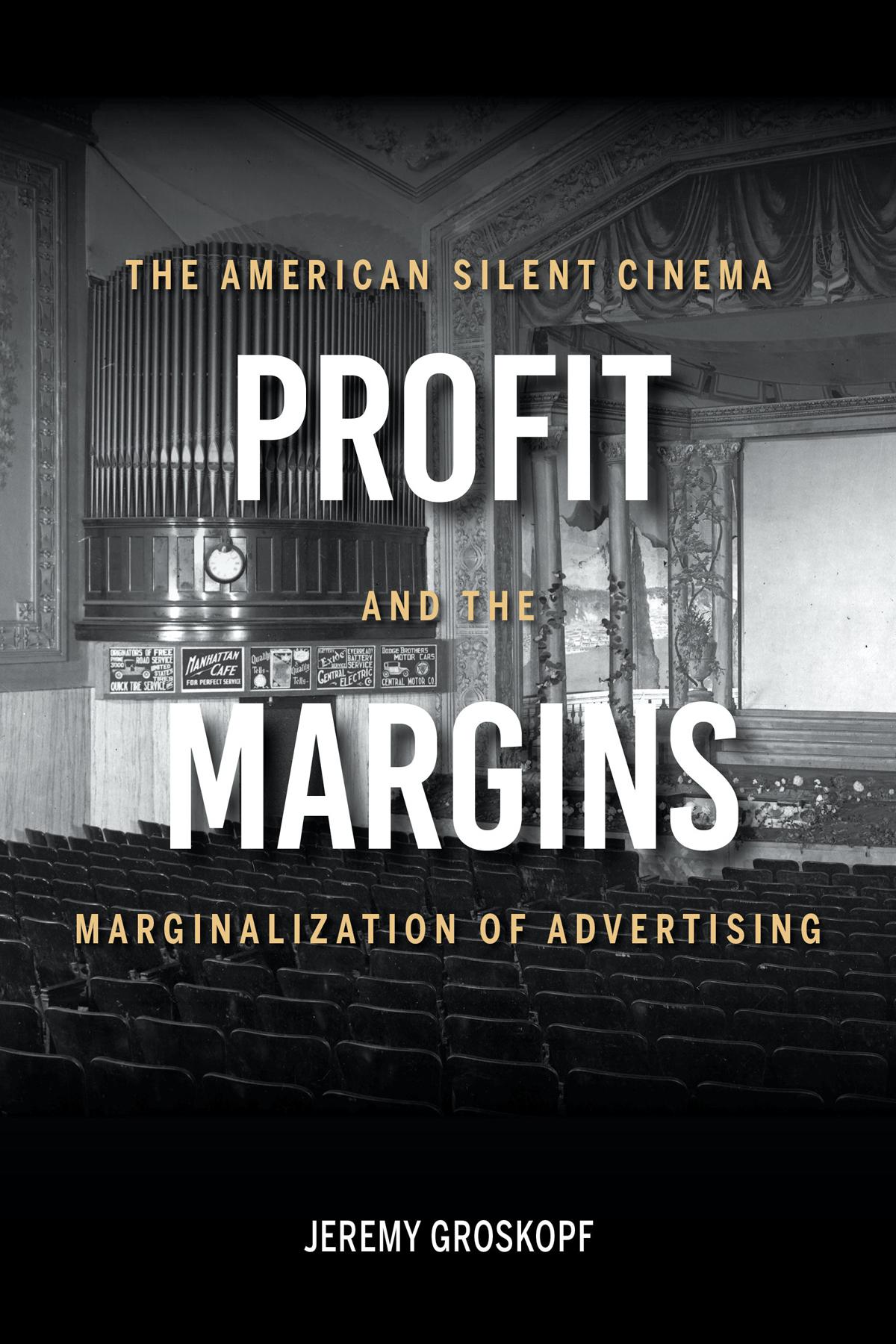
Between the advent of print advertising and the dawn of radio came cinema ads. These ads, aimed at a captive theater audience, became a symbol of the developing binary between upper-class film consumption and more consumerist media.
In Profit Margins, Jeremy Groskopf examines how the ad industry jockeyed for direct advertisement space in American motion pictures. In fact, advertisers, who recognized the import of film audiences, fought exhibitors over what audiences expected in a theater outing. Looking back at these debates in four case studies, Groskopf reveals that advertising became a marker of class distinctions in the cinema experience as the film industry pushed out advertisers in order to create a space free of ads. By restricting advertising, especially during the rise of high-class, palatial theaters, the film industry continued its ongoing effort to ascend the cultural hierarchy of the arts.
An important read for film studies and the history of marketing, Profit Margins exposes the fascinating truth surrounding the invention of cinema advertising techniques and the resulting rhetoric of class division.
Płać wygodnie kartą, Klarną, Apple Pay lub Google Pay. Nie jesteś zadowolony? Zawsze masz 14-dniową gwarancję zwrotu pieniędzy. Więcej przeczytasz w naszych warunkach. Masz pytania? Napisz do nas na hello@memmo.org.
Memmo ułatwia naukę – gdziekolwiek jesteś na świecie. U nas znajdziesz podręczniki i sprytne narzędzia do nauki w jednym miejscu: streszczenia, quizy, podcasty i fiszki. A do tego Ted, Twój kumpel do nauki, który odpowie na wszystko, co Cię nurtuje. Ponad 50 000 studentów już tu się uczy – stworzone, byś uczył się szybciej i mniej stresował.