
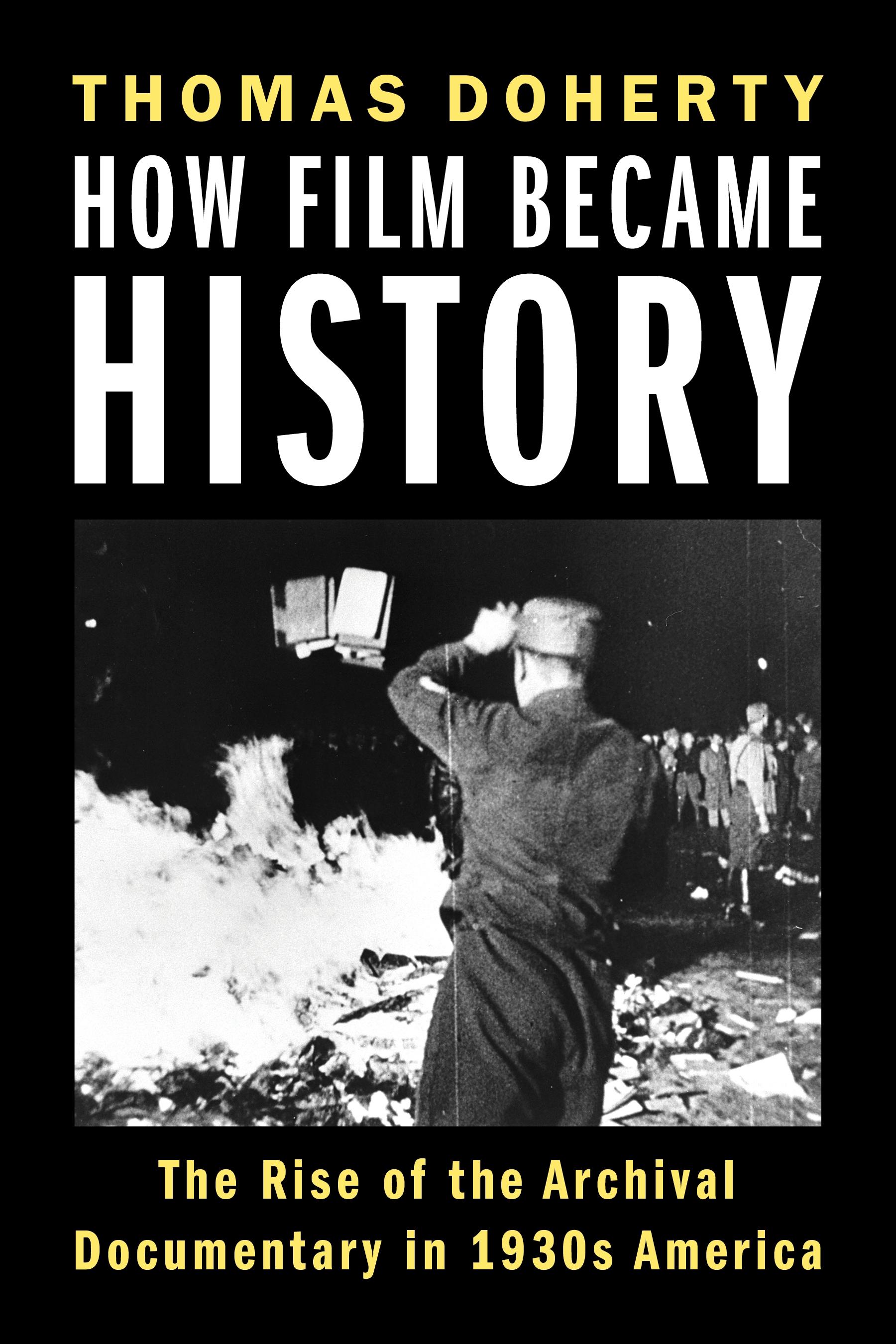
By the 1930s, filmmakers had access to a backlog of footage from nearly forty years of motion pictures, allowing them to create a new kind of film stitched together from the raw material of older films. At around the same time, the transition to synchronous sound added a transformative new element to the grammar of cinema: the voiceover narration. Together, the film inventory and offscreen commentary gave rise to the archival documentary, the motion picture genre that preserves and rewinds history.
Thomas Doherty tells the story of the archival documentary, spotlighting the first films that set out deliberately to preserve history on screen. He shows how newsreels and documentaries challenged the era’s restrictive censorship and how film began to engage with the great political issues of the day. Doherty considers a range of films—some well-known, others obscure—including J. Stuart Blackton’s The Film Parade (1933), Laurence Stallings and Truman Talley’s The First World War (1934), Cornelius Vanderbilt Jr.’s Hitler’s Reign of Terror (1934), Max Eastman and Herbert Axelbank’s Tsar to Lenin (1937), and the March of Time screen magazine. Tracing the creation of the archival documentary, How Film Became History illuminates how motion pictures have come to shape our vision of the past.
Płać wygodnie kartą, Klarną, Apple Pay lub Google Pay. Nie jesteś zadowolony? Zawsze masz 14-dniową gwarancję zwrotu pieniędzy. Więcej przeczytasz w naszych warunkach. Masz pytania? Napisz do nas na hello@memmo.org.
Memmo ułatwia naukę – gdziekolwiek jesteś na świecie. U nas znajdziesz podręczniki i sprytne narzędzia do nauki w jednym miejscu: streszczenia, quizy, podcasty i fiszki. A do tego Ted, Twój kumpel do nauki, który odpowie na wszystko, co Cię nurtuje. Ponad 50 000 studentów już tu się uczy – stworzone, byś uczył się szybciej i mniej stresował.