
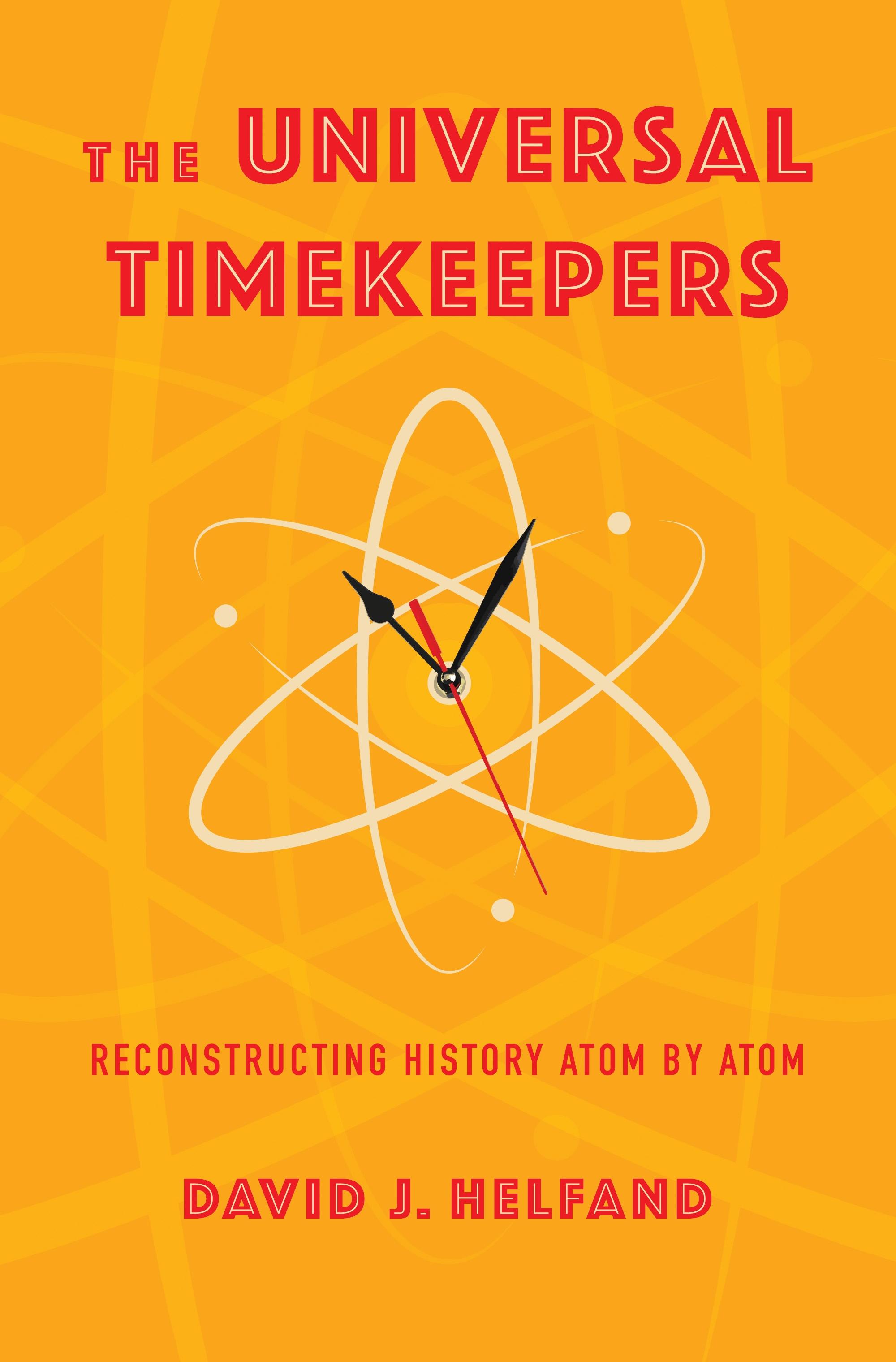
Runner-up, 2024 Columbia University Press Distinguished Book Award
Atoms are unfathomably tiny. It takes fifteen million trillion of them to make up a single poppy seed—give or take a few billion. And there’s hardly anything to them: atoms are more than 99.9999999999 percent empty space. Yet scientists have learned to count these slivers of near nothingness with precision and to peer into their internal states. In looking so closely, we have learned that atoms, because of their inimitable signatures and imperturbable internal clocks, are little archives holding the secrets of the past.
David J. Helfand reconstructs the history of the universe—back to its first microsecond 13.8 billion years ago—with the help of atoms. He shows how, by using detectors and reactors, microscopes and telescopes, we can decode the tales these infinitesimal particles tell, answering questions such as: Is a medieval illustrated prayer book real or forged? How did maize cultivation spread from the highlands of central Mexico to New England? What was Earth’s climate like before humans emerged? Where can we find clues to identify the culprit in the demise of the dinosaurs? When did our planet and solar system form? Can we trace the births of atoms in the cores of massive stars or even glimpse the origins of the universe itself?
A lively and inviting introduction to the building blocks of everything we know, The Universal Timekeepers demonstrates the power of science to unveil the mysteries of unreachably remote times and places.
Płać wygodnie kartą, Klarną, Apple Pay lub Google Pay. Nie jesteś zadowolony? Zawsze masz 14-dniową gwarancję zwrotu pieniędzy. Więcej przeczytasz w naszych warunkach. Masz pytania? Napisz do nas na hello@memmo.org.
Memmo ułatwia naukę – gdziekolwiek jesteś na świecie. U nas znajdziesz podręczniki i sprytne narzędzia do nauki w jednym miejscu: streszczenia, quizy, podcasty i fiszki. A do tego Ted, Twój kumpel do nauki, który odpowie na wszystko, co Cię nurtuje. Ponad 50 000 studentów już tu się uczy – stworzone, byś uczył się szybciej i mniej stresował.